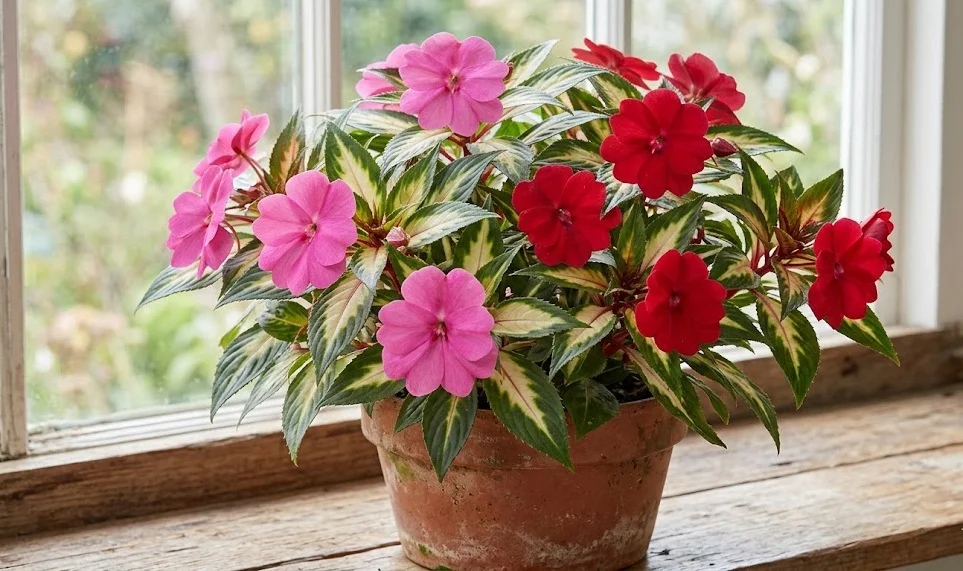

New Guinea impatiens is often described as a shade plant, but that label can be misleading. It performs best in bright shade or filtered light rather than deep darkness. The plant needs enough light to fuel flowering, yet it must be protected from harsh heat and direct afternoon sun. Understanding this balance is essential for dense growth, rich foliage color, and continuous blooms.
The ideal light range
The ideal position gives the plant bright, indirect light for most of the day. Morning sun is usually beneficial because it is gentler and cooler than afternoon sun. This exposure encourages strong flowering without placing excessive heat stress on the leaves. In many gardens, an east-facing location is close to ideal.
Filtered light under open tree canopies also works well. The moving shade protects the plant from scorching while still allowing enough brightness for photosynthesis. This is different from dense shade under evergreen shrubs or dark structures. In very deep shade, the plant may remain alive but flower poorly.
In cooler climates, New Guinea impatiens can tolerate more sun than it can in hot regions. The same cultivar may thrive in half-day sun in a mild coastal garden but scorch in a hot inland courtyard. Local conditions matter as much as general recommendations. Heat, wind, humidity, and soil moisture all modify how much light the plant can handle.
Foliage color can guide placement. Dark-leaved or bronze cultivars may tolerate brighter conditions better than some pale variegated types. Variegated plants often need good light to maintain strong contrast, but their lighter leaf areas may be more sensitive to sunburn. Observing the plant after placement is the best fine-tuning tool.
More articles on this topic
Signs of too much or too little light
Too much direct sun often causes leaf scorch. The damage may appear as brown edges, bleached patches, or dry spots on exposed leaves. Flowers can fade rapidly or become papery in harsh light. The plant may also wilt during the hottest hours even when the soil is moist.
A plant receiving too little light usually stretches. Stems become longer, leaf spacing increases, and the overall shape becomes loose. Flower production declines because the plant does not have enough energy to support continuous blooming. Leaves may remain attractive, but the floral display becomes disappointing.
Sudden light changes can be stressful. A plant grown in a greenhouse or shaded retail area may burn if placed immediately in outdoor sun. Gradual acclimation allows leaves to adjust their structure and pigment levels. This process is especially important in late spring when sunlight is strong.
Seasonal changes also affect light exposure. A spot that is ideal in May may become too hot in July. A container can be moved more easily than a bed planting, which is one reason pots are useful for this plant. Monitoring the plant through the season prevents avoidable stress.
More articles on this topic
Managing light in gardens and containers
In gardens, pair New Guinea impatiens with structures or plants that create gentle shade. Open shrubs, ornamental grasses, pergolas, and tree canopies can all soften direct sunlight. The goal is not darkness but moderated brightness. A luminous shaded site produces the best combination of flowers and foliage.
Containers give more control over exposure. A pot can be moved away from afternoon sun during heat waves or brought closer to light in cooler weather. This flexibility is valuable on balconies and patios where reflected heat can be intense. Light-colored containers also help keep roots cooler.
Hanging baskets and window boxes need special attention. They may receive more wind and reflected light than ground-level plantings. Even a shaded wall can radiate heat during summer. Consistent watering and strategic positioning are essential in these exposed settings.
Artificial lighting can support indoor or overwintered plants. A bright grow light placed at a suitable distance can prevent weak, stretched growth during winter. The plant still needs a normal day-night rhythm, so lights should not remain on continuously. With sufficient artificial light, overwintered plants stay compact and healthier until spring.