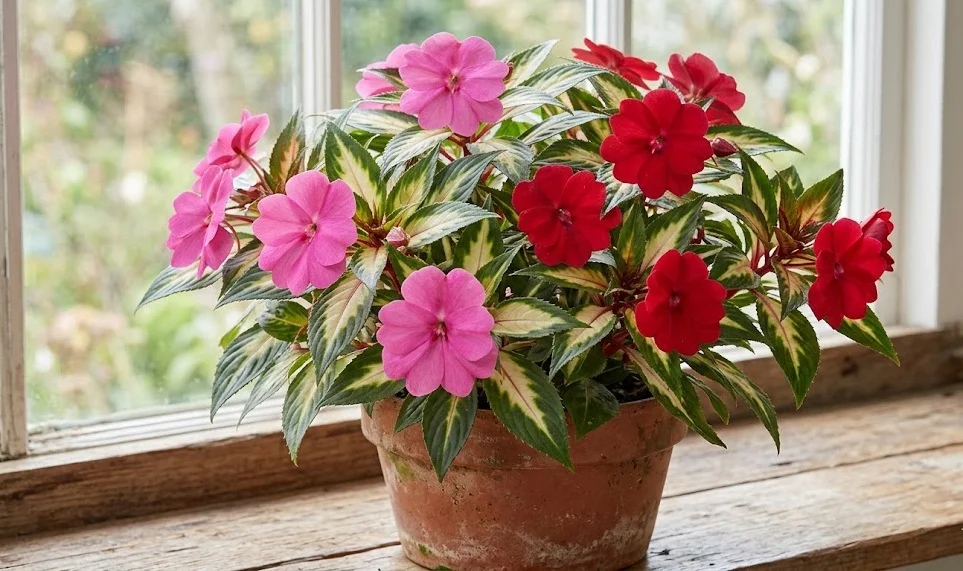

New Guinea impatiens is generally resilient when grown in the right conditions, but it can suffer from diseases and pests if stressed. Poor drainage, excessive humidity, crowding, and irregular watering create the most common problems. The plant’s succulent stems and lush leaves can decline quickly when roots or foliage are compromised. Prevention is therefore more effective than rescue treatment.
Common disease conditions
Root rot is one of the most serious problems affecting New Guinea impatiens. It usually develops when the soil remains wet and poorly aerated for too long. Symptoms include yellowing leaves, wilting despite wet soil, soft stems, and a general collapse of vigor. Once root damage is advanced, recovery is difficult.
Stem rot can occur when moisture remains around the crown or lower stems. Planting too deeply increases this risk because the stem base stays damp. Dense mulch pressed against stems can create the same problem. Keeping the crown slightly open and well ventilated helps prevent infection.
Leaf spot diseases may appear as brown, black, or water-soaked marks on leaves. They are more common when foliage stays wet and air movement is poor. Splashing water can spread pathogens from infected leaves or soil surfaces. Removing damaged leaves and watering at soil level reduces pressure.
Botrytis gray mold can affect flowers and soft tissues in cool, humid weather. Faded blossoms that remain trapped in dense foliage are particularly vulnerable. The disease often appears as fuzzy gray growth on decaying tissue. Good sanitation and airflow are the best preventive measures.
More articles on this topic
Environmental stress that mimics disease
Not every problem is caused by a pathogen. Sunscald can create pale, bleached, or brown patches on leaves, especially after a sudden move from shade to brighter light. The damaged tissue will not turn green again, but new growth can be healthy if the plant is relocated. Gradual acclimation prevents this issue.
Cold stress can cause dull leaves, slowed growth, and stem weakness. New Guinea impatiens is sensitive to low temperatures, even when frost does not occur. Cold, wet soil is especially harmful because roots become inactive while moisture remains high. Waiting for warm planting conditions is an important preventive step.
Nutrient imbalance can also look like disease. Pale leaves, weak growth, or reduced flowering may result from underfeeding, root damage, or unsuitable soil conditions. Fertilizer burn may cause brown leaf edges and sudden decline. Accurate diagnosis begins by checking watering, drainage, feeding, and light before assuming infection.
Drought stress may leave the plant limp and uneven. Repeated dry spells can cause bud drop and leaf loss. A stressed plant is more attractive to certain pests because its tissues are weakened. Consistent care keeps the plant’s natural defenses stronger.
More articles on this topic
Major pests to watch for
Aphids can gather on tender shoots, flower buds, and the underside of young leaves. They feed by sucking sap and may cause distorted growth or sticky honeydew deposits. Small infestations can often be removed with a firm spray of water. Heavier infestations may require insecticidal soap or another appropriate low-toxicity treatment.
Spider mites are more likely in hot, dry, and dusty conditions. They cause fine speckling on leaves and may create delicate webbing when populations rise. Because they thrive in dry air, improving humidity and washing foliage can help. Early detection is important because severe infestations weaken plants quickly.
Thrips can damage flowers and young leaves. Their feeding may cause streaked petals, distorted buds, and silvery marks on foliage. They are small and often hidden, so symptoms may appear before the insects are noticed. Blue or yellow sticky traps can help monitor their presence.
Whiteflies may appear when plants are grown in sheltered, warm environments. They fly up in small clouds when foliage is disturbed. Their feeding weakens leaves and may leave sticky residues. Regular inspection of leaf undersides is essential in greenhouses and protected patios.
Integrated pest and disease management
Healthy growing conditions are the foundation of pest and disease control. Proper spacing, correct watering, and balanced fertilization reduce plant stress. Avoiding extremes makes the plant less vulnerable to both pathogens and insects. A vigorous plant can tolerate minor pest pressure better than a stressed one.
Sanitation is simple but powerful. Remove dead flowers, yellow leaves, and fallen debris from around the plant. Diseased material should not be left in containers or beds where spores can spread. Clean tools after pruning affected plants.
Biological balance should be protected whenever possible. Lady beetles, lacewings, hoverfly larvae, and predatory mites can reduce pest populations naturally. Broad-spectrum insecticides may harm these beneficial organisms. Targeted treatments are usually better for ornamental plantings and the surrounding garden ecosystem.
Regular inspection is the most practical habit. Check the undersides of leaves, the growing tips, and the soil surface at least once a week during active growth. Problems discovered early are easier to correct. Waiting until the plant collapses usually leaves fewer options.
When plants should be removed
Sometimes removal is the most responsible choice. A plant with advanced root rot or severe stem collapse may not recover, even with careful treatment. Keeping it in place can spread disease to nearby plants. Replacing it also restores the appearance of the planting more quickly.
Plants with persistent pest infestations should be isolated if they are in containers. This prevents insects from moving to healthier specimens. In garden beds, heavily infested plants may need to be removed if treatment fails. Disposal should be done carefully so pests are not shaken onto nearby foliage.
Do not compost diseased plant material unless the composting system reaches reliable high temperatures. Many home compost piles do not heat evenly enough to destroy pathogens. Bagging and removing infected material is often safer. Clean the surrounding area after removal.
Prevention for the next planting begins with reviewing what went wrong. If the site was too wet, improve drainage or switch to containers. If pests returned repeatedly, increase monitoring and avoid overcrowding. Each season provides useful information for growing stronger plants.