
Adopting a professional approach to pruning Japanese skimmia is essential for maintaining its natural form and promoting healthy seasonal growth. Unlike many other ornamental shrubs that require aggressive annual cutting, this evergreen species is valued for its slow growth and naturally compact, rounded habit. Pruning should be viewed as a surgical intervention rather than a routine chore, focusing on the removal of damaged wood and the subtle shaping of the plant. By understanding the timing and techniques involved, you can ensure your shrub remains a structural highlight of your shaded garden borders.
The best time to prune these shrubs is in the late spring, immediately after the flowering period has concluded. This timing allows the plant to focus its energy on producing new growth during the summer months without the risk of cutting off next year’s flower buds. Since the flower buds for the following spring actually begin to form in the late summer and autumn, pruning too late in the year will result in a poor floral display. You should always wait until the danger of hard frost has passed before you begin any significant cutting back.
One of the primary goals of pruning skimmia is to maintain its aesthetic integrity by removing any dead, diseased, or damaged branches. These should be cut back to a healthy bud or all the way to the main stem to prevent the spread of decay. You should also look for any branches that are crossing or rubbing against each other, as these friction points can become entry sites for pests. Keeping the interior of the shrub clean and well-aerated is a key part of long-term health maintenance.
Because skimmia is so slow-growing, you should avoid heavy, transformative pruning unless it is absolutely necessary for rejuvenation. If the shrub has become too large for its space or has lost its shape over several decades, you can perform a more significant cutback. However, this should be done gradually over two or three years to avoid shocking the plant and causing it to die back. Most of the time, a “less is more” philosophy is the mark of a truly experienced gardener when dealing with this particular species.
Techniques for shaping and maintaining form
When you are shaping your skimmia, always use a pair of high-quality, sharp bypass pruners to ensure clean and precise cuts. Avoid using hedge trimmers or shears, as these tend to tear the leathery leaves and leave the plant looking ragged and unhealthy. Instead, make individual cuts just above a leaf node or a dormant bud, angling the cut away from the bud to allow water to run off. This precise method encourages the plant to branch out in a controlled and natural manner.
More articles on this topic
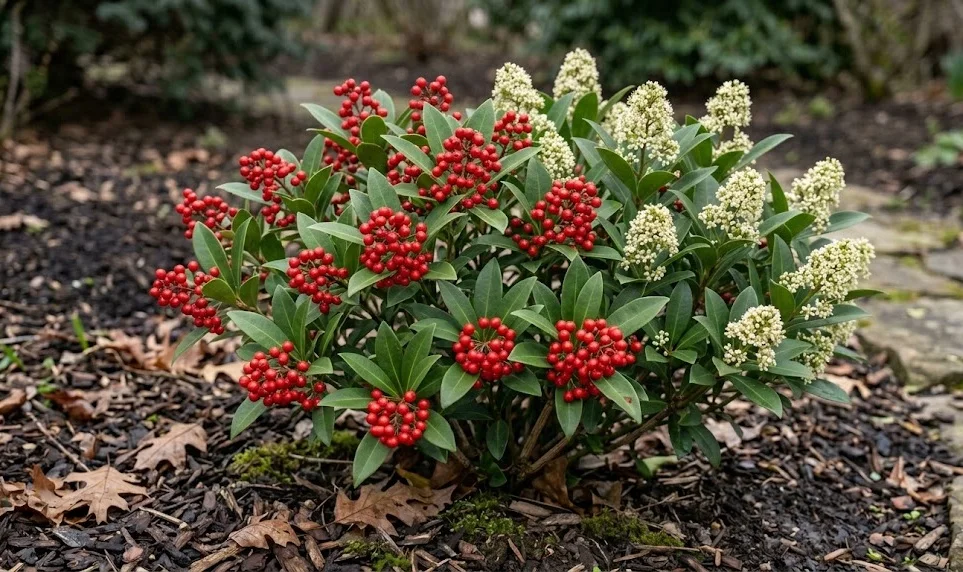
To maintain the characteristic rounded shape of the shrub, you should focus on shortening the longest branches that have strayed from the main canopy. You don’t need to cut every branch; just targeting the outliers will often be enough to restore the plant’s neat appearance. Look at the shrub from several different angles as you work to ensure you are maintaining a balanced and symmetrical form. It is always better to take off too little than too much, as you can always come back and trim more later.
Thinning out the center of a very dense shrub can also be beneficial for improving air circulation and light penetration. By removing a few of the older, internal branches, you allow more air to move through the heart of the plant, which reduces the risk of fungal diseases. This is especially important for older specimens that have become very thick over many years of growth. A more open structure also makes it easier to inspect the interior for hidden pests like scale insects.
If you are growing a female variety for its berries, be careful not to prune away the developing fruit during the summer. The berries take many months to mature and turn red, so any mid-season pruning will directly reduce your winter interest display. This is another reason why the post-flowering window in late spring is the only truly safe time for maintenance. By respecting the plant’s reproductive cycle, you can enjoy both a well-shaped shrub and a spectacular winter berry show.
Rejuvenation and long-term structural care
Over many years, an old Japanese skimmia may start to look “leggy” or thin at the base, which can detract from its ornamental value. In these cases, you can attempt a rejuvenation pruning by cutting some of the oldest stems back to within fifteen centimeters of the ground. This stimulates the dormant buds at the base of the plant to produce vigorous new shoots that will eventually fill in the gaps. It is best to only rejuvenate about one-third of the old stems each year to ensure the plant maintains enough foliage to support itself.
More articles on this topic
After any significant pruning session, it is a good professional practice to provide the plant with a little extra care to help it recover. Applying a fresh layer of organic mulch and a dose of ericaceous fertilizer will provide the necessary nutrients for the new growth to emerge strong. You should also ensure the plant stays well-hydrated, as the stress of pruning can make it more sensitive to dry soil. This holistic approach ensures that the plant doesn’t just survive the pruning but thrives because of it.
If you discover any “reversion” on variegated cultivars—where a branch starts producing solid green leaves—you should prune these out immediately. These all-green branches are often more vigorous than the variegated ones and can quickly take over the entire shrub if left alone. Cutting them back to their point of origin on the main stem preserves the ornamental characteristics of your chosen variety. This simple maintenance task keeps your specialty cultivars looking exactly as they were intended to.
In conclusion, pruning Japanese skimmia is an exercise in restraint and observation rather than a test of strength. By focusing on cleanliness, health, and subtle shaping, you enhance the natural beauty of the plant without disrupting its slow and steady growth. A well-pruned skimmia will remain a compact, glossy, and productive member of your garden for several decades. With these professional tips, you can confidently manage the structure and health of your evergreen collection through every season.