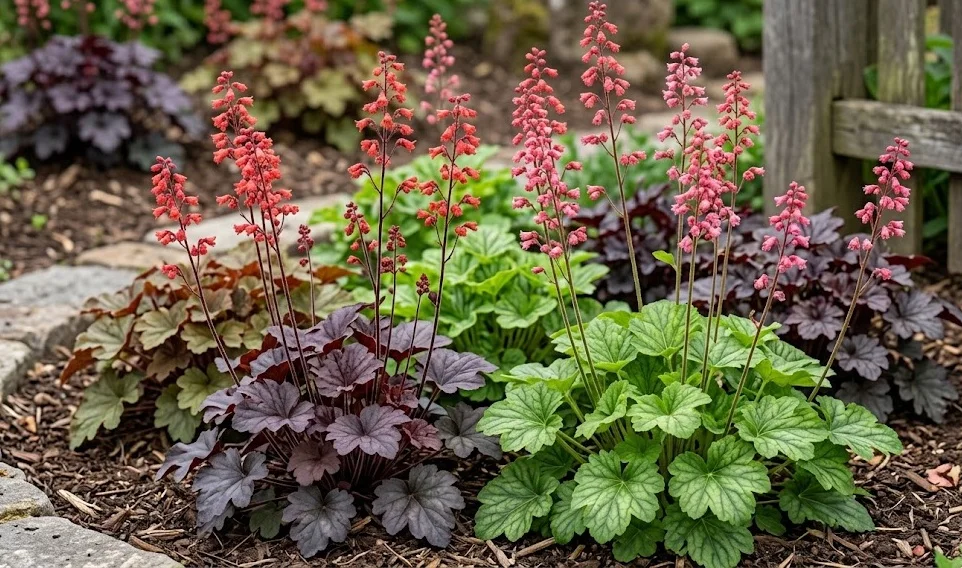

Pruning coral bells is mainly about keeping the crown healthy, the foliage attractive, and the plant productive through the seasons. These perennials do not need hard or complicated pruning, but they benefit from regular grooming. Removing tired leaves, spent flower stems, and damaged growth improves both appearance and plant health. The best results come from cutting at the right time and avoiding unnecessary stress.
Spring cleaning and renewal
Spring is the most important pruning season for coral bells. Winter often leaves older foliage flattened, browned, or torn by frost and wind. Once new growth begins, damaged leaves can be removed from the base. This allows fresh foliage to develop cleanly and improves air movement around the crown.
It is better to wait until severe frost has passed before cutting too heavily. Old foliage can provide slight protection to the crown during late cold spells. When the weather becomes more stable, the plant can be tidied more confidently. A careful spring cleanup quickly improves the plant’s appearance.
Cut each old leaf stem close to the base without injuring new shoots. Pulling leaves by hand can damage the crown, especially if stems are still firm. Sharp scissors or secateurs give cleaner results. Clean cuts reduce the chance of tearing and infection.
After pruning, remove all debris from around the plant. Decaying leaves can harbor pests, fungal spores, and excess moisture. A clean crown area is especially important for older plants. This simple habit supports healthier growth throughout the season.
More articles on this topic
Managing flowers and summer growth
Coral bells produce slender flower stems that rise above the foliage. These flowers are often delicate and attractive to pollinators. They can be left in place while they remain fresh and decorative. In naturalistic plantings, the airy stems add movement and lightness.
Once flowering finishes, spent stems may be cut back to the base. This keeps the plant tidy and prevents the border from looking neglected. Removing old stems also directs energy back into the foliage and crown. It is especially useful for varieties grown mainly for leaf effect.
During summer, remove scorched, broken, or diseased leaves as needed. This selective pruning is safer than cutting the whole plant back in hot weather. The remaining foliage shades the crown and helps the plant regulate moisture. Heavy pruning during heat can increase stress.
If a plant becomes untidy after a difficult summer, gradual renovation is best. Remove the worst leaves first and wait for signs of new growth. Water consistently and avoid strong feeding until recovery begins. The plant will usually improve as temperatures moderate.
More articles on this topic
Cutting back older or overgrown plants
Older coral bells may develop a raised, woody crown over time. Pruning alone cannot fully correct this problem, although it can improve appearance temporarily. If the plant lifts from the soil or becomes sparse in the center, division is usually the better solution. Cutting leaves cannot replace root and crown renewal.
A tired plant can be cut back moderately in spring before division. This makes handling easier and reduces water loss after replanting. Healthy outer sections with roots should be kept, while woody central parts are often discarded. Replanting divisions at the correct depth restores vigor.
Avoid cutting coral bells down to bare crowns in late autumn in cold climates. Exposed crowns are more vulnerable to frost, wetness, and drying winds. Removing only diseased or collapsed foliage is usually safer before winter. Major renewal should wait until spring.
Good pruning supports, but does not replace, good growing conditions. A coral bells plant repeatedly needing severe cutting may be in too much sun, too much wet soil, or poor air circulation. Correcting the site will reduce the need for drastic maintenance. The best-pruned plant is one that grows strongly enough to need only thoughtful grooming.