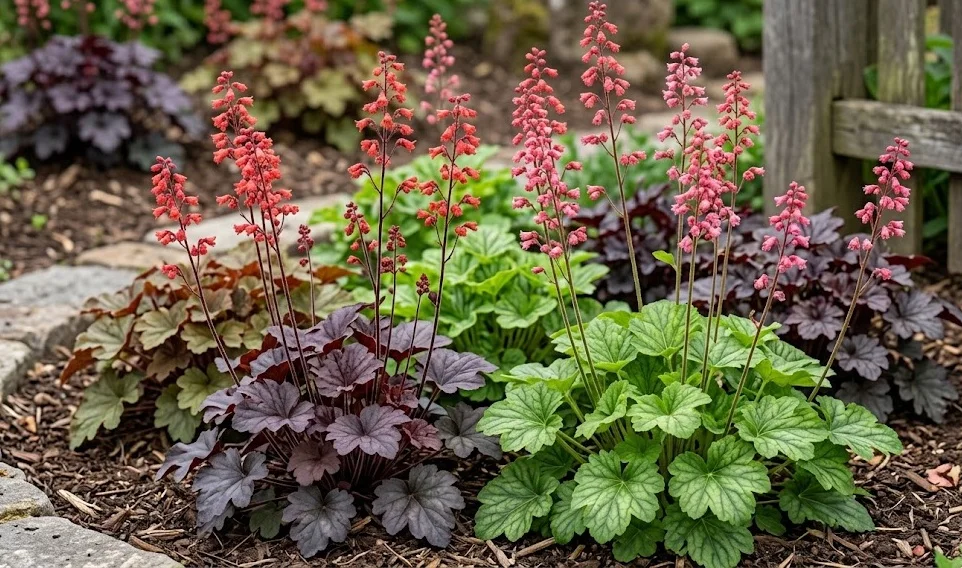

Watering and feeding coral bells correctly is a matter of balance rather than intensity. These perennials need enough moisture to support their shallow roots and colorful foliage, but they dislike standing water and heavy, airless soil. They also benefit from moderate nutrition, while excessive fertilizer can weaken the plant’s natural resilience. A thoughtful routine produces compact crowns, richly colored leaves, and a longer-lasting garden display.
Understanding moisture needs
Coral bells have shallow roots, which means they respond quickly to changes in surface moisture. When the upper soil dries for too long, leaves may wilt, curl, or develop dry edges. This is especially common in hot weather, windy positions, and container plantings. Regular observation is therefore more useful than relying only on a fixed watering schedule.
Moisture should be steady but not excessive. The soil should feel lightly damp below the surface, not soggy or sour. If water remains around the crown for long periods, root and crown problems can develop. Good drainage is just as important as adequate watering.
Newly planted coral bells require closer attention than established clumps. Their roots have not yet explored the surrounding soil, so they depend heavily on the original root ball. If that root ball dries out, the plant may suffer even when nearby soil appears moist. Deep watering after planting helps connect the roots with their new environment.
Established plants are more resilient but should not be neglected during drought. Repeated wilting weakens the plant and reduces leaf quality. It can also make coral bells more vulnerable to pests and winter damage. A stable watering pattern supports both immediate appearance and long-term health.
More articles on this topic
Practical watering methods
Watering should aim to moisten the root zone thoroughly. Light surface sprinkling is usually ineffective because it evaporates quickly and encourages shallow rooting. A slower, deeper watering allows moisture to move through the upper soil layer. This is particularly useful in borders with mulch or competing plants.
Water applied at the base is preferable to overhead watering. Wet foliage can remain damp in shaded areas and may encourage fungal spots. Directing water to the soil keeps leaves cleaner and reduces disease risk. A watering can with a rose removed, drip irrigation, or a soaker hose works well.
Morning is generally the best time to water coral bells. The plant begins the day hydrated, and any accidental moisture on the leaves can dry naturally. Watering in the heat of midday is less efficient because evaporation is high. Evening watering should be used carefully in humid weather.
In containers, watering must be more precise. A pot can appear moist on top while the lower root zone is dry, or the opposite can happen in dense potting mixes. Checking with a finger or moisture meter helps prevent mistakes. Excess water should always drain freely from the bottom of the container.
More articles on this topic
Feeding in garden beds
Coral bells growing in reasonably fertile garden soil need only modest feeding. A spring layer of mature compost is often sufficient for the entire season. Compost improves soil life, supports moisture retention, and releases nutrients slowly. This suits the natural growth pattern of the plant.
A balanced slow-release fertilizer may be used if soil is poor or growth is weak. It should be applied according to the product rate, preferably on the lighter side. Too much fertilizer can cause soft, stretched leaves that are less weather resistant. Strong growth is not always healthy growth.
Nitrogen-heavy feeding should be avoided, especially with ornamental foliage varieties. Excess nitrogen can reduce color intensity and make the plant look coarse. It may also increase susceptibility to aphids and other sap-feeding pests. Balanced nutrition produces firmer leaves and a denser habit.
Late-season feeding should be limited in climates with cold winters. New, soft growth produced too late may be damaged by frost. By late summer, the plant should gradually prepare for dormancy or slower growth. Good autumn care focuses more on moisture balance and cleanliness than feeding.
Feeding container-grown plants
Container-grown coral bells have less access to natural nutrients than plants in open soil. Watering gradually leaches minerals from the potting mix. For this reason, container plants often benefit from light but regular feeding during active growth. The feeding program should still remain moderate.
A slow-release fertilizer mixed into the potting medium can provide steady nutrition. Alternatively, a diluted liquid feed can be applied every few weeks in spring and early summer. The concentration should be gentle, especially for recently planted or divided specimens. Overfeeding in pots can quickly lead to salt buildup and root stress.
Flushing the pot occasionally with plain water helps remove excess salts. This is particularly useful if liquid fertilizer has been used repeatedly. White crusts on the soil surface or pot rim may indicate mineral accumulation. If this appears, reduce feeding and water thoroughly to rinse the medium.
Container plants should not be fertilized when severely dry. Dry roots can be damaged by fertilizer salts, even at normal rates. Water the plant first, let it recover, and feed later if growth is active. Healthy roots are the foundation of effective nutrient uptake.
Recognizing imbalance and correcting it
Water stress often appears first at the leaf margins. Brown edges, curling, and limp foliage can indicate dryness, especially during warm weather. However, similar symptoms may also appear when roots are damaged by waterlogging. The soil condition must be checked before deciding on treatment.
Overwatering may cause yellowing leaves, crown softness, or a general lack of vigor. The plant may look thirsty even though the soil is wet because damaged roots cannot function properly. In this case, adding more water worsens the problem. Improving drainage and allowing the soil to dry slightly is usually more helpful.
Nutrient deficiency is usually slower and less dramatic than watering stress. Pale growth, weak leaf production, and reduced flowering may suggest poor soil fertility. A light compost topdressing can correct mild deficiencies without shocking the plant. Persistent problems may indicate unsuitable soil structure rather than simple lack of fertilizer.
The best care routine is adjusted through observation. Coral bells growing in cool shade need less water and fertilizer than plants in bright, exposed beds. Varieties also differ in vigor, leaf thickness, and tolerance of heat. By responding to the plant rather than following a rigid formula, gardeners achieve healthier and more attractive results.