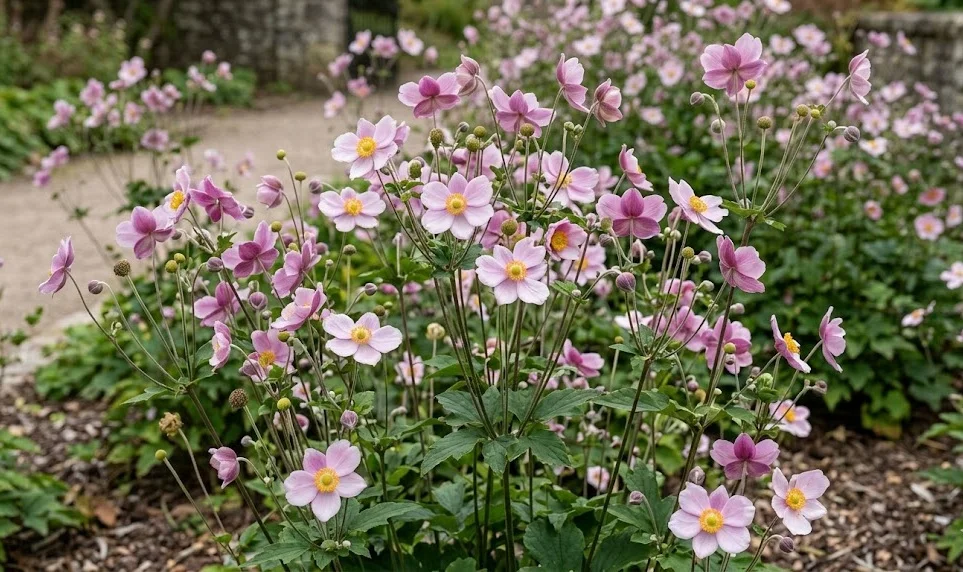

Successful planting of the Chinese anemone begins with selecting the right timing and preparing the site to meet its specific ecological requirements. These plants are best established during the milder months of spring or early autumn, allowing the root system to settle before extreme temperatures arrive. Because they are long-lived perennials that resent being moved, taking the time to properly enrich the soil and choose a permanent location is a vital investment. A well-planted anemone will quickly establish itself and become a cornerstone of your late-season garden display.
Planting procedures and site selection
When you are ready to plant your Chinese anemone, the first step is to dig a hole that is twice as wide as the current root ball but no deeper. This encourages the roots to spread out horizontally into the surrounding soil, which is essential for stability and nutrient uptake. If the plant is pot-bound, gently tease the outer roots to help them transition into the new environment more easily. Avoid burying the crown of the plant too deep, as this can lead to rot and poor growth in the future.
The soil you use to backfill the hole should be a mixture of the native garden soil and high-quality organic compost. This blend provides immediate nutrients while ensuring the plant can eventually adapt to the natural soil conditions of your garden. Firm the soil down gently with your hands to remove any large air pockets, but do not pack it so tightly that the roots cannot breathe. Water the plant thoroughly immediately after planting to help settle the soil and provide essential hydration to the disturbed roots.
Spacing is another critical factor, as these plants will eventually spread through their underground rhizomes to form large colonies. For a full, lush appearance without immediate overcrowding, space individual plants about eighteen to twenty-four inches apart. This gives each specimen enough room to develop its characteristic mounded foliage while still allowing the groups to grow together over time. If you are planting in drifts, staggering the plants in a zigzag pattern will create a more natural and professional-looking effect.
Immediately after planting and watering, apply a layer of organic mulch around the base of the plant, being careful not to touch the stems directly. This mulch will help maintain the consistent moisture levels that newly planted anemones need to thrive during their first few weeks in the ground. Keep a close eye on the plant for the first month, ensuring the soil does not dry out completely, especially if you are planting in the spring. A strong start is the best way to ensure your anemones reach their full potential.
More articles on this topic
Division for propagation
Dividing established clumps is one of the most effective and common ways to propagate the Chinese anemone while keeping the original plant healthy. This task is best performed in early spring just as the first signs of new growth appear, or in the late autumn after the flowering has finished. Division not only gives you new plants for other parts of the garden but also rejuvenates older clumps that may have become less productive. Use a sharp spade or a garden fork to carefully lift the entire root mass from the ground.
Once the clump is lifted, you can see the network of thick, fibrous roots and the growing points from which the new stems emerge. Gently pull the clump apart by hand or use a sharp knife to cut it into smaller sections, ensuring that each piece has at least two or three healthy buds and a good portion of roots. Discard the woody or exhausted center of the old clump and focus on the vigorous outer sections for replanting. This process ensures that the new plants have the best possible chance of thriving.
The newly divided sections should be replanted as soon as possible to prevent the delicate root hairs from drying out in the air. Treat these divisions just like new nursery plants, following the same planting and watering procedures mentioned previously. It is normal for divided plants to look a bit wilted for a few days as they recover from the stress of the move. With consistent moisture and a bit of shade, they will soon start to push out new leaves and establish their own territory.
Propagation through division is a sustainable way to grow your garden and share beautiful plants with your neighbors or friends. Because anemones can be somewhat slow to establish from seed, division provides a much faster route to a flowering-sized plant. Most gardeners find that dividing their anemones every three to four years keeps the plants looking their best and prevents them from becoming too aggressive in smaller garden spaces. It is a simple but essential skill for any serious horticulturist.
More articles on this topic
Root cuttings technique
Another professional method for propagating the Chinese anemone is through root cuttings, which is particularly useful if you want to produce a large number of plants. This process is best done during the dormant season, typically in late autumn or early winter, when the plant’s energy is concentrated in its roots. Start by carefully digging up a small portion of the root system or wait until you are already dividing a plant for another reason. Look for healthy, thick roots that are about the diameter of a pencil.
Once you have selected a few suitable roots, cut them into sections that are approximately two to three inches long. It is important to keep track of which end of the root was closest to the plant’s crown, as roots have a natural polarity and must be planted in the correct orientation. A common trick is to make a straight cut at the top (proximal) end and a slanted cut at the bottom (distal) end. This visual cue will help you remember which way is up when it comes time to plant them.
Prepare a tray or small pots filled with a well-draining seed-starting mix or a blend of peat and perlite. Insert the root cuttings vertically into the medium so that the top of the cutting is just below the surface of the soil. If the roots are very thin, you can also lay them horizontally on the surface and cover them with a thin layer of compost. Place the containers in a cool but frost-free environment, such as a cold frame or an unheated greenhouse, and keep the medium slightly moist.
By the following spring, you should see new green shoots emerging from the soil as the root cuttings begin to develop into independent plants. Once they have grown a few sets of leaves and have a sturdy root system of their own, they can be potted up into larger containers or moved to a nursery bed. This method is highly effective for many anemone species and allows you to preserve the exact characteristics of the parent plant. It requires a bit more patience than division but is very rewarding for the dedicated gardener.
Establishing from seed
While more challenging and time-consuming than vegetative methods, growing Chinese anemones from seed can be a fascinating project for those interested in plant breeding. The seeds of these plants are often covered in a cottony fluff, which helps them disperse in the wind in their native habitats. For the best results, you should collect the seeds as soon as they are ripe and sow them immediately, as they often lose viability if stored for too long. Fresh seed has the highest germination rate and is more likely to result in healthy seedlings.
The seeds usually require a period of cold stratification to break their dormancy, mimicking the natural winter cycle they would experience outdoors. You can achieve this by sowing the seeds in trays and leaving them in a protected outdoor spot over the winter or by placing them in a refrigerator for several weeks. Once the temperatures begin to rise in the spring, the seeds should start to germinate, although the process can be slow and uneven. Do not give up if you don’t see results right away, as some seeds may take several months to sprout.
Once the seedlings have emerged, they need to be handled with extreme care because their tiny roots are very fragile. Provide them with bright, indirect light and keep the soil consistently moist but not saturated to avoid damping-off diseases. When they have grown large enough to handle, you can prick them out and move them into individual small pots to continue their growth. It may take two or three years for a plant grown from seed to reach flowering size, so patience is definitely a requirement for this method.
One of the main reasons gardeners choose to grow from seed is the chance of discovering a unique variation in flower color or form. Because seeds involve genetic recombination, the offspring may not look exactly like the parent plant, leading to pleasant surprises in the garden. However, if you are looking to replicate a specific cultivar, vegetative propagation is a much more reliable choice. Growing from seed is a labor of love that deepens your connection to the life cycle of these elegant perennials.