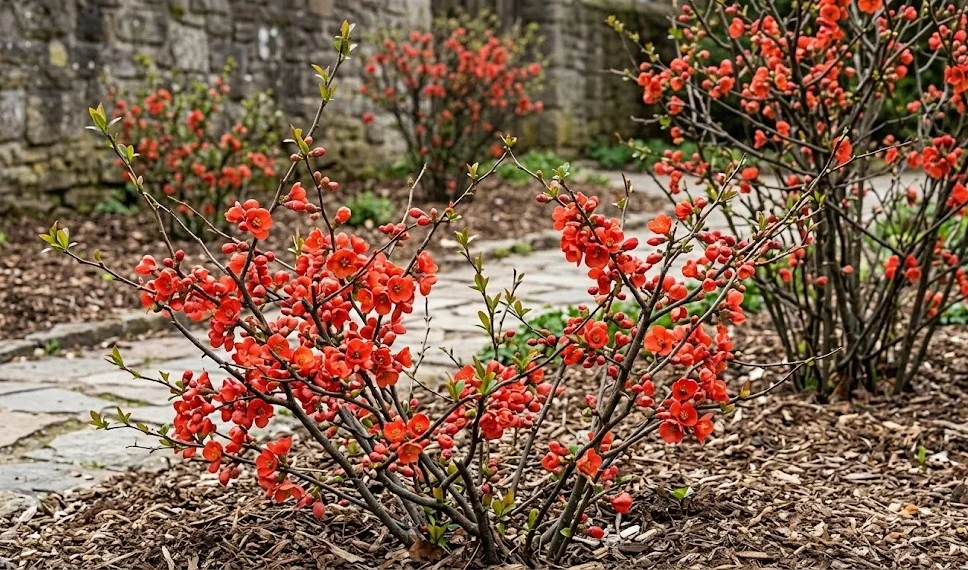

Choosing the right location is the first and most critical step in establishing a healthy Japanese quince in your garden landscape. This shrub is remarkably adaptable, but it performs best when given plenty of sunlight and well-drained, fertile soil. You should look for a spot that receives at least six hours of direct sun each day to ensure a profuse flowering display in the spring. While it can tolerate partial shade, the growth will be less dense and the flower production will significantly decrease in darker areas.
The soil quality at the planting site will determine how quickly the root system establishes itself after the initial move. Japanese quinces prefer a slightly acidic to neutral soil, as alkaline conditions can lead to nutrient deficiencies like iron chlorosis. If your soil is heavy clay, you must incorporate organic matter to improve drainage and prevent water from pooling around the roots. Conversely, very sandy soils benefit from the addition of compost to help hold moisture and provide essential nutrients for the young plant.
Consider the ultimate size of the shrub when deciding where to dig your hole, as some varieties can spread quite wide over time. You should allow enough space between the quince and other permanent structures or plants to ensure adequate air circulation. Good airflow is vital for preventing fungal leaf diseases that can mar the appearance of the foliage during humid summer months. Planning for the future size of the plant prevents the need for stressful transplanting or excessive pruning as the shrub reaches maturity.
Finally, think about the visual impact and the practical use of the shrub within your overall garden design. Because many varieties have sharp thorns, it is often best to plant them away from high-traffic paths or children’s play areas. They work excellently as a boundary hedge or as a focal point in a mixed shrub border where their early blooms can be appreciated. Evaluating the site from multiple angles ensures that the plant will not only grow well but also enhance the beauty of your home.
The planting process and initial care
Once you have selected the ideal site, the actual planting process should be done with care to minimize transplant shock. The best time to plant is during the dormant season, either in late autumn or early spring before the new growth begins. Dig a hole that is twice as wide as the root ball but no deeper than the container the plant came in. Loosening the soil on the sides of the hole allows the new roots to penetrate the surrounding ground more easily as they expand.
More articles on this topic
Before placing the shrub in the hole, gently tease out any roots that have started to circle the inside of the pot. Position the plant so that the top of the root ball is level with or slightly above the surrounding soil surface to prevent stem rot. Fill the hole back in with a mixture of the native soil and a small amount of high-quality compost or leaf mold. Firm the soil down gently with your hands or feet to remove large air pockets without compacting the ground too tightly.
Immediately after planting, you must water the shrub thoroughly to settle the soil and provide the roots with essential hydration. Applying a thick layer of organic mulch around the base of the plant helps to regulate soil temperature and conserve moisture during the first year. Be sure to keep the mulch a few inches away from the trunk to avoid creating a damp environment that could encourage fungal issues. This initial protection is crucial for the plant as it transitions from the nursery environment to your garden’s specific conditions.
During the first growing season, the young quince will require regular watering, especially during dry spells or extreme summer heat. You should check the soil moisture level a few inches below the surface to ensure the root zone remains consistently damp but not saturated. Avoid applying heavy fertilizers during the first few months, as you want the plant to focus on root development rather than excessive top growth. Patience during this establishment phase will lead to a much stronger and more resilient shrub in the years to come.
Propagation through hardwood cuttings
Propagating Japanese quince from hardwood cuttings is a reliable and cost-effective way to create new plants for your garden. This process is best performed in late autumn or early winter when the shrub is fully dormant and the wood has matured. Select healthy, straight stems from the current year’s growth that are roughly the thickness of a pencil for the best results. Using sharp, sterilized bypass pruners, take cuttings that are about six to eight inches long, making a clean cut just below a node.
More articles on this topic
To prepare the cuttings for planting, remove any remaining leaves or soft, unripened tips from the top of the stem. Dip the bottom end of each cutting into a rooting hormone powder or gel to stimulate the formation of new roots and protect against rot. You can then insert the cuttings into a pot filled with a well-draining mix of sand and peat moss or a dedicated cutting compost. Ensure that at least two or three nodes are buried below the surface, as this is where the new roots will emerge.
Place the pots in a sheltered location, such as a cold frame or an unheated greenhouse, where they are protected from the worst of the winter weather. The soil should be kept slightly moist but never soaking wet, as excessive moisture will cause the cuttings to decay before they can root. Over the winter, the base of the cutting will form a callus, and roots will begin to develop as the temperatures start to rise in the spring. This slow, natural process results in sturdy young plants that are already adapted to your local climate.
By the following autumn, the rooted cuttings should be strong enough to be moved into individual pots or a nursery bed for further growth. You will know they are ready when you see vigorous new foliage and can feel resistance when gently tugging on the stem. It usually takes another year of growth before these new plants are large enough to be moved to their final positions in the landscape. Propagation is a rewarding way to expand your collection and share these beautiful shrubs with friends and neighbors.
Alternative methods of propagation
While cuttings are popular, Japanese quince can also be successfully propagated through a process known as layering. This method involves bending a flexible, low-growing branch down to the ground and burying a portion of it in the soil while it is still attached to the parent plant. You can wound the underside of the buried section slightly and apply rooting hormone to speed up the process of root formation. Secure the branch in place with a landscape staple or a heavy stone to ensure it stays in contact with the moist earth.
Layering is often more successful for beginners because the developing plant continues to receive water and nutrients from the mother shrub during the rooting phase. It typically takes a full growing season for a sufficient root system to develop at the buried node. Once the new plant is well-established, you can simply sever the connection to the parent shrub and transplant the new individual to its new home. This technique is particularly useful for varieties that might be stubborn when grown from traditional cuttings.
Growing Japanese quince from seed is another option, though it requires more patience and the resulting plants may not be identical to the parent. The seeds must be extracted from ripe fruit in the autumn and then undergo a period of cold stratification to break their dormancy. You can achieve this by placing the seeds in a moist medium in the refrigerator for about three months before sowing them in the spring. This method is often used by plant breeders looking to discover interesting new variations in flower color or growth habit.
Finally, older and larger shrubs can sometimes be propagated by carefully dividing the root mass or removing rooted suckers from the base. This should be done in early spring just as the plant is waking up but before it has fully leafed out. Use a sharp spade to cut away a portion of the plant that already has its own established roots and stems. Immediately replant these divisions and treat them with the same care as a newly purchased shrub to ensure they survive the transition.