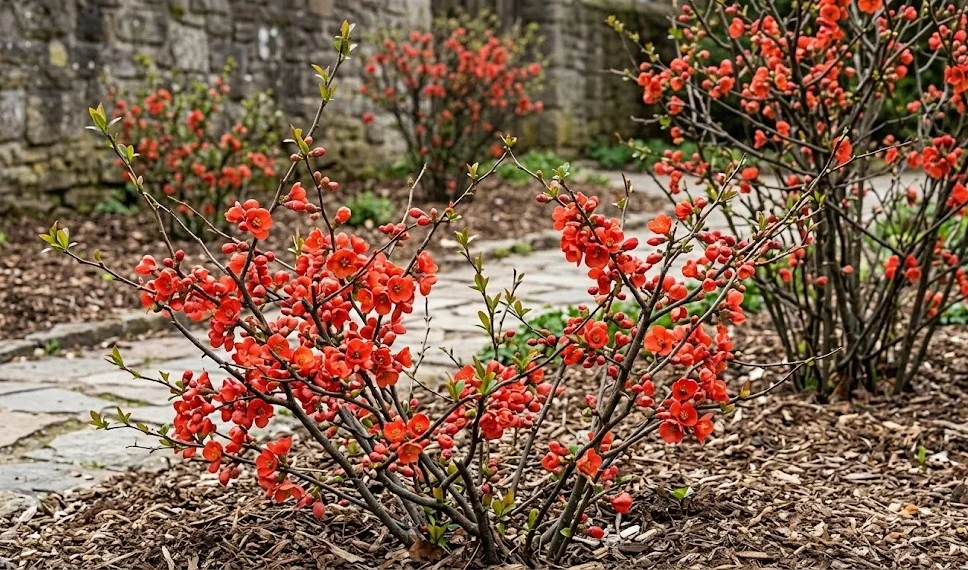

The Japanese quince is a sun-loving shrub that performs at its absolute best when it is positioned in a spot that receives full sunlight for most of the day. For a professional-level display of spring flowers, the plant generally needs at least six to eight hours of direct, unfiltered light. While it is a hardy and adaptable species that can survive in less-than-ideal conditions, its aesthetic quality is directly tied to the amount of solar energy it receives. Gardeners who prioritize a heavy bloom and healthy fruit set should always look for the brightest spot in their landscape.
When a quince receives adequate light, its growth habit remains compact and dense, which is the preferred form for most garden designs. The branches become sturdy and well-developed, providing a strong framework for the abundance of blossoms that appear in early spring. Direct sunlight also helps the wood to “ripen” during the summer, a process that is essential for the formation of flower buds for the following year. Without enough light, the plant’s internal chemical signals for flowering are weakened, leading to a much sparser and less impressive floral show.
The intensity of the light is just as important as the duration, particularly in northern climates where the sun may be lower in the sky for much of the year. Placing the shrub against a south-facing wall can provide extra light and warmth, which often results in earlier blooming compared to plants in more open areas. This reflected light can also help the fruit to ripen more thoroughly during the late summer and autumn months. Understanding these microclimates within your own garden allows you to place the plant where it can truly flourish.
In very hot southern regions, the midday sun can sometimes be intense enough to cause minor stress to the foliage, though the plant is generally resilient. In these specific cases, a location that offers full morning sun and a small amount of filtered light during the hottest part of the afternoon can be beneficial. However, you should always err on the side of more light rather than less, as the Japanese quince is rarely harmed by too much sun. Observant gardeners will notice that the most vibrant and productive specimens are almost always those in the most exposed positions.
The impact of shade on growth and health
While the Japanese quince is technically capable of growing in partial shade, there are several significant drawbacks to placing it in a darker area of the garden. The most immediate change you will notice is a dramatic reduction in the number of flowers produced each spring. Instead of the branches being smothered in vibrant blossoms, you may only see a few scattered flowers, primarily on the outermost parts of the shrub. This loss of ornamental value is the primary reason why professional landscapers avoid planting this species in deep shade.
More articles on this topic
In addition to poor flowering, a quince grown in low light will often develop a “leggy” or stretched growth habit as it tries to reach toward the sun. The stems become longer and thinner, and the space between the leaves increases, resulting in a much thinner and less attractive silhouette. This weakened structure is also more prone to damage from wind or heavy snow because the wood doesn’t harden off as effectively. A shaded shrub lacks the vigorous, dense appearance that makes the Japanese quince such an excellent choice for hedges or focal points.
Reduced light levels also create a microclimate that is much more favorable for the development of fungal diseases like leaf spot and powdery mildew. In the shade, morning dew and rainwater take much longer to evaporate from the surface of the leaves, giving fungal spores more time to germinate. Shaded plants often struggle with these health issues year after year, which further weakens their constitution and detracts from their overall beauty. Providing enough light is one of the simplest and most effective ways to maintain a healthy, disease-resistant shrub.
Furthermore, the fruit production of a Japanese quince is heavily dependent on the amount of light the plant receives throughout the growing season. In shady spots, the fruit may fail to develop at all, or if it does, it will remain small, green, and lacking the characteristic fragrance of a sun-ripened quince. If you are growing this shrub for its culinary uses, a sunny location is absolutely mandatory to ensure a high-quality harvest. Even for purely ornamental purposes, the lack of colorful autumn fruit is a significant loss to the plant’s year-round interest.
Site selection and landscape positioning
When planning where to plant your Japanese quince, you should carefully observe how the shadows move across your garden at different times of the day and throughout the seasons. A spot that seems sunny in the early spring when the trees are bare may become quite shaded once the surrounding deciduous canopy fills in with leaves. You must account for this seasonal change to ensure the shrub receives enough light during its critical summer growth period. Mapping out the light patterns in your yard is a fundamental step in professional landscape planning.
More articles on this topic
Consider the potential growth of nearby plants and trees, as a small sapling today could become a major source of shade for your quince in five or ten years. You should allow enough clearance to prevent the shrub from being “swallowed” by larger, more aggressive neighbors that might block its access to the sun. If you find that an established quince has become too shaded over time, you may need to prune back the surrounding vegetation to restore its light levels. Regular maintenance of the entire garden environment ensures that each plant continues to receive the resources it needs.
The architectural features of your home, such as fences, walls, and overhangs, also play a major role in determining the light availability for a planting site. Avoid placing the Japanese quince directly under deep eaves or on the north side of a tall building where it will spend most of its time in the shade. Instead, look for open areas or western and southern exposures that maximize the plant’s exposure to the sun’s rays. These bright positions not only support the plant’s health but also make the brilliant flower colors appear even more vivid to the observer.
For those with limited space or primarily shady gardens, some varieties of Japanese quince are slightly more shade-tolerant than others, though the general rules still apply. You might also consider growing the shrub in a large container that can be moved to the sunniest parts of the patio or deck as the seasons change. This flexibility allows you to enjoy the beauty of the plant even in a landscape that isn’t naturally perfect for its light requirements. Ultimately, success with this species comes down to respecting its biological need for light and placing it accordingly.