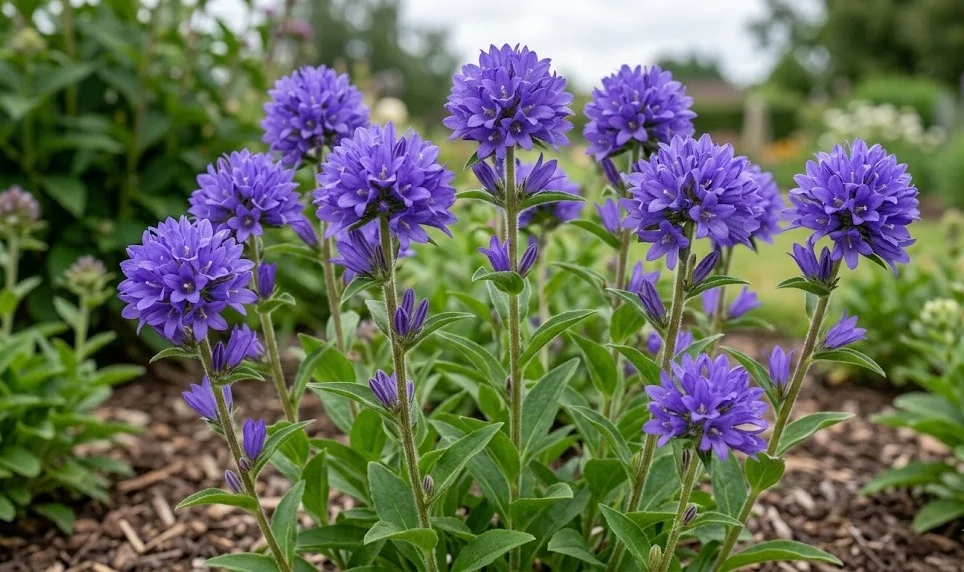

Clustered bellflower is naturally hardy in many temperate gardens, but overwintering success still depends on drainage, crown health, and autumn preparation. Cold alone is often less dangerous than wet soil around the crown. A well-established plant in suitable ground usually returns strongly in spring. Container plants and recently divided clumps need more careful winter management.
Preparing plants in autumn
Autumn care should begin after the main flowering and seed-setting period has finished. Stems can be left standing for a while if they remain healthy and attractive. They may also provide some shelter and wildlife value in naturalistic plantings. However, diseased or collapsed material should be removed promptly.
Cutting back should be done with attention to local conditions. In damp gardens, removing dead stems before winter can reduce disease pressure. In colder, drier gardens, leaving short stems may help mark the crown and trap a light protective layer of leaves. The best approach depends on drainage and winter humidity.
The crown should be inspected before hard winter weather arrives. Soft, blackened, or decaying tissue may indicate rot or poor drainage. Healthy crowns feel firm and sit securely in the soil. Early detection gives a chance to improve conditions before damage worsens.
Weeds should be cleared from around the plant in autumn. Winter weeds compete for moisture and can create damp air around the crown. They also shelter slugs that may damage new shoots in spring. A clean border supports healthier overwintering.
More articles on this topic
Managing winter moisture
Winter wetness is one of the main risks for clustered bellflower. Soil that stays saturated prevents roots from breathing and encourages rot. This is especially problematic in heavy clay or low-lying beds. Improving drainage before winter is more effective than trying to save a damaged plant later.
Mulch can be helpful, but it must be used carefully. A loose, thin mulch protects soil structure and reduces temperature swings. It should not be piled over the crown in wet climates. Thick wet mulch can cause more harm than frost.
Raised planting positions often improve winter survival. Even a slight elevation can move excess water away from the crown. Gardeners with heavy soil may benefit from adding grit and compost to the planting area. The goal is to keep the root zone cool and moist, not saturated.
Snow is not usually a problem when drainage is good. A snow layer can insulate the crown from severe temperature fluctuations. Trouble begins when melting snow sits in compacted soil. This is why soil structure matters throughout the year, not only during planting.
More articles on this topic
Protecting container plants
Container-grown clustered bellflower is more exposed to winter stress than plants in the ground. Roots in pots experience sharper temperature changes and can freeze more quickly. Pots can also become waterlogged during winter rain. Good container management is therefore essential.
The container should have open drainage holes and a free-draining growing mix. Raising the pot slightly on feet helps water escape. A sheltered position near a wall can reduce exposure to wind and excessive rain. The plant should still receive light and air rather than being sealed into a damp corner.
Watering during winter should be minimal but not completely ignored. The compost should not dry into dust, especially during mild dry spells. At the same time, the pot should never stand in water. Moist but aerated compost is the safest condition.
In very cold regions, the pot may need insulation. Wrapping the container, grouping pots together, or moving it into an unheated cold frame can protect the roots. Heated indoor rooms are not suitable because the plant needs winter dormancy. Cool protection is better than warmth.
Spring recovery after winter
Spring growth usually begins from the crown as temperatures rise. Old stems and remaining debris can be removed once new shoots are visible. This cleanup improves air circulation and allows light to reach the emerging growth. It also makes it easier to assess winter damage.
If sections of the clump have died, they should be trimmed away. Healthy shoots can often expand into the open space during the season. If the whole center has weakened, division may be useful. Replanting vigorous outer sections can renew the plant.
Spring is also the time to correct winter-related problems. If the soil remained too wet, drainage should be improved before the next cold season. If frost lifted the crown, soil can be gently firmed around the roots. Small corrections made early often prevent larger setbacks.
A light spring feeding supports recovery after dormancy. Compost or a modest balanced fertilizer can be applied as new growth develops. Heavy feeding is unnecessary and may weaken stem quality. A steady start encourages healthy flowering later in the season.