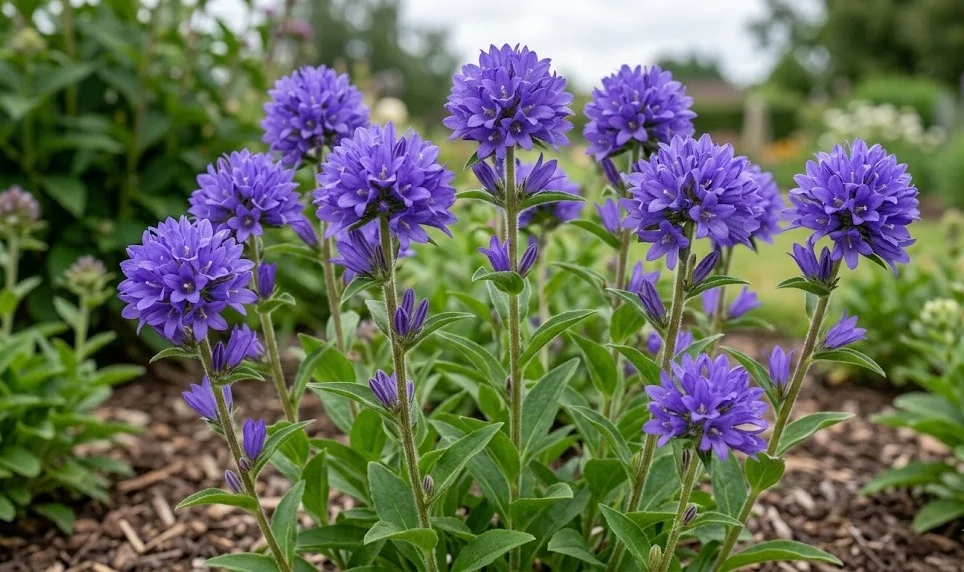

Clustered bellflower flowers most reliably when it receives enough light to build strong stems and dense flower clusters. It tolerates some shade, but excessive shade often reduces flowering and can make stems lean. The best exposure depends on climate, soil moisture, and the surrounding planting scheme. Matching light conditions to the plant’s needs is one of the simplest ways to improve performance.
Full sun and flowering quality
Full sun generally produces the strongest flowering in cool and temperate climates. Plants grown in open light usually develop sturdier stems and more compact flower clusters. The foliage also tends to remain denser and better balanced. This makes full sun a good choice for traditional perennial borders.
Sunlight drives the energy needed for bud formation. When the plant receives generous light in spring, it can produce stronger flowering stems. Poor light during this period may result in fewer buds and weaker growth. Early-season light is especially valuable before neighboring plants reach full size.
In very hot climates, full sun can become stressful if soil moisture is inconsistent. Leaves may wilt during the afternoon, and flowers may fade more quickly. This does not always mean the plant is unsuitable for sun, but it does mean moisture management becomes more important. Mulch and deep watering can help reduce heat stress.
Open sunny sites should still have decent soil. Dry, thin soil in full sun can push the plant into survival mode. Fertile, moisture-retentive, well-drained soil allows clustered bellflower to use sunlight productively. Light and soil quality should always be considered together.
More articles on this topic
Partial shade and heat protection
Light partial shade can be beneficial where summers are hot or dry. Afternoon shade protects flowers from intense heat and can extend their display. Morning sun with later shade is often an excellent compromise. This exposure gives the plant energy without excessive stress.
Partial shade should still be bright and open. Dense shade beneath shrubs or trees is usually unsuitable because it limits flowering and increases competition. Clustered bellflower needs enough direct or filtered light to maintain upright growth. Shade that is too deep leads to stretching and fewer blooms.
Air movement is important in shaded positions. Damp shade increases the risk of mildew, leaf spots, and slug damage. Plants in partial shade should be spaced generously and kept free of heavy debris. A bright, airy shade is very different from a dark, stagnant corner.
Companion plants can create useful seasonal shade. Tall perennials may protect clustered bellflower from harsh afternoon sun while still allowing spring light. This layered approach works well in naturalistic plantings. The key is to prevent companions from overwhelming the bellflower.
More articles on this topic
Reading plant signals and adjusting exposure
The plant itself often reveals whether the light level is suitable. Strong stems, rich foliage, and abundant flower clusters suggest a good exposure. Sparse flowering, leaning stems, and pale growth may indicate too much shade. Scorched leaves and rapid wilting may indicate excessive heat combined with dry soil.
If a plant is leaning toward the light, nearby competition should be examined. It may not need moving if surrounding plants can be thinned or cut back. Sometimes a small change in neighboring vegetation solves the problem. In other cases, transplanting to a brighter position is more effective.
Light conditions change as gardens mature. Young trees grow, shrubs expand, and perennial clumps become denser. A position that was suitable for clustered bellflower five years ago may become too shaded. Regular reassessment keeps the planting healthy.
Moving the plant is best done in spring or early autumn. The clump can be lifted, divided if needed, and replanted in a better exposure. Watering after transplanting helps it recover from root disturbance. With improved light, flowering often becomes noticeably stronger in the following season.