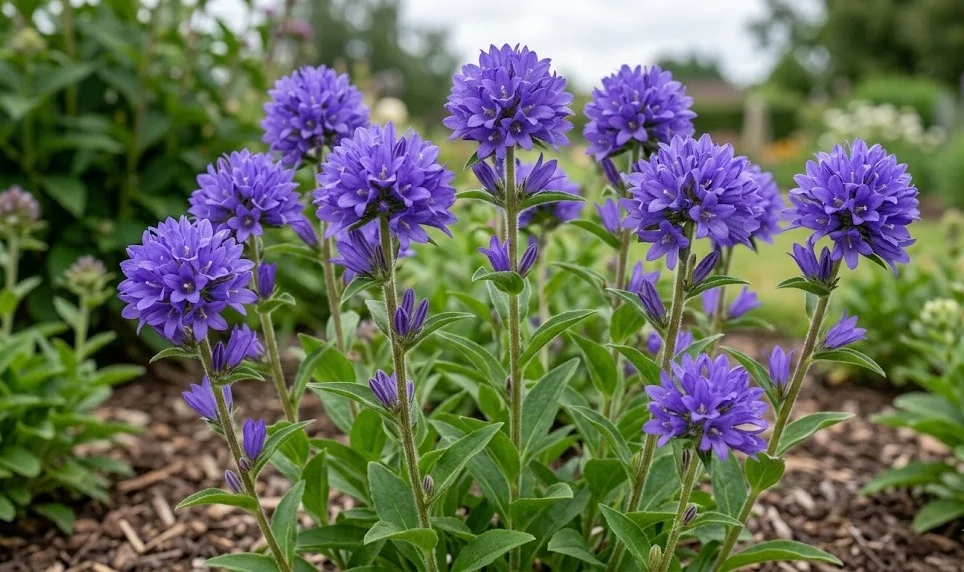

Clustered bellflower is generally a robust perennial, but it can suffer when grown in crowded, damp, or poorly drained conditions. Most disease and pest problems are easier to prevent than to cure once they become severe. Healthy soil, proper spacing, careful watering, and seasonal cleanup are the foundation of plant protection. When problems appear, accurate identification is essential before any treatment is chosen.
Common disease pressures
Powdery mildew can affect clustered bellflower, especially in dry soil combined with humid air and poor circulation. It appears as a pale, dusty coating on leaves and stems. Although it is often more cosmetic than fatal, heavy infection can weaken the plant. Better spacing and consistent soil moisture help reduce the risk.
Leaf spot diseases may appear as brown, gray, or dark lesions on the foliage. These spots often spread faster during wet weather or when leaves remain damp for long periods. Severely affected leaves can yellow and drop early. Removing infected foliage helps slow the spread.
Crown rot is one of the more serious problems because it affects the base of the plant. It is usually associated with poorly drained soil, excessive mulch, or winter wetness. The crown may become soft, dark, or foul-smelling. Prevention through drainage is far more reliable than treatment after damage occurs.
Rust can occasionally occur on bellflowers, forming orange or brownish pustules on leaf surfaces. Infections are usually encouraged by humid conditions and dense planting. Affected leaves should be removed and disposed of away from the compost if infection is heavy. Improving air movement is an important long-term measure.
More articles on this topic
Pest problems to watch for
Slugs and snails may damage young leaves and tender spring shoots. Their feeding creates irregular holes and ragged edges, especially near the lower parts of the plant. Damage is often worse in damp, shaded gardens with heavy mulch. Early control protects the plant before flowering stems develop.
Aphids can gather on soft shoot tips and flower buds. They suck sap and may cause distorted growth if colonies become large. Their sticky honeydew can also encourage sooty mold on nearby surfaces. Natural predators often control aphids, but strong infestations may need targeted action.
Spider mites may appear during hot, dry periods, particularly on stressed plants. They cause fine speckling, dull foliage, and sometimes delicate webbing. Dry, dusty conditions favor their spread. Improving moisture balance and washing foliage gently can help reduce populations.
Leaf miners are less common but can leave winding pale trails inside leaves. The damage is usually cosmetic unless infestations are extensive. Removing affected leaves is often enough in small plantings. Healthy plants usually continue growing despite minor miner damage.
More articles on this topic
Prevention through good cultivation
Good cultivation is the first and most effective defense against diseases and pests. Clustered bellflower should be planted where air can move freely around the stems. Dense, stagnant planting conditions make foliage stay damp longer after rain. This increases the likelihood of fungal issues.
Watering at soil level is another important preventive measure. Overhead watering wets leaves and can spread spores from infected plant tissue. Morning watering gives any accidental leaf moisture time to dry. The habit is simple but has a strong protective effect.
Soil improvement reduces stress and strengthens the plant’s natural resistance. Compost supports steady growth, while drainage prevents root and crown problems. Overfeeding should be avoided because lush growth attracts aphids and collapses more easily. Balanced plants are generally less vulnerable than forced plants.
Regular inspection helps catch problems before they spread. Lower leaves, crown areas, and new shoots should be checked during the growing season. Small pest colonies or isolated diseased leaves are easy to manage. Neglected problems often require more drastic intervention.
Managing infections responsibly
When disease appears, affected material should be removed promptly. Tools should be clean, especially when cutting infected stems or leaves. Removed material should not be left lying around the plant. Good hygiene reduces the amount of infectious material in the border.
Fungicides are rarely the first answer for clustered bellflower in home gardens. Cultural correction usually gives better long-term results. If a treatment is used, it should be chosen specifically for the identified disease and applied according to local regulations. Unnecessary spraying can disturb beneficial organisms and may not solve the underlying problem.
A heavily diseased clump may need renovation. Cutting back damaged growth can encourage cleaner new foliage if the crown remains healthy. If rot is present, the plant may need lifting and only sound sections should be replanted. Severely rotted material should be discarded.
Disease management should include reviewing the site. If the same problem returns every year, the cause is probably environmental. More space, better drainage, reduced overhead watering, or a sunnier position may be needed. A long-term solution comes from changing the conditions that allowed the disease to thrive.
Integrated pest management
Pest control should begin with identification and tolerance of minor damage. A few chewed leaves rarely justify aggressive action. Many beneficial insects, birds, frogs, and beetles help regulate pest populations naturally. Encouraging biodiversity creates a more stable garden system.
Slugs and snails can be managed by reducing hiding places near the crown. Boards, dense debris, and excessively thick mulch provide shelter. Hand-picking in the evening can be effective in small gardens. Barriers and wildlife-friendly traps may also reduce damage.
Aphids can often be dislodged with a firm spray of water. Ladybirds, hoverfly larvae, and lacewings are valuable natural enemies. Avoiding unnecessary insecticide protects these helpers. If treatment becomes necessary, it should be selective and applied only where pests are active.
Stressed plants attract more pests than vigorous ones. Proper watering, moderate feeding, and suitable light all reduce vulnerability. A plant growing in balance can usually tolerate some insect activity without serious decline. The best pest management therefore starts with good perennial care.