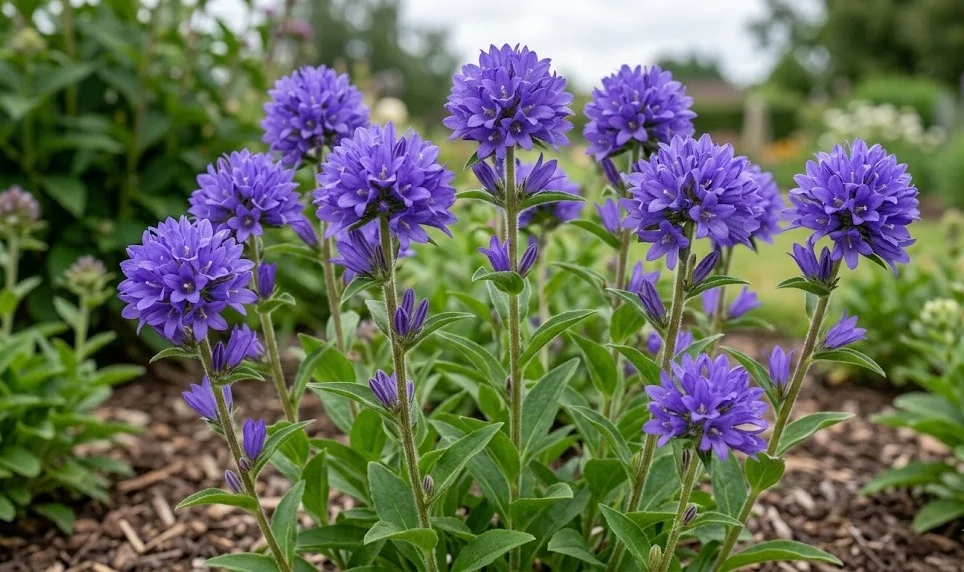

Pruning clustered bellflower is mainly about timing, cleanliness, and preserving the strength of the crown. The plant does not need complex shaping, but it benefits from deadheading, removal of tired stems, and seasonal cleanup. Correct cutting keeps the border tidy and can support fresh basal growth after flowering. Poor timing or overly severe cutting can reduce vigor, especially during drought or heat.
Deadheading during and after bloom
Deadheading begins when the first flower clusters start to fade. Removing spent blooms prevents the plant from putting too much energy into seed production. It also keeps the flowering stems neater in visible borders. This is especially useful where clustered bellflower is grown near paths or seating areas.
The cut should be made just above a healthy leaf joint or side shoot. This preserves enough foliage to continue feeding the plant. Cutting too low while the plant is still actively flowering can weaken its appearance. A precise cut gives better results than simply snapping off the flower head.
Deadheading may encourage smaller secondary blooms in favorable conditions. These later flowers are usually less dramatic than the main display, but they extend seasonal interest. Adequate moisture after the first flush improves the chance of repeat flowering. Dry, stressed plants respond less strongly.
Some flower heads can be left for seed if naturalizing is desired. This suits informal gardens where a few seedlings are welcome. In more controlled beds, seed heads should be removed before ripening. Managing seed production helps maintain the intended planting design.
More articles on this topic
Cutting back stems and foliage
After the main flowering period, stems may begin to look rough or untidy. If they are still green and healthy, they can remain for a while to support the crown. If they are brown, diseased, or collapsed, cutting them back improves the plant’s appearance. The timing should reflect both aesthetics and plant health.
Cutting back to basal foliage can refresh the clump after flowering. This is most successful when the plant has access to moisture and mild conditions. New leaves may emerge from the base, giving the plant a cleaner late-season look. In hot drought, severe cutting should be delayed or avoided.
Diseased stems should always be removed as soon as they are noticed. Leaving infected material in place can spread fungal spores to healthy leaves. Tools should be cleaned after working on diseased plants. Hygiene is a simple but important part of pruning.
Foliage should not be removed unnecessarily while it remains functional. Green leaves produce energy that strengthens the crown for the following year. Overzealous pruning can reduce this energy reserve. A balanced approach removes what is declining while keeping what is still useful.
More articles on this topic
Seasonal cleanup and renewal pruning
Autumn cleanup depends on climate and garden style. In damp regions, removing old stems before winter reduces disease pressure around the crown. In drier naturalistic gardens, some stems may be left temporarily for structure and habitat. Diseased material should never be left for winter interest.
Spring cleanup is often the final step before new growth accelerates. Old stems can be cut away once fresh shoots are visible. This prevents accidental damage to emerging growth and keeps the crown clear. It also allows better inspection of winter survival.
Pruning can be combined with division when clumps become congested. Cutting back top growth makes lifting and handling easier. Older central material can be removed, and vigorous outer sections can be replanted. This renewal process restores both shape and flowering capacity.
The best pruning routine is steady rather than drastic. Clustered bellflower responds well to regular deadheading, timely removal of tired stems, and clean seasonal maintenance. It does not need hard shaping to remain attractive. Careful cutting simply supports the plant’s natural strength and flowering rhythm.