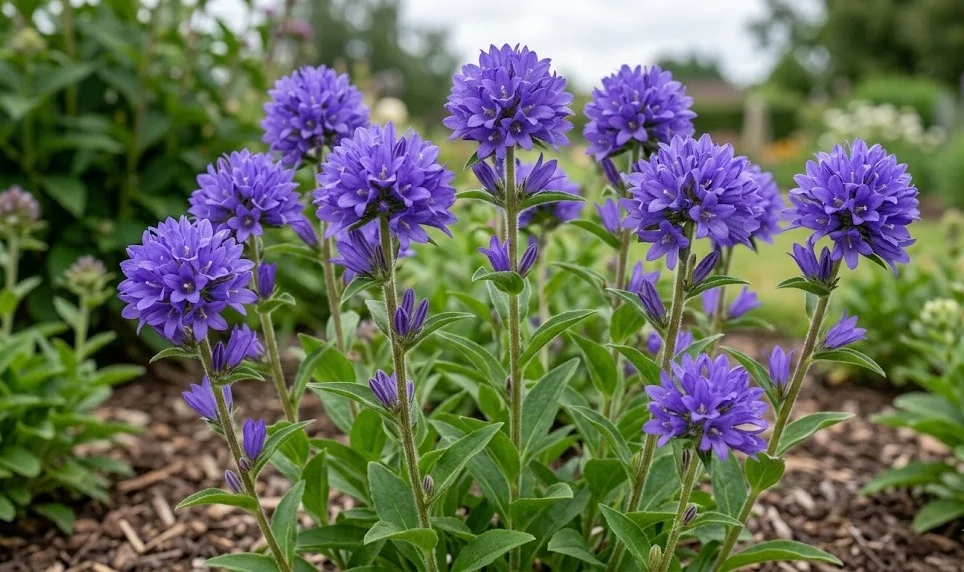

Clustered bellflower performs best when water and nutrients are supplied evenly rather than generously. It is not a plant that appreciates extremes, because drought can shorten flowering while waterlogged soil can weaken the crown. Fertilizing should support firm stems and dense flower clusters without forcing lush, unstable growth. A measured approach produces plants that are both attractive and resilient.
Understanding moisture needs
Clustered bellflower needs the most consistent moisture during active spring growth. This is when the plant produces fresh leaves, extends stems, and forms flower buds. If the soil dries too deeply at this stage, flowering can become shorter and less impressive. Even moisture helps the plant maintain strong, upright growth.
The plant does not require constantly wet soil. Roots need oxygen as much as they need water, and saturated ground can quickly become harmful. A healthy soil should feel slightly moist below the surface but not sticky or sour-smelling. This balance is especially important in heavier soils.
Established plants cope better with short dry periods than newly planted specimens. Their deeper and wider root systems allow them to draw moisture from a larger soil volume. However, prolonged drought can still reduce flower quality and cause lower leaves to yellow. Supplemental watering may be needed during extended dry spells.
Local climate should guide watering frequency. In cool, cloudy weather, watering needs may be modest. In hot, windy weather, moisture loss increases rapidly. Checking the soil by touch is more accurate than following a fixed calendar.
More articles on this topic
Practical watering methods
Deep watering is preferable to light surface sprinkling. Water should reach the root zone rather than only wetting the top layer of soil. Shallow watering encourages roots to remain near the surface, where they are more vulnerable to heat and dryness. A thorough soak followed by a drying interval supports stronger roots.
Morning watering is usually the best practice. Leaves dry more quickly during the day, reducing the risk of fungal problems. Evening watering can be acceptable in dry climates, but wet foliage overnight may encourage disease in humid regions. Water directed at the soil is safer than overhead spraying.
Mulching can make watering more efficient. A thin organic mulch reduces evaporation and keeps soil temperature more stable. It also limits weed competition, which can otherwise steal moisture from the plant. Mulch should not be packed against the crown because trapped moisture can lead to rot.
Container-grown clustered bellflower needs a more controlled routine. Pots heat up faster and dry out more quickly than garden soil. At the same time, saucers filled with standing water can damage roots. A container should be watered thoroughly, then allowed to drain freely.
More articles on this topic
Recognizing water stress
Drought stress often appears first as wilting, dull foliage, or premature browning of lower leaves. Flower buds may remain smaller, and open blooms may fade faster than usual. Stems can become shorter when dry conditions occur early in the season. These signs indicate that the root zone is not supplying enough moisture for active growth.
Overwatering produces different symptoms, though they can sometimes look similar. Leaves may yellow even when the soil is wet, and stems may soften near the base. The plant may appear weak because damaged roots cannot absorb nutrients properly. A sour smell or slimy crown tissue is a warning sign of serious waterlogging.
The best response depends on the cause. Dry plants need slow, deep watering and possibly mulch to reduce evaporation. Waterlogged plants need improved drainage, reduced irrigation, and sometimes lifting or replanting in better soil. Treating both problems the same way often makes conditions worse.
Regular observation prevents stress from becoming severe. Looking at the plant once a week during active growth is usually enough in stable weather. During heat waves or heavy rain, closer attention is worthwhile. Early correction is easier than rescuing a badly weakened perennial.
Fertilizing for flowers and stem strength
Clustered bellflower benefits from moderate fertility, especially in spring. A light application of compost around the root zone can supply nutrients gradually. This method also improves soil structure and biological activity. It is a gentle way to support flowering without overfeeding.
A balanced slow-release fertilizer can be used when soil is poor or when plants show weak growth. The fertilizer should not be dominated by nitrogen. Excess nitrogen encourages leafy growth that may flop and flower poorly. Balanced nutrition supports both foliage and flower formation.
Liquid feeding is usually unnecessary for established garden plants. It can be useful for young container plants or newly propagated specimens, but it should be diluted and applied cautiously. Repeated strong liquid feeds may push growth too quickly. Slow, steady development produces better garden performance.
Fertilizer should be applied to moist soil, not dry soil. Feeding dry roots can cause stress and uneven nutrient uptake. After applying granular fertilizer, watering helps move nutrients into the root zone. This simple step makes feeding safer and more effective.
Seasonal feeding strategy
In early spring, the plant begins drawing on stored energy from the crown. A modest top-dressing of compost helps replenish nutrients as new shoots develop. This is also a good time to remove old debris and check crown health. Feeding and cleaning together prepare the plant for the growing season.
Before flowering, the plant needs enough nutrition to support bud formation. If the soil is naturally fertile, additional feeding may not be required. If growth looks pale or weak, a small dose of balanced fertilizer can help. The goal is to correct deficiency, not to force excessive height.
After flowering, the plant shifts energy back into the crown and roots. Light feeding with compost may be useful if the plant has produced a heavy display. Strong fertilizer late in the season should be avoided because it can encourage tender growth. Mature, well-ripened growth is more winter resilient.
In autumn, nutrient management should be conservative. Mulch or compost can be applied lightly as part of soil improvement, but heavy fertilization is not appropriate. The plant should be allowed to slow down naturally. A calm seasonal rhythm supports long-term health and dependable flowering.