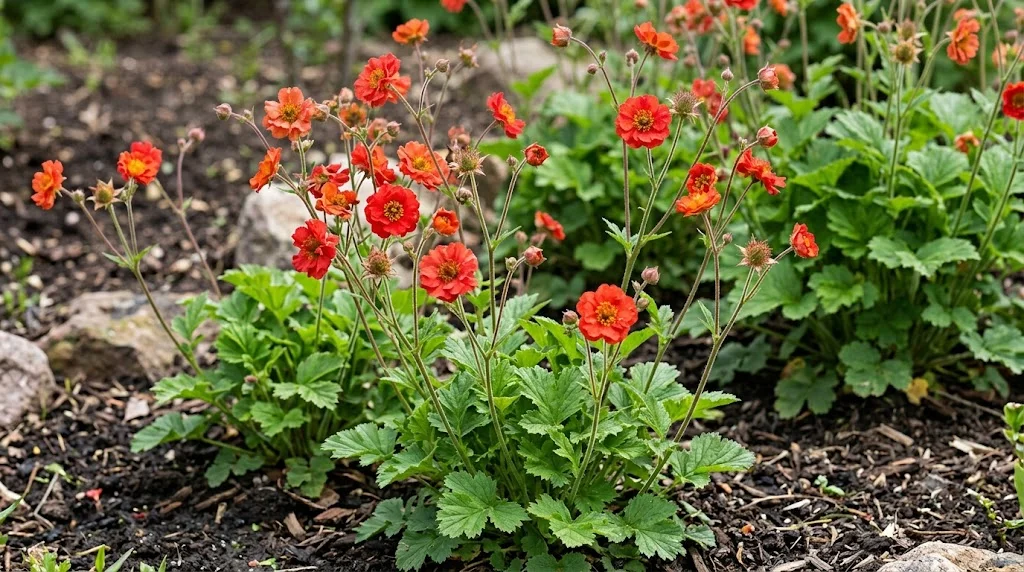

Chilean avens is a cold-hardy perennial in many temperate regions, and established plants usually survive winter without elaborate protection. Its greatest seasonal threat is often persistent wetness around the crown rather than low temperature alone. Winter preparation should therefore focus on drainage, crown health, and protection from repeated freeze-thaw movement. The amount of care required depends on local climate, soil type, plant age, and whether the plant grows in a container.
Preparing garden plants for dormancy
Allow healthy foliage to remain until it begins to collapse naturally. The leaves continue producing energy while they remain green, helping the roots store reserves for spring. Remove blackened, diseased, or decaying material before it accumulates around the crown. Clean plants are less likely to shelter pests or retain excessive moisture.
Cut spent flower stems near their base after flowering has ended. Leaving a few sound seed heads is acceptable when they add winter interest or provide food for wildlife. Remove them if they lean onto the crown and trap damp debris. Avoid cutting into the central growing points while tidying the plant.
Check the soil surface before prolonged winter rain begins. Loosen compacted crusts around the plant without disturbing the crown or major roots. Redirect runoff that collects in the bed, and clear blocked channels along raised borders. A well-drained root zone is more valuable than a thick protective covering.
Do not apply nitrogen-rich fertilizer late in the season. Tender growth stimulated in autumn is more vulnerable to frost and can weaken the plant’s natural transition into dormancy. A light layer of mature compost may be used as a soil conditioner. Keep it away from direct contact with the crown.
More articles on this topic
Protecting crowns in cold climates
Established Chilean avens usually tolerates frost when planted in suitable soil. In very cold or exposed gardens, a light winter mulch can moderate rapid temperature changes. Apply loose material such as dry leaves, straw, or fine bark after the ground has cooled. The purpose is to stabilize conditions, not to keep the soil warm enough for continued growth.
Leave the crown sufficiently open to prevent condensation and decay. Dense, wet mulch can be more harmful than cold air because it restricts oxygen and holds moisture against living tissue. Remove or thin the covering during unusually mild, wet periods if necessary. Ventilation is especially important in regions with frequent winter rain.
Newly planted autumn divisions deserve more protection than mature clumps. Their roots may not yet anchor the plant firmly, making them vulnerable to frost heaving. Check them after freeze-thaw cycles and gently firm exposed roots back into the soil. Do not press heavily on frozen or waterlogged ground.
Snow generally provides useful insulation and should not be removed unless its weight has flattened nearby structures onto the plant. Ice encasement is more concerning when it persists and prevents gas exchange. Avoid walking over frozen crowns beneath snow. Compacted snow and soil can damage dormant tissue even when no injury is immediately visible.
More articles on this topic
Overwintering container-grown plants
Roots in containers experience colder temperatures than roots protected by the surrounding ground. Move pots to a sheltered position beside a wall, inside an unheated greenhouse, or within a cold frame. The location should remain cool enough for dormancy but protected from severe wind and repeated saturation. Heated indoor rooms are generally unsuitable.
Raise the container on pot feet or bricks so drainage holes remain open. Remove saucers that could hold rainwater beneath the pot. Wrap the outside of the container with insulating material in very cold climates. Protect the pot rather than packing thick mulch over the crown.
Check the compost occasionally throughout winter. It should not remain soaked, but it should also not become completely dry for many weeks. Water sparingly during mild, frost-free periods when the upper compost has dried noticeably. Never apply water when the root ball is frozen solid.
Small containers are more vulnerable because their limited soil volume changes temperature rapidly. Grouping pots together can provide some protection, especially when the outer containers are insulated. Very small plants may be temporarily plunged into an empty bed or placed in a larger box filled with dry insulating material. Ensure that moisture can still drain freely.
Restoring growth in spring
Remove heavy winter protection gradually as severe frost becomes less likely. Leaving thick coverings in place during warm spring weather can cause pale, weak shoots and encourage rot. Keep lightweight material available if a late freeze is forecast. Newly emerging leaves are more sensitive than the dormant crown.
Inspect the plant for loose roots, dead tissue, and signs of crown damage. Firm soil gently around any exposed root sections. Cut away soft or blackened material with a clean tool. Healthy crown tissue should feel firm and show fresh buds or leaves.
Begin watering only as growth and evaporation increase. Spring soil can remain wet below the surface even when the top appears dry. Check the root zone before adding water. Container plants often need irrigation earlier than plants in open ground because pots warm and dry more quickly.
Apply compost or a modest balanced fertilizer after active growth is clearly underway. Feeding a dormant or damaged plant does not accelerate recovery and may increase stress. Monitor new shoots for slugs and aphids, which often target tender spring growth. With appropriate winter preparation, most healthy plants resume development quickly as temperatures rise.