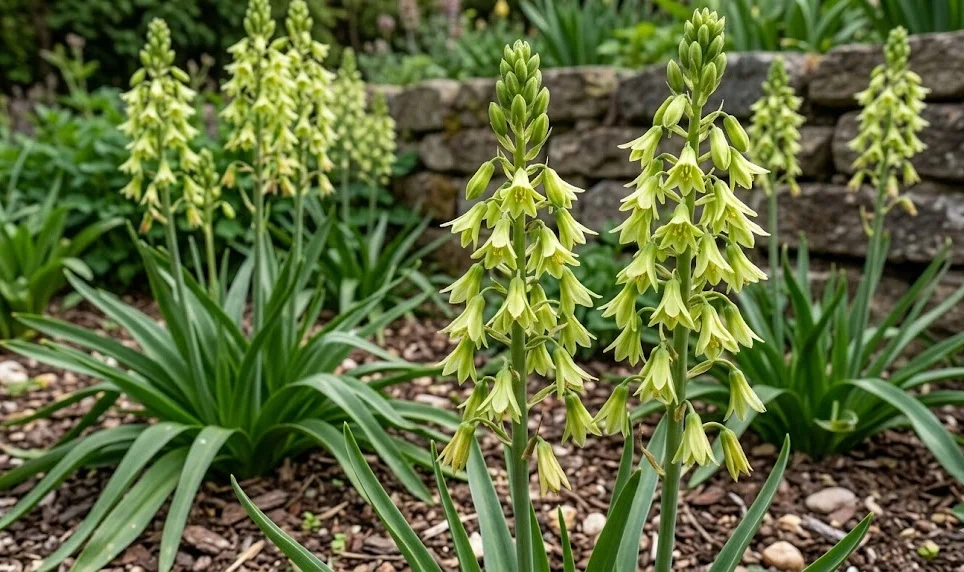

The green-flowered giant chincherinchee is an unusual bulbous plant valued for its tall flower spikes, elegant structure, and distinctive green blossoms. It performs best when its seasonal rhythm is respected, because active growth, flowering, and dormancy each require different care. Although the plant is not especially demanding, poor drainage and excessive summer moisture can quickly weaken the bulbs. With the right balance of light, water, warmth, and rest, it can become a long-lived highlight in a container collection or sheltered garden.
The plant develops from a substantial underground bulb that stores moisture and nutrients between growing seasons. Its upright leaves usually emerge before the flower stalk begins to lengthen, creating a strong architectural effect. Mature plants may produce impressive stems carrying numerous bell-shaped or star-like green flowers. The subdued flower colour works especially well among silver foliage, ornamental grasses, and darker-leaved companion plants.
Its natural growth cycle differs from that of many familiar spring-flowering bulbs. Growth commonly begins during the cooler part of the year, while dormancy follows after flowering and leaf decline. This pattern means that constant year-round watering is unsuitable. Successful cultivation depends on observing the foliage and adjusting care to the plant’s current stage.
Gardeners in colder regions usually achieve the most dependable results by growing it in pots. Containers make it easier to control drainage, protect the bulbs from frost, and manage summer dryness. In very mild climates, the plant may be grown outdoors in a warm, sheltered bed. Even there, the soil must remain porous and should never become waterlogged after heavy rainfall.
Understanding the seasonal growth cycle
The first signs of renewed activity are usually fresh leaves emerging from the top of the bulb. At this stage, watering should resume gradually rather than suddenly saturating the compost. The roots need access to moisture, but they also require air around them. A cautious start reduces the risk of basal rot before the root system becomes fully active.
More articles on this topic
As leaf growth strengthens, the plant can use more regular moisture and a modest supply of nutrients. The foliage should remain upright, firm, and evenly coloured. Pale or weak leaves may indicate insufficient light, depleted compost, or damaged roots. Soft growth often develops when the plant is kept too warm and shaded.
The flowering stage demands stable conditions because abrupt changes can interrupt bud development. Allow the plant to receive abundant light and avoid moving it repeatedly between warm and cool locations. Keep the compost lightly moist, but never leave the pot standing in water. The tall flower stem may require discreet support if it begins leaning toward the light.
After flowering, the leaves should remain in place until they yellow naturally. During this period, they continue feeding the bulb and preparing it for the next cycle. Watering should be reduced gradually as the foliage declines. Once the leaves have dried completely, the bulb should enter a comparatively dry resting phase.
Choosing the right soil and container
A fast-draining growing medium is essential for maintaining healthy bulbs. A suitable mixture can be made from quality potting compost combined with coarse mineral material such as grit, pumice, or perlite. The organic portion retains enough moisture for growth, while the mineral component prevents compaction. Dense garden soil or moisture-retentive peat used alone is likely to remain wet for too long.
More articles on this topic
The container must have generous drainage holes that remain unobstructed. A layer of broken pottery is unnecessary if the potting mix itself drains correctly, although mesh can prevent compost from escaping. Terracotta pots are useful in humid conditions because their porous walls allow faster drying. Plastic containers may be preferable in hot, dry climates where moisture disappears rapidly.
Pot size should be proportionate to the bulb and its developing root system. An excessively large pot contains a greater volume of wet compost, which increases the chance of rot. A cramped container, however, can restrict root development and become unstable when the tall flower stem appears. Select a pot that leaves a moderate space around the bulb without surrounding it with unnecessary compost.
The bulb should not be buried excessively deeply in a container. Keeping the neck or upper portion close to the surface improves ventilation and makes it easier to detect developing problems. The exact depth can be adjusted according to bulb size and local conditions. In consistently damp climates, slightly shallower planting is generally safer than deep planting.
Maintaining suitable temperature and air movement
Cool to moderately warm conditions support sturdy growth. Excessive indoor heat, especially when combined with weak winter light, can produce elongated leaves and unstable stems. A bright conservatory, frost-free greenhouse, or cool room is often more suitable than a heated living area. Temperatures should remain above damaging frost levels throughout active growth.
Good air movement helps moisture evaporate from the foliage and compost surface. This reduces the likelihood of fungal spotting, grey mould, and soft tissue around the bulb neck. Ventilation should be gentle rather than harsh, because cold draughts can stress actively growing plants. Crowded shelves should be avoided, especially where leaves from neighbouring pots overlap.
The plant can tolerate warmer conditions when light levels are strong and the roots remain healthy. However, sudden exposure to intense heat may shorten the flowering period. During warm spells, move container-grown plants away from heat-reflecting walls or sealed glass. Stable temperatures usually produce better flowers than dramatic fluctuations.
During dormancy, the dry bulb generally tolerates warmer conditions more readily than an actively growing plant. A dry, airy location is preferable to a humid storage area. The dormant container should not be placed where summer rain can repeatedly soak the compost. Warmth is rarely a problem when the bulb remains dry and well ventilated.
Supporting flower development
Flowering depends heavily on the condition and maturity of the bulb. A young or recently divided offset may need several seasons before it reaches flowering size. Strong foliage during the active period is essential because it replenishes stored energy. Cutting leaves prematurely can delay or prevent the next flowering cycle.
Adequate light encourages compact leaves and well-formed flower spikes. Plants grown in deep shade may remain alive but often flower poorly. If the plant is cultivated indoors, place it near the brightest suitable window and rotate the pot occasionally. Rotation should stop once the flowering stem has developed significantly, as repeated repositioning can distort its growth.
Nutrient supply should be measured rather than excessive. A balanced or slightly potassium-rich fertiliser can support flower formation when applied at low concentration during active growth. Too much nitrogen encourages lush leaves at the expense of strong flowering. Fertilising a dormant or rootless bulb provides no benefit and may damage emerging roots.
The developing flower stem should be monitored for leaning or bending. A thin support cane can be inserted near the edge of the pot to avoid injuring the bulb. Use soft ties that do not constrict the expanding stem. Supporting the stalk early is easier and safer than attempting to straighten it after it has become heavy.
Managing dormancy correctly
Dormancy is a normal physiological stage rather than a sign that the plant has died. The foliage gradually yellows as nutrients are withdrawn into the bulb. This process should be allowed to finish naturally without forcing the plant to remain green. Continued heavy watering at this stage interferes with drying and increases the risk of decay.
Once the leaves are fully dry, remove them gently without tearing living tissue from the bulb neck. The pot can then be moved to a sheltered place protected from rainfall. The compost should remain mostly dry throughout the rest period. Occasional inspection is still necessary to check for softening, pests, or excessive shrivelling.
A dormant bulb should feel firm and substantial when lightly examined. Minor surface wrinkling is not always serious, especially after a long dry period. Soft areas, unpleasant odour, or collapsing tissue indicate rot and require immediate attention. Affected material should be removed with a clean blade, and the wound should be allowed to dry.
Dormancy may vary in length depending on temperature, light, and the plant’s individual rhythm. It is better to follow visible signs of growth than to water according to a rigid calendar. When fresh shoots appear, introduce moisture gradually. This approach respects the bulb’s natural cycle and reduces unnecessary losses.
Growing outdoors and in containers
Outdoor cultivation is most successful in regions with mild winters and dry or controllable summers. Choose a raised bed, rock-garden pocket, or sloping site where water drains immediately. A south-facing wall can provide extra warmth and protection from cold wind. Winter wetness is often more dangerous than short periods of cool weather.
Container cultivation offers far greater control in climates with frost or prolonged rainfall. Pots can be displayed outdoors during suitable weather and moved under cover before temperatures fall. This method also makes it easier to provide a completely dry dormancy. The main disadvantage is that containers dry more quickly and require closer observation.
When moving plants outdoors, acclimatise them gradually to direct sunlight. Foliage grown behind glass can scorch when exposed abruptly to intense ultraviolet light. Begin with bright shade and extend the period of morning sun over several days. This gradual transition preserves healthy leaves and prevents sudden stress.
Before bringing plants indoors, inspect the foliage and compost for insects. Snails, slugs, aphids, and small soil pests can be carried into protected growing areas. Remove debris from the pot surface and clean the exterior of the container. Isolating the plant briefly from established collections is a sensible preventive measure.
Long-term maintenance and observation
Regular observation is more valuable than following a fixed care routine without adjustment. Check leaf colour, firmness, growth direction, and the rate at which the compost dries. These signs reveal whether the plant is receiving suitable light and moisture. Early intervention is much easier than treating advanced bulb damage.
Repotting is usually needed only when the compost has broken down, drainage has deteriorated, or offsets have filled the container. Frequent disturbance can damage active roots and delay flowering. The best time is generally near the end of dormancy, before strong new growth begins. Handle the bulb carefully and preserve healthy roots whenever possible.
Old compost should be examined for signs of rot, pests, or compacted material. Remove dead roots, but avoid cutting firm, living roots unnecessarily. Replant the bulb in fresh, dry or barely moist medium according to its stage of growth. Delay heavy watering until active root growth is evident.
A well-grown specimen becomes more impressive as the bulb increases in size. Patience is important because flowering quality often improves gradually over several seasons. Consistent seasonal care produces better results than frequent changes in method. By respecting drainage, light, and dormancy, gardeners can maintain this remarkable plant for many years.