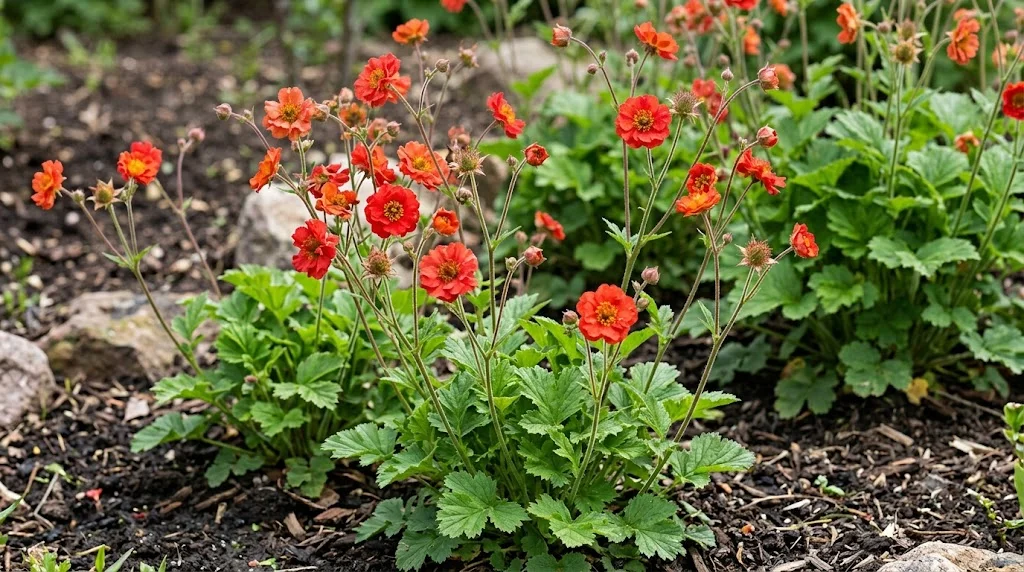

Chilean avens flowers most reliably when its roots receive steady moisture and moderate nutrition throughout active growth. The plant dislikes both prolonged drought and stagnant, airless soil, making balance more important than rigid schedules. Watering should therefore respond to weather, soil texture, plant age, and the depth of the root system. Feeding should support strong stems and repeat flowering without producing excessive soft foliage.
Understanding moisture requirements
Established plants prefer soil that remains lightly and consistently moist during spring and early summer. This does not mean the root zone should feel wet at all times. Healthy soil contains both moisture and air, allowing roots to absorb water while continuing normal respiration. A crumbly texture after watering usually indicates better conditions than sticky, saturated ground.
Moisture needs rise as new leaves and flower stems develop. Wind, direct sunlight, high temperatures, and nearby root competition all increase water loss. Plants in sandy soil require more frequent attention than those in moisture-retentive loam. Heavy clay may need less frequent watering, but each application must be managed carefully to prevent saturation.
Young plants have limited root systems and cannot access moisture from a large volume of soil. They should be checked regularly during their first growing season, even when established plants nearby remain comfortable. Newly divided clumps are similarly vulnerable until fresh roots develop. Repeated wilting during establishment can delay growth and reduce future flowering.
Older plants generally tolerate brief dry periods once their roots have spread. However, prolonged drought often causes reduced flowering, scorched leaf margins, and premature dormancy. Severe stress can also weaken the crown and make it less resilient during winter. Preventing extreme fluctuations is usually easier than attempting to restore a badly dehydrated plant.
More articles on this topic
Applying water effectively
Water deeply enough to moisten the main root zone rather than only darkening the soil surface. A slow application allows water to infiltrate instead of running away across compacted ground. After watering, check the soil several centimeters below the surface to judge whether moisture has penetrated adequately. This simple observation is more reliable than watering for a fixed number of minutes.
Direct water toward the base of the plant while keeping the crown from being constantly soaked. A watering can without a rose, a low-pressure hose, or drip irrigation can deliver moisture accurately. Overhead sprinklers are less efficient because part of the water evaporates or lands outside the root zone. Wet foliage also remains more vulnerable to spotting diseases in humid weather.
Morning is generally the best time to irrigate. The plant receives water before daytime temperatures rise, and splashed foliage has time to dry. Evening watering is acceptable when necessary, especially during heat, but avoid leaving leaves wet throughout cool nights. Midday watering is not inherently harmful, although evaporation losses can be greater.
Mulching reduces surface evaporation and limits sudden changes in soil moisture. A layer of compost, leaf mold, or finely shredded organic material is suitable for most borders. Keep the material clear of the central crown to preserve airflow. Renew the mulch when it becomes thin, compacted, or incorporated into the soil.
More articles on this topic
Adjusting irrigation through the seasons
In spring, rainfall may provide much of the moisture required, but rapidly developing foliage can still dry the soil. Check conditions beneath the surface after several sunny or windy days. Water newly planted or divided specimens before they begin to wilt. Established clumps usually need irrigation only when natural rainfall is insufficient.
Summer watering should be based on heat, soil type, and flowering activity. During moderate weather, a thorough weekly watering may be enough in many gardens. Sandy beds and containers may need attention several times each week. Heavy soil should be allowed to drain before additional water is applied.
Flower production can slow if the plant experiences repeated drought. Buds may remain small, stems may shorten, and older foliage may become untidy. Restoring even moisture can support renewed growth, but flooding dry soil is not helpful. Rehydrate the root zone gradually if it has become extremely dry and water-repellent.
Watering can be reduced as growth slows in autumn. Natural rainfall often becomes sufficient, and cool temperatures lower evaporation. Winter irrigation is rarely needed for plants in open ground unless conditions are unusually dry and the soil is unfrozen. Container plants, however, should still be checked because sheltered pots may receive little rain.
Feeding plants growing in the ground
Chilean avens is not a heavy feeder when grown in fertile garden soil. An annual spring application of mature compost is often sufficient to maintain healthy growth. Compost supplies nutrients gradually while also improving moisture retention and soil structure. This approach is less likely to cause weak, overly lush stems than repeated high-nitrogen feeding.
Where the soil is poor, apply a balanced slow-release fertilizer as new growth begins. A formulation with moderate, relatively even nutrient proportions is usually suitable. Scatter it over moist soil around the root zone and follow the manufacturer’s rate carefully. Fertilizer placed directly against the crown or applied too heavily can damage tissue.
Excess nitrogen often produces large leaves but fewer flowers. The resulting stems may be soft, tall, and more likely to fall in wind or rain. Soft growth can also become more susceptible to aphids and certain fungal problems. If plants are leafy but flower poorly, reduce feeding and assess light levels before adding more nutrients.
Potassium supports flowering and general stress tolerance, but concentrated products should not be used automatically. A balanced soil condition is more important than maximizing one nutrient. Deficiencies should be suspected only after irrigation, drainage, pH, and root health have been considered. Applying several fertilizers without diagnosis can create nutrient imbalance or salt buildup.
Feeding container-grown plants
Container plants depend entirely on the nutrients present in a limited amount of growing medium. Most commercial potting mixes provide initial nutrition, but this supply gradually declines. A controlled-release fertilizer mixed into the compost in spring can provide steady feeding. Alternatively, a dilute liquid fertilizer can be applied during active growth.
Begin liquid feeding only after the plant has established and is producing healthy new leaves. Use a balanced or flowering-plant formulation at the recommended dilution. Feeding every two to four weeks is generally more appropriate than applying a strong solution infrequently. Never fertilize a severely dry root ball because concentrated salts can injure dehydrated roots.
Flush the container occasionally with plain water so excess fertilizer salts can drain away. White crusts on the compost surface or pot rim may indicate mineral accumulation. If growth becomes weak despite regular feeding, inspect the roots and growing medium rather than simply increasing the dose. Congested roots, exhausted compost, or poor drainage may be the real problem.
Stop routine feeding as growth slows toward autumn. Continued nutrition can encourage tender late growth that is vulnerable to cold. Resume only when active growth begins the following spring. Repotting with fresh compost may reduce the amount of supplementary fertilizer needed during the early part of the season.