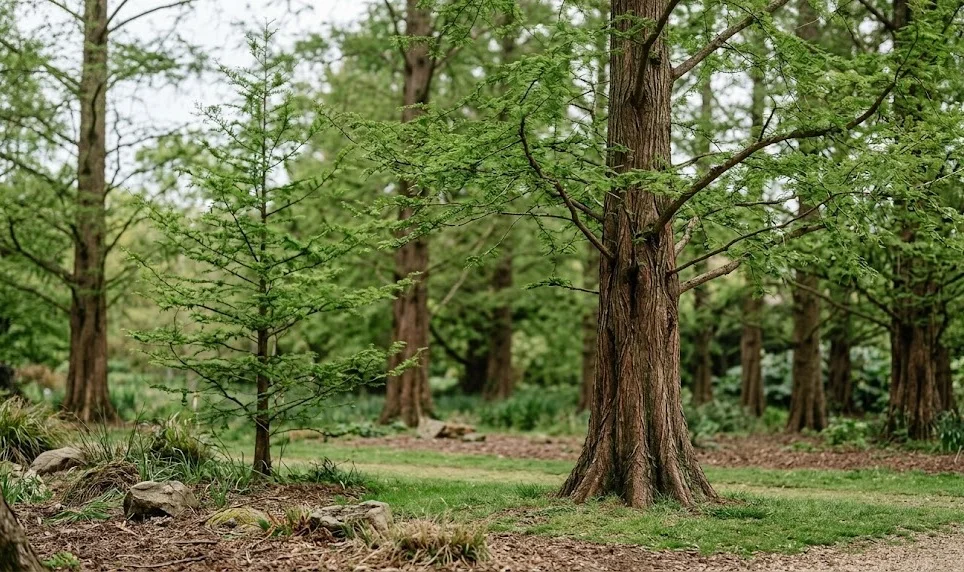

Pruning a dawn redwood is an exercise in restraint and precision, as this species naturally possesses a strong central leader and a highly symmetrical growth habit. Unlike many broadleaf trees that require extensive thinning and shaping, the dawn redwood often maintains its majestic form with minimal human interference. However, thoughtful and professional pruning is still a vital part of its long-term care, particularly for maintaining safety, structural integrity, and aesthetic balance. Understanding when and how to intervene is the hallmark of an expert gardener or arborist.
The primary goal of pruning a dawn redwood is to support its natural pyramidal shape while removing any dead, damaged, or diseased wood. Because it grows so rapidly, it is important to address any structural issues early in the tree’s life before they become major problems. Regular inspections of the canopy allow for the identification of crossing branches or co-dominant leaders that could lead to future instability. A “light touch” approach is always preferred, as over-pruning can stress the tree and lead to unsightly “water sprouts” or excessive suckering.
Timing is a critical factor in the success of any pruning operation for this deciduous conifer. The best time to perform major structural pruning is in late winter or early spring while the tree is still dormant and before the new buds begin to swell. During this period, the tree’s architecture is fully visible, making it much easier to see the branch structure and identify any flaws. Pruning during dormancy also minimizes the risk of sap loss and reduces the likelihood of attracting pests or spreading diseases through the open wounds.
While the dawn redwood is generally resilient, it is important to avoid pruning in late summer or early autumn. Cutting the tree during this time can stimulate a flush of new growth that will not have enough time to harden off before the first frost, leading to significant winter damage. Minor pruning, such as the removal of a small broken twig or a diseased branch, can be done at any time of the year as a matter of urgent maintenance. However, for any significant shaping or structural work, adhering to the winter schedule is the professional standard.
Maintaining the central leader and structure
The central leader is the most important structural element of the dawn redwood, as it dictates the tree’s vertical growth and its iconic symmetrical form. In some cases, a tree may develop “co-dominant” leaders, where two or more stems compete for dominance at the top of the tree. This is a serious structural defect that can lead to the tree splitting down the middle as it grows larger and heavier. Identifying and removing the weaker of the two leaders early on is essential for ensuring the tree’s long-term stability and safety.
More articles on this topic
Lateral branches should be managed to ensure they are well-spaced along the trunk and have strong attachments. Branches with “included bark” or narrow crotch angles are more likely to break under the weight of snow or high winds and should be selectively thinned or removed. Ideally, the branches should be distributed evenly around the trunk to maintain the tree’s balance and aesthetic appeal. Professional arborists look for a “staircase” arrangement of branches that allows light and air to penetrate deep into the canopy.
Limbing up, or the removal of the lower branches to provide clearance for foot traffic or lawn maintenance, should be done gradually over several years. Removing too many lower branches at once can stress the tree and cause the trunk to become spindly and weak. It is generally recommended to keep at least the top two-thirds of the tree’s height in living crown to maintain its vigor and structural health. For a dawn redwood, the lower branches often add to its majestic, buttressed appearance, so they should be preserved as long as practical.
The use of correct pruning techniques is vital for the tree’s ability to heal and resist infection. All cuts should be made just outside the “branch collar,” the slightly swollen area where the branch attaches to the trunk. Cutting too close to the trunk (a flush cut) or leaving a long stub both prevent the tree from properly sealing the wound and can lead to decay. Using sharp, high-quality tools ensures clean cuts that minimize damage to the sensitive cambium layer and promote rapid healing.
Corrective and restorative pruning
Corrective pruning is often necessary after a storm or an ice event that has caused physical damage to the tree’s canopy. Broken or hanging branches should be removed as soon as possible to prevent them from falling and causing further injury or property damage. When dealing with storm damage, the goal is to make clean cuts back to a healthy lateral branch or the main trunk, removing only the minimum amount of wood necessary. This help the tree redirect its energy toward new growth and prevents the entry of opportunistic pathogens.
More articles on this topic
If a mature dawn redwood has been neglected for many years, it may require restorative pruning to improve its health and appearance. This often involves thinning out the “deadwood” that naturally accumulates in the interior of the canopy as the tree grows and shades itself out. Removing this dead material improves air circulation and light penetration, which can revitalize the remaining living branches. Restorative work on a large tree should always be done in stages over several years to avoid shocking the system with too much sudden change.
Thinning the outer canopy is occasionally necessary for trees in high-wind areas to reduce their “sail” effect and prevent uprooting. This involves the selective removal of small, peripheral branches to allow the wind to pass through the tree more easily. This type of pruning requires a high level of skill to maintain the tree’s natural look while achieving the desired reduction in wind resistance. It is a subtle but effective way to improve the safety of a large specimen in an urban or suburban setting.
The use of “topping” or radical height reduction is strictly prohibited and highly damaging for a dawn redwood. Cutting the main leader of the tree destroys its natural form, leads to a massive flush of weak, poorly attached new growth, and creates a permanent entry point for rot. If a tree has outgrown its space, the only professional solution is to remove it and replace it with a more appropriate species. Proper pruning is always about working with the tree’s natural biology, never about forcing it into an unnatural or unsustainable shape.
Professional tools and safety practices
The quality of the tools used for pruning a dawn redwood directly impacts the health of the tree and the safety of the gardener. For small branches and twigs, high-quality bypass pruners provide a clean, scissor-like cut that is much better than the crushing action of anvil-style pruners. For larger branches, a sharp pruning saw with a narrow blade allows for precise cuts even in tight spaces. All tools should be cleaned and disinfected between trees, especially if there is any suspicion of disease, to prevent the spread of pathogens.
Safety is the most important consideration when pruning a large tree like the dawn redwood, which can quickly reach heights that are beyond the reach of a standard ladder. Working at height with sharp tools is inherently dangerous and should only be attempted with the proper safety equipment and training. For any work that requires climbing or the use of a chainsaw in the canopy, hiring a certified professional arborist is the safest and most responsible choice. They have the expertise to perform the work correctly while minimizing the risk to themselves and the surrounding property.
Regular maintenance pruning is far more efficient and better for the tree than waiting until major intervention is required. By spending a few minutes each year checking the tree and making a few small, strategic cuts, you can guide its development and prevent most structural issues. This proactive approach keeps the tree looking its best and ensures it remains a safe and healthy part of the landscape for many decades. A well-pruned dawn redwood is a testament to the partnership between human care and the raw power of nature.
Ultimately, the goal of pruning is to disappear, leaving behind a tree that looks as though it grew that way entirely on its own. By respecting the natural form and growth patterns of the dawn redwood, you enhance its beauty without compromising its ancient integrity. The sight of a perfectly shaped dawn redwood, with its strong central leader and symmetrical branches, is a rewarding result of patient and professional care. Good pruning is an investment in the tree’s future and a legacy of stewardship for the landscape.