Pruning and cutting back Chilean avens

Pruning Chilean avens is mainly a matter of removing spent flowers, damaged foliage, and old seasonal growth rather than shaping the plant heavily. Correct cutting encourages repeat blooming, improves airflow, and prevents decaying material from collecting around the crown. The timing and depth of each cut should reflect the plant’s growth stage. Clean, sharp tools reduce tissue damage and help protect the clump from infection.
Deadheading during the flowering season
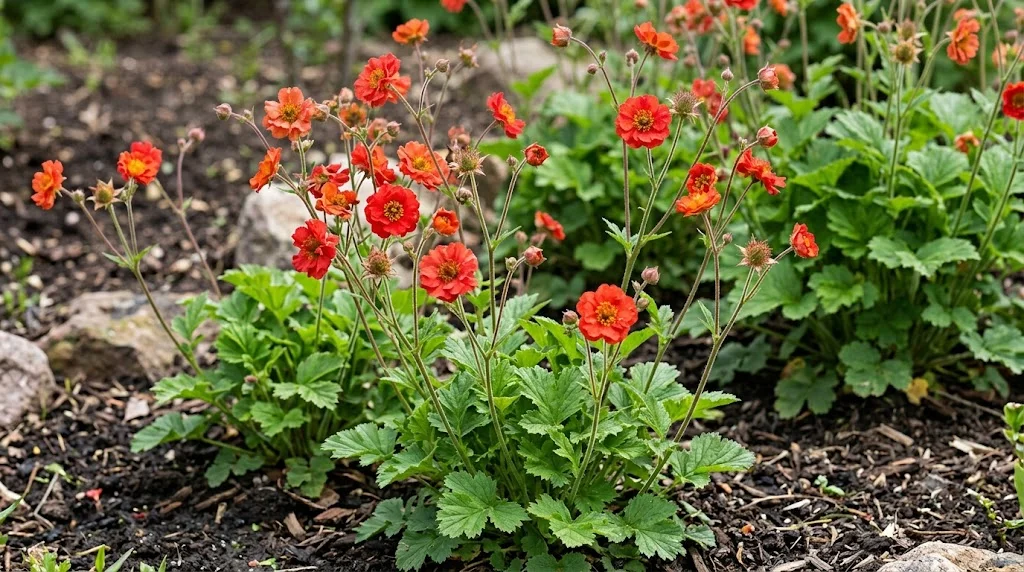
Begin deadheading when the first flowers fade and petals begin to drop. Follow each flower stem down to a healthy leaf, side bud, or the base of the clump. Cutting at a natural junction leaves the plant looking tidier than removing only the flower head. It also prevents bare stems from remaining above the foliage.
Regular deadheading limits seed formation and redirects energy toward further flowering and root maintenance. Many cultivars respond by producing a second, lighter flush later in the season. The response is strongest when the plant also receives sufficient water and nutrition. Deadheading cannot compensate for severe drought, deep shade, or an exhausted crown.
Use clean secateurs or fine garden scissors for precise cuts. Thin stems can sometimes be pinched out by hand, but pulling may loosen the crown or tear neighboring tissue. Disinfect tools when moving between plants showing suspicious spots or stem decay. Sharp blades produce wounds that dry and seal more efficiently.
Some flower stems may be left to form seed when natural propagation or winter interest is desired. Choose only healthy, well-positioned stems and remove the rest. Seed development reduces the likelihood of repeat flowering because it requires considerable energy. Named cultivars may also produce seedlings that differ from the parent plant.
More articles on this topic
Cutting back foliage and old stems
Remove yellow, torn, or diseased leaves whenever they become unsightly or threaten crown hygiene. Cut each leaf stalk close to its base without damaging emerging shoots. Selective removal is preferable to stripping healthy foliage unnecessarily. Green leaves continue to support the root system throughout the growing season.
After the main flowering period, untidy plants can be trimmed more thoroughly. Remove all spent stems and the worst outer foliage while preserving the active central rosette. Water afterward if the soil is dry, and apply only light feeding when the soil is poor. Fresh leaves may emerge and restore a compact appearance.
Late-season cutting depends on climate and foliage condition. In wet regions, collapsed leaves should be removed before they form a dense layer over the crown. In cold but relatively dry climates, sound foliage can remain temporarily to provide natural protection. Diseased material should always be removed regardless of season.
Avoid cutting the crown flush with the soil. The growing points sit close to the surface and can be damaged by excessively low pruning. Leave visible healthy buds and firm basal tissue intact. An accidental deep cut may expose the crown to moisture, frost, and infection.
More articles on this topic
Rejuvenating neglected or congested plants
An old clump may produce many leaves but few flowers, particularly when the center has become woody. Pruning alone rarely restores such a plant because the underlying issue is crown congestion. Lift and divide the clump in spring or early autumn. Replant vigorous outer sections and discard exhausted central tissue.
Before division, remove flower stems and reduce excessive foliage to limit water loss. Do not cut away every leaf, because the divisions still need some photosynthetic tissue. Shortening long or damaged leaves makes the plant easier to handle. Keep exposed roots moist while preparing the new planting positions.
Plants that have become flattened by storms can also be cut back selectively. Remove broken stems completely because damaged tissue does not regain strength. Preserve upright shoots and healthy basal leaves whenever possible. A light support installed around the remaining growth can prevent further collapse.
After any major pruning or division, provide steady moisture while the plant recovers. Avoid strong fertilizer until new growth confirms that the roots are functioning well. Watch for slugs, which may attack the tender shoots produced after cutting. With appropriate follow-up care, a renewed clump can regain a dense habit and return to reliable flowering.