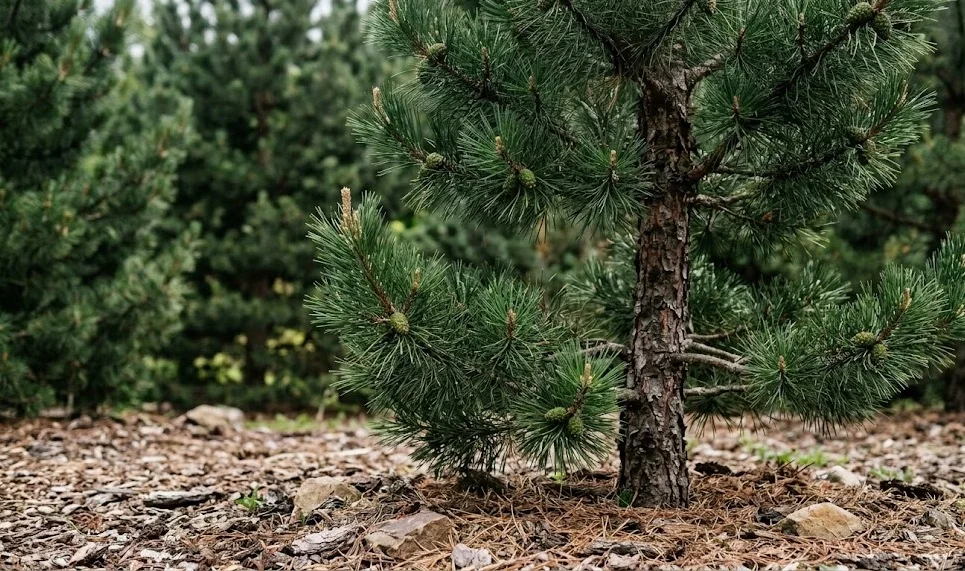

Understanding the light requirements of a black pine is fundamental to ensuring its healthy growth and impressive architectural form. You must recognize that this species is fundamentally heliophilic, meaning it has a deep-seated biological need for abundant and direct sunlight. A professional approach to landscape planning always begins with an analysis of the light patterns throughout the day and the entire year. By providing the optimal light environment, you allow the tree to maximize its energy production and maintain its signature dense, dark green foliage.
In its natural habitat across Europe and the Mediterranean, the black pine is often found in open, sun-drenched landscapes where it dominates the canopy. You should aim to replicate these conditions in your garden or agricultural plot to prevent the tree from becoming thin, leggy, or susceptible to disease. Sunlight is not just about growth; it is the fuel that powers the tree’s natural defense mechanisms and its ability to withstand environmental stress. Professional gardeners never underestimate the power of proper placement when it comes to long-term success with evergreens.
As the sun moves across the sky through the seasons, the shadows in your garden will change, potentially affecting the light your tree receives. You should observe these shifts carefully to ensure that no nearby structures or faster-growing trees eventually shade out your pine. If a tree begins to struggle in low-light conditions, it often becomes a magnet for pests like aphids and scale insects that thrive on weakened plants. Taking a proactive and expert view of the light environment is a hallmark of a sophisticated and successful management plan.
Consistency of light exposure across the entire canopy is also important for maintaining the symmetrical and attractive shape of the tree. You might notice that branches on the shaded side of a tree become sparse or die back entirely over several years. This uneven growth can lead to structural imbalances that make the tree more prone to wind damage or breaking under heavy snow. By mastering the light requirements of the black pine, you ensure that your specimen remains a healthy and beautiful centerpiece for decades to come.
Optimal sun exposure for photosynthesis
The black pine requires a minimum of six to eight hours of direct, unfiltered sunlight every day to truly flourish and reach its full potential. You should prioritize south-facing locations that offer the maximum amount of light during the peak growing months of spring and summer. This intense light is necessary for the tree to produce the sugars and starches it needs to build strong wood and dense needles. Professional arborists always check for potential obstructions like buildings or large neighboring trees before recommending a planting site.
More articles on this topic
When a tree receives optimal light, its needles will be thicker, longer, and a deeper green than those grown in partial or full shade. You will also notice that the annual “candles” or new growth shoots are robust and provide a significant increase in the tree’s overall size each year. This vigorous growth is a clear indicator that the tree’s photosynthetic engine is running at maximum efficiency. Providing this level of light is the most important “fertilizer” you can give to a young and developing black pine.
Full sun also helps to keep the canopy dry and reduces the humidity around the needles, which is a major factor in preventing fungal diseases. You should understand that the sun’s UV rays act as a natural disinfectant, killing off many surface-level pathogens before they can infect the tree. This environmental control is a professional and sustainable way to maintain plant health without relying on constant chemical interventions. A sun-drenched tree is naturally more resilient and requires much less maintenance over the long term.
Finally, consider the quality of the light and how it might be affected by local factors like urban pollution or persistent coastal fog. In these challenging environments, you may need to be even more selective about the placement of your trees to ensure they get every possible minute of direct sun. While the black pine is adaptable, it will always perform best when its primary biological need for light is met with professional precision. Your dedication to finding the perfect light environment will be rewarded with a majestic and thriving evergreen.
Dealing with partial shade conditions
While the black pine is incredibly resilient, placing it in a position where it only receives partial shade can lead to several long-term health issues. You might notice that the tree begins to “stretch” toward the available light, resulting in a tilted trunk and uneven branch distribution. This phototropic response is the tree’s desperate attempt to capture enough energy to survive in a sub-optimal environment. Professional gardeners often use corrective pruning to manage this, but it is much better to avoid the situation through proper initial placement.
More articles on this topic
In partial shade, the interior of the canopy often becomes very thin as the tree sheds older needles that are no longer receiving enough light to be productive. You will end up with a tree that looks “see-through” rather than having the dense, privacy-providing foliage that the species is known for. This lack of needle density also reduces the tree’s overall energy reserves, making it slower to recover from any physical damage or pest attacks. Understanding these consequences is a vital part of an expert’s decision-making process when planning a landscape.
If you must plant in an area with less-than-ideal light, you should choose a cultivar that has been specifically bred for better shade tolerance, though even these will still prefer the sun. You can also improve the situation by thinning out the canopies of neighboring trees to allow more “dappled” light to reach the pine throughout the day. This “skylighting” technique is a professional way to manage a complex, multi-layered garden while still supporting the needs of sun-loving species. Being creative with your light management can help you succeed even in challenging garden layouts.
Monitoring a tree in partial shade requires an extra level of vigilance when it comes to watering and pest management. You should be careful not to overwater, as the soil in shaded areas stays damp for longer and the tree’s lower energy levels make it more prone to root rot. Keeping the area around the tree clean and well-aerated will also help mitigate the increased risk of fungal infections that thrive in cooler, dimmer conditions. A professional approach to shade management is about balance and constant observation of the tree’s vital signs.
Light factors affecting branch density
The density of the branches and needles is directly proportional to the amount and quality of light the tree receives over its entire life. You should recognize that light stimulates the development of lateral buds, which are responsible for the “filling out” of the tree’s structure. In low-light environments, these buds often remain dormant, leading to a sparse and unattractive appearance that many find disappointing. Professional growers use light management as a tool to produce the high-quality, dense specimens that are so prized in the nursery trade.
Reflected light from nearby surfaces like white walls or light-colored pavement can sometimes provide a small but helpful boost to a tree in a tight space. You might see that the side of the tree facing a reflective surface is denser and healthier than the side facing a dark fence or a shadowed corner. While not a replacement for direct sun, these environmental factors can be used strategically by a professional designer to improve the health of a specimen. Every photon counts when you are trying to grow a perfect black pine in a modern urban or suburban setting.
Seasonal changes in light intensity and duration also play a role in how the tree allocates its resources for growth and maintenance. You should be aware that the low-angle sun of winter provides much less energy than the high, intense sun of mid-summer, even on a clear day. This is why the tree enters a period of dormancy, focusing its limited resources on survival rather than expansion during the darkest months of the year. Understanding these natural rhythms allows you to time your maintenance tasks, like pruning and fertilizing, for maximum effect.
Finally, remember that the light environment is not static and will change as your garden matures and the trees around your pine continue to grow. You should perform a “light audit” every few years to ensure that your black pine is still receiving the energy it needs to remain healthy. If you find that the light levels have dropped significantly, it might be time to prune back neighboring plants or even consider moving the pine if it is still young enough. A professional’s job is never done, as the landscape is a living and constantly evolving system that requires your ongoing attention and expertise.