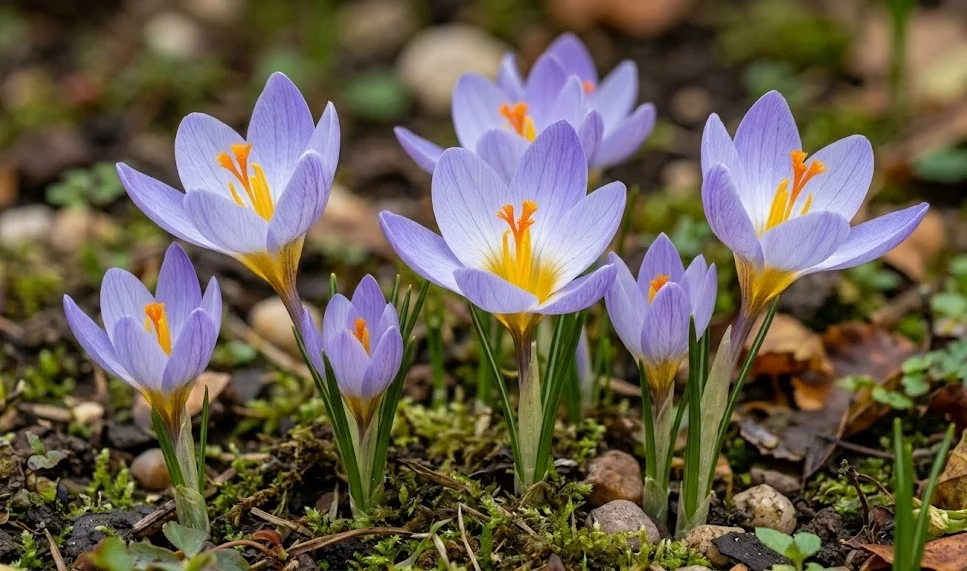

Beautiful crocus is generally resilient when grown in the right conditions, but it can suffer when drainage, hygiene, or planting depth are poor. Most serious problems begin below the soil, where corms may rot before symptoms are obvious. Pests can also damage shoots, flowers, and stored reserves, especially in damp or crowded plantings. Prevention is therefore more effective than rescue treatment.
Recognising corm rot and soil-related disease
Corm rot is the most important disease issue for beautiful crocus. It often develops in soil that remains wet during dormancy or in winter. Affected corms may become soft, brown, hollow, or unpleasantly scented. Above ground, the first sign may simply be missing flowers or weak leaves.
Fungal and bacterial rots can spread through damaged tissue. Injuries from digging, rough handling, or pest feeding create entry points. This is why corms should be handled gently and planted in clean soil. Damaged specimens should not be planted with healthy stock.
Poor drainage is usually the underlying cause. Even high-quality corms can fail if planted in heavy, airless soil. Improving the structure before planting is much better than trying to treat disease later. Raised beds and gritty planting pockets reduce the risk significantly.
If rot is discovered, remove affected corms and surrounding contaminated soil. Do not compost badly diseased material. Allow the site to dry and improve drainage before replanting. Replacing the plants immediately in the same wet conditions will usually repeat the problem.
More articles on this topic
Fungal problems on leaves and flowers
Leaf spotting can occur when foliage remains wet and crowded for long periods. Small brown or grey marks may appear on the leaves. Mild spotting is often cosmetic, but severe infection weakens photosynthesis. Good air movement and sensible spacing reduce the risk.
Flower mould can develop during damp autumn weather. The low flowers are close to the soil and can be splashed by rain. Removing collapsed petals can help if mould is visible. A gravel surface mulch also keeps flowers cleaner.
Avoid overhead watering when flowers and leaves are present. Watering the soil directly is safer and more efficient. Morning watering gives the plant time to dry before nightfall. Wet foliage overnight encourages fungal activity.
Do not overfeed with nitrogen if fungal issues are common. Soft, lush leaves are more vulnerable than firm, well-ripened growth. A balanced feeding programme helps the plant resist stress. Healthy plants in bright, open positions are much less likely to suffer serious leaf disease.
More articles on this topic
Slugs, snails, and chewing damage
Slugs and snails may attack emerging shoots and flowers, especially in damp autumn weather. Damage often appears as ragged edges, missing buds, or slime trails around the plant. Because the flowers are low, they are easy targets. Young shoots can be damaged before they are fully visible.
Cultural control is important in ornamental plantings. Remove hiding places such as boards, dense debris, and thick wet mulch. Keep the planting area open and tidy without stripping it bare. A gritty surface makes movement less comfortable for soft-bodied pests.
Hand-picking can be effective in small gardens, especially after rain or at dusk. Barriers and traps may help when used consistently. Wildlife-friendly management encourages birds, frogs, beetles, and other natural predators. Chemical controls should be chosen carefully and used only according to local guidance.
Healthy corms can recover from minor flower damage, but repeated shoot loss weakens them. If damage happens every year, the planting site may be too damp or sheltered. Moving the corms to a brighter, drier position can reduce pressure. Strong plants in open soil are usually less attractive to slugs.
Rodents, birds, and underground pests
Rodents can dig up or eat crocus corms in some gardens. Damage may appear as disturbed soil, missing corms, or hollowed planting holes. Newly planted corms are especially vulnerable because the soil has been loosened. Firming the soil after planting helps reduce interest.
Wire mesh can protect valuable plantings. A layer of fine mesh placed above the corms allows shoots to grow through while discouraging digging. In containers, mesh over drainage holes can also prevent entry from below. Protection is most useful during the first season after planting.
Birds may disturb flowers while searching for insects or exploring loose soil. They are rarely a serious long-term problem, but they can spoil a small display. Firm soil and a gravel mulch make the area less inviting. Light twiggy protection can be used temporarily when shoots first appear.
Vine weevil larvae can damage container-grown corms in regions where the pest is common. The larvae feed below the surface and may hollow out roots and storage tissues. Check pots if plants collapse unexpectedly despite correct watering. Replacing infested compost and using appropriate biological controls can help.
Prevention through hygiene and plant health
Start with healthy planting material from reliable sources. Diseased or poorly stored corms introduce problems before the plant even reaches the garden. Inspect every corm before planting. Reject anything soft, mouldy, or badly damaged.
Clean tools reduce disease spread when lifting and dividing clumps. A sharp, clean knife should be used only when necessary. Many offsets can be separated by hand without cutting. Any cut surfaces should be allowed to dry briefly before replanting in suitable conditions.
Avoid overcrowding because dense clumps dry slowly and compete for resources. Division every few years may be useful if flowering declines. However, unnecessary annual lifting can cause stress and injuries. The best management is observation followed by timely, gentle intervention.
Strong plants resist pests and diseases better than stressed plants. Correct light, drainage, moderate feeding, and undisturbed foliage all contribute to resilience. Beautiful crocus does not need intensive protection when its basic needs are met. Most problems are preventable through good site selection and seasonal care.