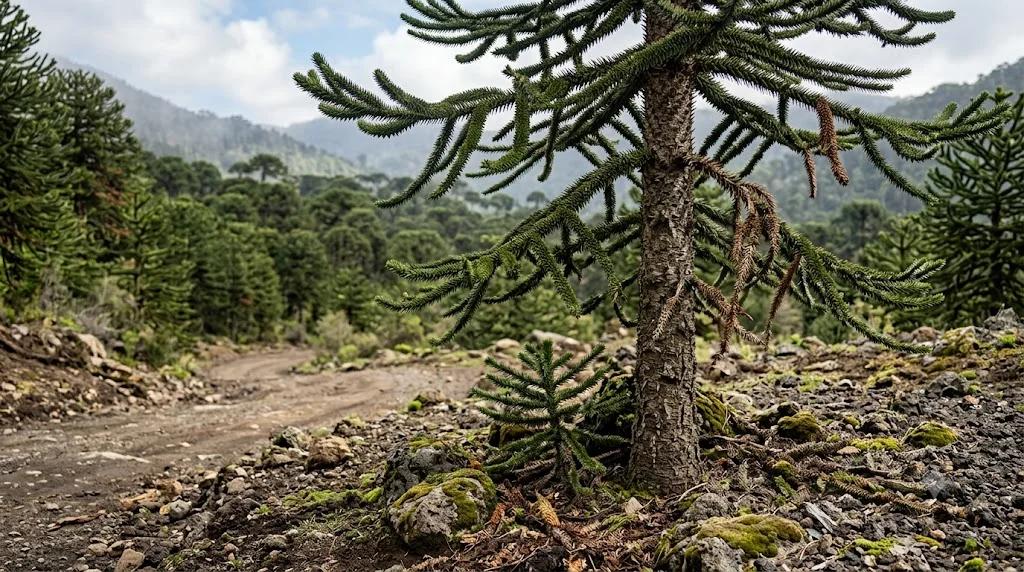

Monkey puzzle trees are generally robust when grown in suitable soil and climate, but stressed specimens can become vulnerable to root diseases, branch dieback, sap-feeding insects, and environmental damage. Many visible symptoms are not caused by an infectious organism, so diagnosis should begin with drainage, moisture, frost exposure, and mechanical injury. Early investigation is important because root problems may advance for months before the crown declines noticeably. Good cultivation remains the most effective defence against both pests and disease.
Root rot and drainage-related decline
Root rot is among the most serious problems affecting monkey puzzle trees. Several soil-borne organisms can attack roots when the soil remains wet and poorly aerated. Fine roots die first, reducing the tree’s ability to absorb water and minerals. The crown may then become dull, brown gradually, or lose entire branches.
Phytophthora-type diseases are particularly associated with saturated soil and contaminated water movement. Symptoms can include reduced vigour, resin bleeding near the lower trunk, darkened bark, and progressive crown decline. Because the pathogen may remain in the soil, simply removing dead branches does not address the infection. Laboratory diagnosis is often needed to confirm the organism involved.
Prevention depends on selecting a naturally well-drained site and avoiding excessive irrigation. Soil should not be moved from known infected areas into healthy planting zones. Tools, footwear, and machinery can carry contaminated soil particles between gardens or woodland sites. Cleaning equipment is especially important where serious root disease has already been identified.
A badly affected mature tree should be assessed by a qualified arboricultural professional. Large declining branches or a weakened root system may create structural hazards. Chemical treatments are not a guaranteed cure and may be restricted to professional use. Improving drainage and reducing additional stress are usually central parts of any management strategy.
More articles on this topic
Branch dieback and fungal infection
Individual branches may die after frost injury, drought, mechanical damage, or fungal invasion. Dead tissue often begins at a damaged shoot tip and progresses inward. The dense foliage can hide early lesions, making routine inspection valuable. Discoloured bark, resin flow, cracking, or sunken areas may indicate a canker.
Fungal pathogens frequently exploit tissue that has already been weakened. Cuts made during wet conditions can provide an entry point, especially when tools are dirty. Broken branches should be removed cleanly without leaving long stubs. Large or difficult work should be handled by an experienced arborist because the foliage is sharp and access can be hazardous.
Pruning debris from diseased branches should not be left beneath the tree. Material can be removed or disposed of according to local plant-health guidance. Tools should be cleaned between cuts when an infectious disease is suspected. Pruning healthy tissue after diseased tissue with an unclean blade can spread contamination.
Not every brown branch requires immediate cutting. Older shaded foliage may die naturally as the crown matures, particularly near the trunk. A professional diagnosis is advisable when browning spreads rapidly, affects several branch tiers, or is accompanied by trunk symptoms. The pattern and speed of decline often provide important diagnostic clues.
More articles on this topic
Sap-feeding and scale insects
Scale insects may settle on stems or foliage and feed on plant sap. Small populations often cause little visible damage, but heavy infestations can weaken young or stressed trees. Sticky honeydew may appear when soft scale insects are present. Dark sooty mould can then grow on the sugary deposits.
The rigid overlapping leaves make detailed inspection difficult, so branches should be examined carefully with gloves. Scale insects may resemble small shells, bumps, or waxy patches rather than active insects. A hand lens can help distinguish them from natural bark features. Checking several parts of the crown gives a more representative assessment.
Natural predators often suppress minor infestations in diverse gardens. Broad-spectrum insecticides can harm these beneficial organisms and may disrupt biological control. Horticultural oils or other approved treatments may be suitable at specific life stages. Product choice and timing must follow local regulations and label directions.
Severely infested container plants should be separated from other susceptible ornamentals. Dead material and heavily affected shoots may be removed when doing so will not spoil the tree’s form. Improving light, watering, and general vigour helps the plant tolerate pest pressure. Repeated inspection is necessary because eggs or immature stages may survive an initial treatment.
Environmental injuries mistaken for disease
Winter browning often results from cold wind, frozen soil, and bright sunshine acting together. The foliage continues to lose water while frozen roots cannot replace it. Exposed branch tips may turn bronze or brown, especially on young trees. This damage is physiological rather than infectious, although weakened tissue may later be colonised by fungi.
Sunscorch and heat stress can also cause localised browning. Symptoms are usually strongest on the side facing intense afternoon sun or reflected heat. Dry soil and hot walls increase the severity of injury. Improving irrigation and reducing reflected heat are more useful than applying fungicides.
Salt exposure may damage trees near treated roads or windy coastlines. Salt draws moisture from plant tissues and can produce scorched foliage or declining shoot tips. Contaminated runoff can also alter soil structure and injure roots. Barriers, improved drainage, and careful water management can reduce future exposure.
Mechanical injuries are common near lawns, driveways, and construction areas. Mowers, strimmers, vehicles, and soil excavation can damage the trunk or roots. Buried roots may also decline when soil levels are raised during landscaping. Protecting the root zone is far easier than restoring a tree after major structural damage.
Monitoring, prevention, and responsible treatment
Regular observation allows subtle changes to be detected before decline becomes advanced. Compare new growth, foliage colour, resin flow, and branch condition from season to season. Photographs taken from the same positions can document gradual changes. Records of rainfall, irrigation, frost, and nearby construction may also help explain symptoms.
Healthy soil is the foundation of disease prevention. Organic mulch supports moisture stability and soil organisms while reducing surface compaction. It should be applied broadly but kept away from the trunk. Heavy traffic, storage of materials, and repeated digging beneath the crown should be prevented.
Treatments should only be selected after the likely cause has been identified. Insecticides will not correct root rot, and fungicides will not repair drought injury. Unnecessary chemical use can damage beneficial organisms and complicate diagnosis. A targeted response is safer, more economical, and more environmentally responsible.
Professional advice is important when a large tree shows rapid crown decline, trunk decay, major resin bleeding, or instability. Mature monkey puzzle trees can be extremely heavy and difficult to work on safely. An arborist can assess both plant health and structural risk. Where laboratory testing is needed, samples must be collected from the correct tissue and handled carefully.