
Light has a direct influence on the color, density, and overall ornamental value of purple-leaved filbert. The shrub can tolerate some shade, but its most intense foliage color develops where it receives generous sunlight. Too little light leads to greener leaves, weaker flowering, and a looser canopy. Understanding the balance between sun exposure and heat stress is essential for professional placement.
Full sun and foliage color
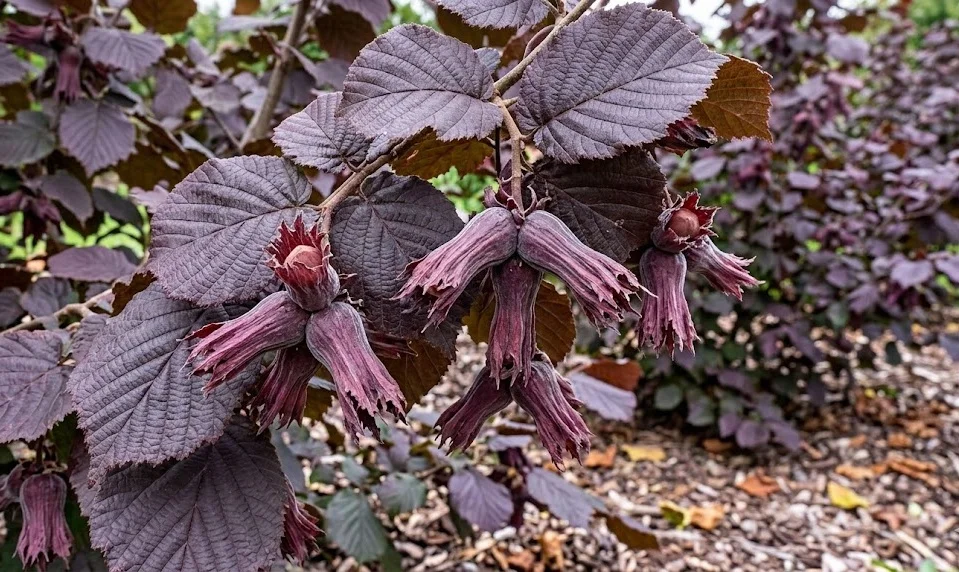
Full sun usually gives purple-leaved filbert its richest burgundy tones. Young leaves often appear especially dark and glossy when light is strong. This color is one of the main reasons the plant is used as an ornamental shrub. Without enough sunlight, the visual effect becomes much less dramatic.
Strong light also encourages compact, vigorous growth. Shoots develop more evenly, and the crown becomes denser. A well-lit plant generally produces more robust annual wood. This improves both structure and future flowering potential.
In cooler and moderate climates, full sun is usually ideal. The plant can use the available light without suffering excessive heat stress. Soil moisture must still be maintained, because sunny sites dry faster. Mulch and deep watering help balance exposure.
Leaf color may change through the season even in good light. Spring foliage can be vivid, while summer leaves may mature to a darker or slightly bronzed tone. Some variation is normal and does not indicate a problem. The important sign is whether new growth remains strong and well colored.
More articles on this topic
Partial shade and heat management
Light partial shade can be suitable in hot regions. Afternoon shade may protect foliage from scorching during intense summer heat. This is especially helpful where dry winds and high temperatures coincide. The plant still needs enough morning or filtered light to maintain color.
Partial shade under high, open trees can work well. The canopy should allow moving light rather than deep, constant darkness. Purple-leaved filbert performs poorly under dense evergreen shade. Competition from tree roots can also reduce moisture and nutrients.
In partial shade, pruning becomes more important. The plant may grow more open as it reaches toward light. Removing congested or poorly placed branches helps maintain shape. However, pruning cannot fully compensate for a badly shaded site.
Garden design should consider how shade changes over time. Nearby trees and shrubs may expand and gradually reduce light. A site that was suitable at planting can become too dark after several years. Regular evaluation prevents slow decline from being overlooked.
More articles on this topic
Symptoms of unsuitable light
Insufficient light often causes duller foliage. Leaves may become bronze-green, brownish green, or unevenly colored rather than richly purple. New shoots may elongate too much and look thin. Flowering and nut production may also decrease.
Excessive exposure combined with drought can cause scorch. Leaf edges may brown, and the plant may wilt during hot afternoons. This does not always mean the plant needs more shade. Often it needs deeper watering, better mulch, or improved soil moisture.
Uneven light can produce an unbalanced canopy. The side facing the sun may grow vigorously while the shaded side becomes sparse. Selective pruning can improve shape, but the underlying light pattern remains important. In severe cases, neighboring plants may need to be thinned.
The best light condition is one that supports strong growth without repeated stress. In many gardens, this means full sun with moisture-retentive soil. In hotter areas, it may mean morning sun with light afternoon protection. Observing leaf color and shoot vigor gives the most reliable guidance.