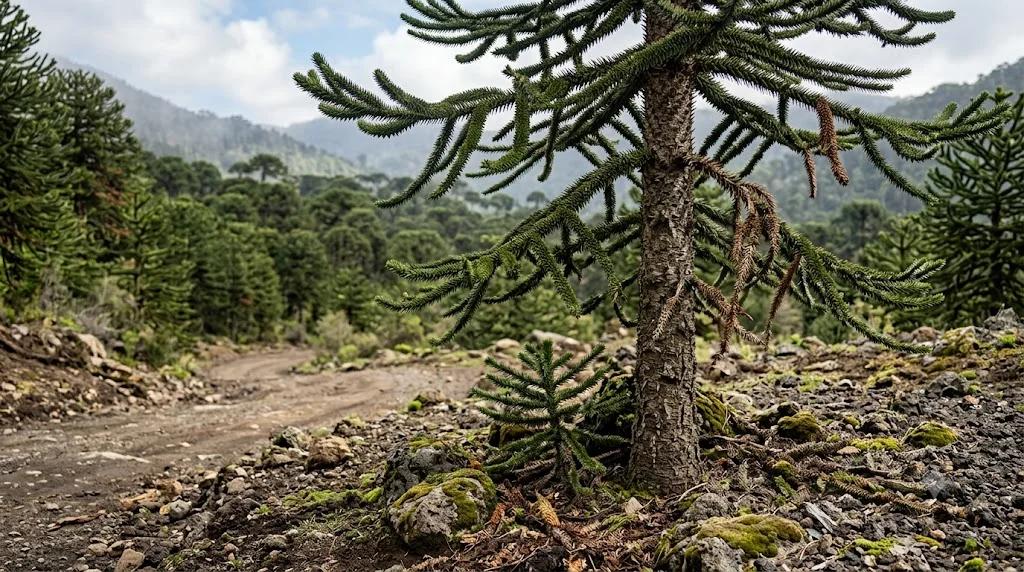

A mature monkey puzzle tree can tolerate substantial cold when it is healthy, well established, and growing in suitable soil. Young trees are less resilient because their roots occupy a limited area and their tender shoots are more exposed to rapid temperature changes. Winter damage often results from a combination of frost, drying wind, bright sun, and frozen ground rather than low temperature alone. Sensible autumn preparation is therefore more effective than wrapping the tree heavily after severe weather has already arrived.
Preparing the tree before cold weather
Winter preparation begins during the growing season. A tree that has received balanced watering and moderate nutrition is better able to harden its tissues naturally. Excessive nitrogen feeding in late summer can encourage soft growth that remains vulnerable to frost. Fertiliser applications should therefore finish early enough for new shoots to mature.
Autumn soil moisture should be checked before the ground becomes cold. Evergreen foliage continues to lose water during winter, especially on sunny or windy days. A deeply dry root zone increases the risk of winter browning. Thorough watering may be beneficial during a dry autumn, but saturated soil must be avoided.
A broad mulch layer protects the upper roots from rapid temperature fluctuations. Composted bark, leaf mould, or mature wood-based material can be used. Mulch should be spread over the root zone rather than heaped around the trunk. A clear gap around the stem helps prevent persistent dampness and bark deterioration.
Young trees should be checked for stability before autumn storms. Loose roots can be damaged when the trunk rocks repeatedly in strong wind. Stakes and flexible ties must be secure without restricting trunk growth. Any tie that rubs against the bark or branches should be repositioned immediately.
More articles on this topic
Protecting against frost, wind, and winter sun
Cold wind can remove moisture from the foliage faster than the roots can replace it. This effect becomes more severe when the soil is frozen. A temporary permeable windbreak can protect a young tree on an exposed site. Solid barriers should be avoided because they can create damaging turbulence.
Breathable horticultural fleece may be used temporarily around small specimens during exceptional cold. The material should be supported so that it does not press heavily against the sharp foliage. It should also be removed or opened during milder conditions to improve airflow. Permanent winter wrapping can trap moisture and reduce light.
Bright winter sun can warm exposed foliage while the root zone remains frozen. Rapid temperature changes may contribute to browning and tissue stress. Protection from the strongest morning sun can be useful in very cold continental climates. Any shading material must remain light, ventilated, and securely fixed.
Snow is usually harmless when it is light and falls naturally through the open crown. Wet, heavy snow can bend young branches or deform the leader. Accumulations should be removed gently with an upward lifting motion rather than beaten from above. Frozen branches are brittle and should not be forced back into position.
More articles on this topic
Winter care for container-grown specimens
Container-grown monkey puzzle trees are more vulnerable than those planted in the ground. The limited soil volume freezes rapidly and exposes the entire root system to low temperatures. Large frost-resistant pots offer better protection than small containers. Even so, additional insulation may be required in cold regions.
The container can be wrapped with insulating material while leaving drainage holes unobstructed. Raising it slightly above cold paving helps excess water escape and reduces direct contact with frozen surfaces. The pot may also be moved beside a sheltered wall where temperatures fluctuate less dramatically. A heated indoor room is generally unsuitable because warm, dry air disrupts natural dormancy.
Watering should be reduced during winter but not stopped completely. The compost should be checked during mild periods and watered when it is becoming distinctly dry. Water must drain freely, and irrigation should never leave the root ball saturated. Frozen compost should be allowed to thaw naturally before watering.
Container plants still need light during winter. A dark garage or windowless shed is not a suitable long-term location. An unheated, bright greenhouse can provide useful shelter in colder climates, but ventilation is essential during sunny days. Temperatures inside protected structures can rise unexpectedly even in midwinter.
Assessing and managing winter damage
Winter injury often becomes fully visible only in spring. Foliage may appear bronze, brown, or dry on the exposed side of the tree. Damaged branches should not be removed immediately unless they are clearly broken. Waiting until growth resumes makes it easier to distinguish dead tissue from temporarily discoloured foliage.
The central leader deserves special attention after severe weather. A damaged leader may fail to extend or may produce several competing shoots. Where multiple upright shoots develop, corrective work should be minimal and carefully timed. Professional advice is useful because an incorrect cut can permanently distort the tree.
Dry spring conditions can worsen damage that began during winter. Water the root zone when necessary and renew the mulch after the soil warms. Strong fertiliser should not be used in an attempt to force rapid recovery. Moderate care allows surviving buds and roots to resume growth without additional stress.
Repeated winter injury usually indicates that the planting site is unsuitable or insufficiently protected. Exposure, drainage, autumn watering, and soil depth should all be reviewed. A temporary windbreak may solve the problem for a young tree, but mature size must still be considered. In climates with consistently severe winters, long-term cultivation may remain difficult despite careful protection.