
Strong light is one of the most important requirements for a productive lemon tree. Insufficient brightness causes weak shoots, sparse flowering, leaf loss and poor fruit development, even when watering and feeding appear correct. Direct sunlight is valuable, but plants moved from shade or indoor conditions require gradual acclimatisation. The best position combines long exposure, good ventilation and protection from sudden environmental extremes.
Providing enough outdoor sunlight
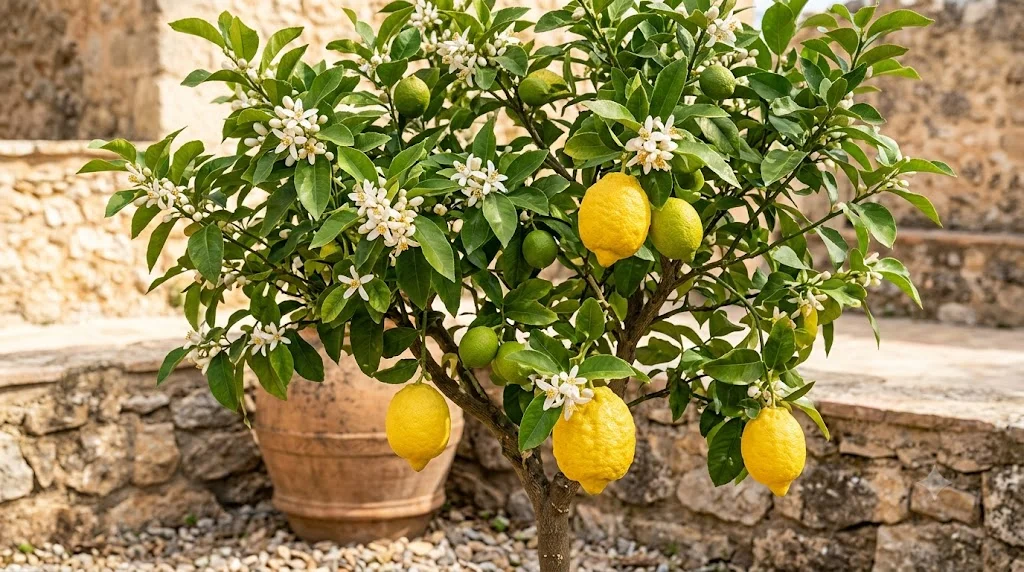
A lemon tree grown outdoors should receive several hours of direct sun each day. Full sun generally produces compact growth, strong flowering and well-coloured fruit. A south-facing site is often ideal in temperate regions. In very hot climates, light afternoon shade can reduce heat stress without seriously limiting productivity.
Morning sunlight is particularly useful because it dries dew and surface moisture from the leaves. This reduces the period during which fungal spores can germinate. Afternoon sun is stronger and may increase water demand. Trees in dark containers should be monitored because the root ball can become much hotter than the surrounding soil.
Nearby walls, fences and buildings may create seasonal shade that is not obvious when the tree is first positioned. Observe the site at different times of day and during different months. A place that is sunny in midsummer may be shaded throughout spring and autumn. Container-grown plants can be moved when changing sun angles reduce exposure.
Branches should be arranged so that light reaches the interior canopy. A dense outer shell of leaves shades fruiting wood and encourages weak internal shoots. Selective thinning improves light distribution without exposing the trunk suddenly to intense sun. Severe opening of the canopy can cause bark scorch in hot regions.
More articles on this topic
Meeting indoor light needs
Indoors, place the lemon tree near the brightest available window. South- or south-west-facing glazing usually provides the highest useful light level. Clean glass and foliage improve transmission. Even a short distance from the window can greatly reduce the amount of light reaching the plant.
Rotate the container occasionally to encourage balanced growth, but avoid changing its orientation too frequently. A tree naturally directs leaves and shoots toward the strongest light source. Constant turning forces repeated adjustment and may increase stress. A modest rotation every few weeks is usually sufficient.
Supplemental grow lights are valuable during dark winters. Position them close enough to provide useful intensity without overheating the leaves. A consistent daily lighting period is more effective than irregular use. Warm room temperatures should be matched by longer and stronger illumination.
Ordinary room lighting is not a substitute for horticultural light. A space that appears bright to human eyes may still be too dim for citrus photosynthesis. Long, thin shoots and increasing gaps between leaves indicate insufficient intensity. Moving the plant closer to natural light or adding a proper grow lamp is more effective than increasing fertiliser.
More articles on this topic
Recognising and preventing light stress
Low-light growth is usually soft, elongated and pale. Leaves may become larger and thinner as the plant attempts to capture more light. Flower buds develop poorly, and existing fruit may stop enlarging. Reducing warmth slightly can help a wintering tree when stronger light cannot be provided.
Sun scorch appears as pale, bleached or brown patches on the most exposed leaf surfaces. It often develops after a tree is moved suddenly from indoors into strong spring sunshine. Damaged tissue does not recover, although new leaves can grow normally. Gradual acclimatisation is the best prevention.
Excessive heat can accompany strong light, especially behind glass. Leaves may wilt despite moist compost because water loss temporarily exceeds root uptake. Ventilation, shading during the hottest hours and protection of the pot can reduce stress. The goal is high light without trapping destructive heat around the foliage.
A healthy lemon tree in suitable light develops sturdy shoots, relatively short spaces between leaves and a dense but balanced canopy. Flowering is more regular, and fruit colours evenly. Light should always be assessed together with temperature and watering. Correcting only one factor rarely succeeds when the others remain out of balance.