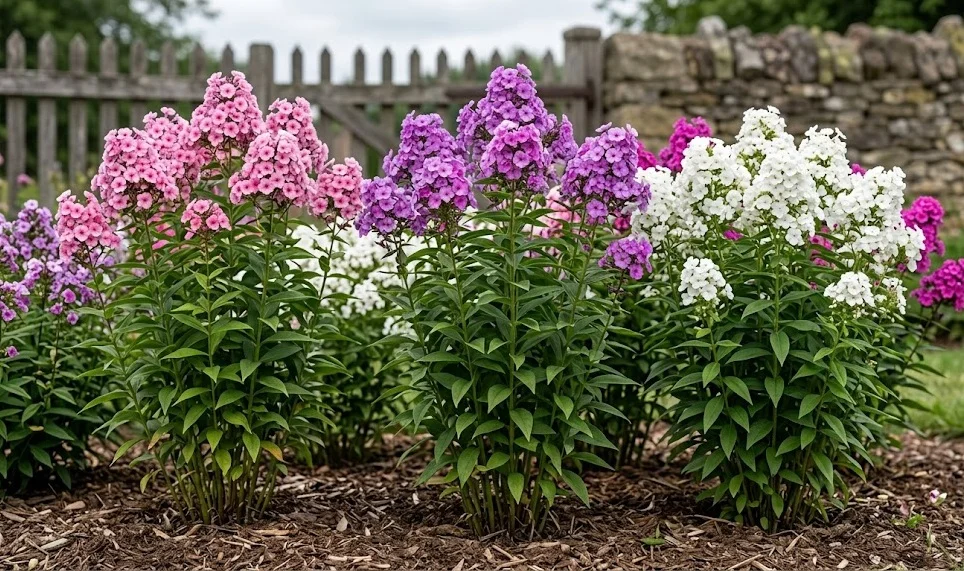

Garden phlox is a strong and rewarding perennial, but it is also known for a few recurring health problems that are best managed through prevention. Powdery mildew, leaf spotting, stem issues, mites, aphids, and chewing insects can all appear under the right conditions. Most problems become serious only when plants are crowded, drought-stressed, overfed, or grown in stagnant air. A healthy planting system is therefore the first and most important form of plant protection.
Powdery mildew and foliar disease
Powdery mildew is the disease most often associated with garden phlox. It appears as pale, powdery patches on leaves and stems, often becoming more visible in mid to late summer. The disease is unsightly and can weaken the plant if it becomes severe. It is especially common when air circulation is poor and plants experience moisture stress.
Contrary to what many gardeners assume, powdery mildew does not require wet leaves in the same way as many other fungal diseases. It often develops during warm days, cool nights, and periods of high humidity. Drought-stressed plants are particularly vulnerable because their natural defenses are reduced. This is why good watering can help prevent a disease that appears on the foliage.
Resistant cultivars are a valuable choice where mildew is a repeated problem. Resistance does not mean complete immunity, but it can significantly reduce severity. Even resistant plants should be spaced properly and watered well. Cultivar choice and cultural care work best when used together.
Other leaf diseases may cause spots, browning, or premature leaf drop. These issues are often encouraged by crowded growth and infected debris left in the bed. Removing badly affected leaves can slow spread, but avoid stripping the plant excessively. At the end of the season, cleaning away diseased stems and foliage is an important hygiene measure.
More articles on this topic
Root, crown, and stem problems
Root and crown problems usually begin with unsuitable soil conditions. Garden phlox likes moisture, but it does not tolerate prolonged waterlogging around the crown. When roots are deprived of oxygen, they become vulnerable to decay. A plant affected by root trouble may wilt even when the soil appears wet.
Planting depth can also contribute to crown issues. If the crown is buried too deeply, moisture can collect around the growing points. This may lead to rot, weak shoots, or poor spring emergence. The crown should sit at soil level, with mulch kept slightly away from the base.
Stem weakness is sometimes mistaken for disease when it is actually caused by excess nitrogen, shade, or crowding. Soft stems bend more easily and may split during wind or rain. Plants grown in too much shade often stretch toward the light and become less stable. Correcting the growing conditions usually improves future growth.
Good sanitation reduces the chance of stem and crown problems carrying over from year to year. Old stems should be cut down once they have died back. Diseased material should be removed from the garden rather than left as mulch around the plant. Clean surroundings give new spring shoots a healthier start.
More articles on this topic
Aphids, mites, and sap-feeding pests
Aphids may appear on tender garden phlox shoots in spring or early summer. They feed by sucking sap and may cause distorted growth if numbers are high. Small colonies can often be removed by hand or washed away with water. Beneficial insects such as lady beetles and hoverfly larvae often help control them naturally.
Spider mites are more likely in hot, dry conditions. They can cause fine stippling, dull foliage, and a tired appearance. Severe infestations may produce webbing and leaf drop. Improving moisture conditions and regularly rinsing foliage in the morning can make the plant less favorable to mites.
Sap-feeding pests tend to increase when plants are stressed. Dry soil, excessive heat, and poor airflow all reduce plant resilience. A vigorous, well-watered phlox clump is better able to tolerate minor feeding damage. This does not remove the need for monitoring, but it lowers the risk of serious outbreaks.
Insecticides should be used carefully and only when necessary. Broad-spectrum products can harm beneficial insects and pollinators. Since garden phlox flowers are attractive to bees, butterflies, and other insects, spraying during bloom should be avoided whenever possible. Targeted, low-impact methods are usually more appropriate in a mixed garden.
Chewing insects and physical damage
Chewing damage on garden phlox may come from caterpillars, beetles, slugs, or snails. The signs include holes in leaves, ragged edges, or missing young shoots. The exact pest often depends on local conditions and the season. Inspection in the evening or early morning can reveal pests that hide during the day.
Slugs and snails are most troublesome in damp, sheltered gardens. They may damage young shoots as they emerge in spring. Keeping the area free of dense debris can reduce hiding places. Barriers, traps, and hand collection can be useful where damage is regular.
Beetles and caterpillars may feed on foliage or flowers, though they rarely destroy a healthy mature clump. Minor chewing is often cosmetic and does not require treatment. If damage is severe, identifying the pest before acting is important. Different pests require different management methods.
Physical damage from wind, storms, pets, or careless maintenance can also affect garden phlox. Tall stems carrying heavy flower heads may snap after rain. Early staking prevents much of this damage. Planting in a position with some protection from strong wind also helps maintain the display.
Integrated prevention and recovery
The best pest and disease control begins with plant spacing. Good spacing improves air movement, reduces humidity around leaves, and makes inspection easier. It also allows each clump to access water and nutrients without excessive competition. A crowded border may look lush at first, but it often becomes a disease-prone environment.
Water management is equally important. Drought stress encourages mildew and mites, while waterlogging encourages root problems. A deep, consistent watering routine keeps the plant in balance. Mulch helps, but it must be used in a way that does not smother the crown.
When disease appears, the first step is to improve conditions rather than immediately reaching for sprays. Remove the worst affected leaves, thin overcrowded stems, and correct watering habits. In severe or repeated cases, replacing susceptible cultivars with more resistant ones may be the best long-term solution. This is especially sensible in humid climates.
Recovery depends on timing and severity. A plant with late-season mildew may still return strongly the following spring if its roots and crown are healthy. A plant weakened by repeated drought, crowding, and disease may need division and relocation. Garden phlox is forgiving, but it responds best when problems are solved at their source.