
The Chinese leopard plant is a magnificent perennial that brings a bold architectural presence to any shaded garden with its large, leathery leaves and vibrant yellow flowers. Managing this species requires a deep understanding of its preference for moisture-retentive soils and protection from the harsh midday sun. Gardeners often value this plant for its ability to thrive in damp areas where other ornamentals might struggle with root saturation. Consistency is the primary factor in ensuring that the foliage remains turgid and the plant displays its full aesthetic potential throughout the growing season.
Soil requirements for optimal growth
The structural composition of the soil is a critical factor for the long-term health of these perennials. These plants prefer a heavy, clay-based soil that can hold a significant amount of water without becoming anaerobic. Incorporating organic matter such as well-rotted leaf mold or compost can improve the nutrient profile significantly. Aim for a slightly acidic to neutral pH level to ensure the roots can absorb all necessary minerals effectively.
Adequate drainage is still necessary even though the plant loves moisture, as stagnant water can lead to oxygen deprivation in the root zone. You should avoid sandy soils that dry out too quickly unless you are prepared to amend them heavily with moisture-retaining additives. Testing your soil before planting can reveal if there is a need for specific adjustments to the mineral content. Regular mulching with organic materials helps to maintain the soil structure and prevents the surface from crusting over during dry spells.
Nutrient availability in the soil directly correlates with the size and vibrancy of the large leaves. High nitrogen levels are particularly beneficial during the early spring when the plant is putting on rapid vegetative growth. You might consider adding a layer of composted manure around the base of the plant every spring to replenish the topsoil. This practice not only provides nutrients but also encourages beneficial microbial activity that supports root health.
Long-term success depends on maintaining the integrity of the soil environment over several years. Compaction can be a problem in heavy clay, so you should avoid stepping near the root zone when the ground is very wet. If the soil becomes too dense, the rhizomes may struggle to expand, leading to a decline in the plant’s overall vigor. Periodic gentle aeration around the perimeter of the plant can help maintain the necessary gas exchange within the substrate.
More articles on this topic
Microclimate and humidity preferences
This plant is native to moist woodland environments and requires a microclimate that mimics these humid conditions. High atmospheric humidity prevents the large leaf surfaces from losing water too rapidly through transpiration. In dry climates, the edges of the leaves may turn brown and crispy if the air remains too arid for extended periods. Planting near water features like ponds or streams can naturally increase the local humidity levels for the foliage.
Wind protection is another essential aspect of site selection to prevent physical damage to the large leaves. Strong gusts can tear the foliage or cause excessive moisture loss, leading to temporary wilting even if the soil is wet. Surrounding the plant with taller, sturdier shrubs can create a sheltered pocket that preserves the still, moist air it craves. Such a sheltered position also helps the tall flower stalks remain upright during summer storms.
Temperature regulation within the garden bed plays a significant role in the plant’s metabolic processes. It prefers cooler temperatures and may go into a semi-dormant state if the heat becomes extreme during the summer months. Shading the ground with groundcover plants or thick mulch keeps the root system cool and stable. Avoid placing the plant near dark-colored walls or stone pavements that radiate heat long after the sun has set.
During the height of summer, you can manually intervene to boost the humidity levels around your plants. Lightly misting the foliage in the early morning can provide a refreshing boost without encouraging fungal growth on the leaves. However, you should ensure that the leaves have time to dry before nightfall to prevent the onset of mildew. Creating a community of moisture-loving plants can also create a collective humid zone through their shared transpiration.
More articles on this topic
Seasonal maintenance routines
Spring is the time for renewal and requires several proactive steps to ensure a strong start for the season. As the ground warms up, you should remove any old mulch or debris that may be harboring overwintering pests. This is also the best time to apply a fresh layer of organic matter to support the upcoming growth spurt. Watching for the first signs of emerging shoots allows you to protect them from late frosts if necessary.
Summer maintenance is largely focused on moisture management and monitoring for heat stress. You must be diligent about checking the soil moisture daily, especially during heatwaves when the plant is most vulnerable. Deadheading the spent flower stalks can help the plant redirect its energy back into the rhizomes rather than seed production. Keep an eye out for any signs of leaf scorch, which might indicate that the plant is receiving too much direct sunlight.
Autumn is a period of transition where the plant begins to prepare for its winter dormancy. As the foliage starts to yellow and die back naturally, you can begin to reduce the frequency of supplemental watering. It is generally better to leave the foliage in place until it has completely withered to allow nutrients to return to the roots. Clearing away the dead material once it has turned brown prevents pathogens from overwintering in the garden bed.
Winter care is minimal but crucial for ensuring that the plant survives until the following spring. In colder regions, a thick layer of straw or wood chips over the crown provides essential insulation against deep freezes. You should ensure that the site does not become a puddle of standing water during the winter thaws, as this can rot the dormant rhizomes. Once the protection is in place, the plant requires very little attention until the cycle begins again.
Understanding growth habits and form
The growth habit of this perennial is clump-forming, meaning it gradually expands outward from a central rootstock. Each year, the rhizomatous root system produces new shoots, increasing the overall diameter of the plant’s footprint. It typically reaches a height and spread of about three feet, making it a substantial focal point in the garden. Understanding this scale is important when planning the layout of a shade border to avoid overcrowding.
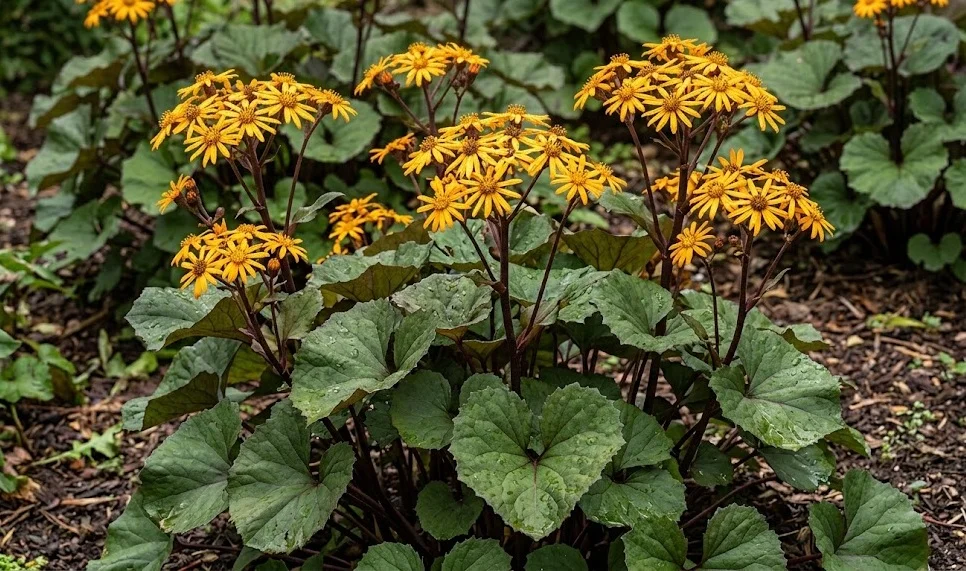
The foliage is the primary attraction, featuring large, rounded leaves that can reach up to twelve inches across. These leaves are often a deep green with a leathery texture, providing a wonderful contrast to finer-textured ferns or grasses. Some cultivars exhibit a dark purple or bronze hue on the undersides of the leaves, adding extra visual interest. The leaves are held on sturdy, upright petioles that keep the foliage well above the ground level.
Flowers appear in mid to late summer, rising above the foliage on tall, dark-colored stems. The inflorescences are composed of multiple daisy-like bright yellow flowers that attract various pollinators, including bees and butterflies. Each individual flower head contributes to a large, flat-topped cluster that provides a splash of color in shaded areas. While the flowers are beautiful, they are often considered secondary to the dramatic impact of the foliage.
The architectural form of the plant makes it suitable for various design applications in the landscape. It works exceptionally well as a specimen plant or when grouped together to create a lush, tropical-looking mass. Because of its moisture needs, it is a perfect candidate for bog gardens or the margins of ornamental ponds. Its bold texture helps to break up the visual monotony of smaller-leaved woodland plants.
Managing light and exposure
Finding the perfect balance of light is perhaps the most challenging aspect of caring for this species. It is naturally adapted to filtered light or dappled shade, such as that found under the canopy of large deciduous trees. Direct morning sun is generally tolerated and can even enhance the color of cultivars with purple or bronze foliage. However, the intense radiation of the afternoon sun must be avoided to prevent severe wilting and leaf burn.
In deep shade, the plant may survive but will likely produce fewer flowers and the stems may become leggy. The ideal situation is a spot that receives bright, indirect light for the majority of the day. If you notice the plant stretching toward a light source, it may be an indication that the shade is too dense. Conversely, if the leaves are constantly drooping despite wet soil, the light intensity is probably too high.
Seasonal changes in the sun’s path should be taken into account when selecting a permanent location. A spot that is perfectly shaded in the spring might become exposed to direct sun as the seasons progress into summer. Observing the shadow patterns in your garden throughout the year can help you avoid making a mistake in placement. You can use temporary shade cloth if you discover that a mature plant is suddenly being scorched by an unexpected light gap.
Reflected light from light-colored buildings or fences can also impact the plant’s health. This type of exposure can be surprisingly intense and may cause the same damage as direct sunlight. Positioning the plant behind larger perennials or using a trellis can help mitigate the effects of reflected heat and light. Always prioritize the health of the foliage, as damaged leaves will not recover and must be eventually removed.
Enhancing garden health and vitality
A holistic approach to garden health ensures that your plants remain resilient against environmental stressors. Encouraging a diverse ecosystem of beneficial insects can help keep common pests like aphids or mites in check. Using organic fertilizers instead of synthetic ones promotes a healthier soil food web, which benefits the plant in the long run. Healthy plants with strong cell walls are much more capable of resisting diseases and recovering from minor damage.
Companion planting is an excellent way to support the needs of your Chinese leopard plant. Pairing it with plants that have similar water requirements, like Hostas or Astilbes, makes irrigation management much more efficient. These companions also help to cover the soil, keeping it cool and moist through their collective shade. The visual contrast between the bold leaves of the leopard plant and the delicate fronds of a nearby fern is also aesthetically pleasing.
Regular observation is the best tool for maintaining the vitality of your garden specimens. Taking a few minutes each week to inspect the undersides of leaves and the condition of the crown can help you catch problems early. Look for changes in color, unusual spots, or signs of chewing by insects or mollusks. Early intervention usually requires much less effort and fewer resources than trying to fix a major infestation or disease outbreak.
Water quality can also affect the long-term vitality of the plant, especially in areas with very hard water. High concentrations of minerals in the water can lead to a buildup in the soil, potentially affecting the pH level over time. Using harvested rainwater is a great way to provide soft, slightly acidic water that perfectly matches the plant’s needs. If you must use tap water, allowing it to sit in a container for a day can help some chemicals dissipate.
Regional considerations and adaptations
The performance of this plant can vary significantly depending on your specific hardiness zone and regional climate. In northern areas with shorter growing seasons, the plant may need more light to reach its full size before frost. In the south, the extreme heat and humidity of summer require extra attention to watering and deep shade. Understanding your local frost dates is essential for timing your spring and autumn maintenance tasks correctly.
Soil types across different regions will also dictate how you manage the plant’s environment. If you live in an area with naturally sandy soil, you will need to be much more aggressive with your organic amendments and mulching. Those in regions with heavy clay should focus on ensuring that the soil remains permeable and does not become waterlogged during rainy seasons. Adapting your techniques to your local conditions is the hallmark of a successful and professional gardener.
Native fauna in your area might also interact with the plant in ways you need to manage. For instance, in regions with high deer populations, you might find that the large leaves are an attractive food source. Using natural repellents or physical barriers can help protect your plants from being grazed to the ground. Similarly, being aware of local pest cycles can help you anticipate when to be most vigilant about slugs or snails.
Micro-climates within your own property can offer unique opportunities for growing this moisture-loving perennial. A low-lying spot in the yard that stays naturally damp might be the perfect location for a thriving colony. Conversely, a raised bed might dry out too quickly and require much more frequent irrigation. By matching the plant to the specific conditions of your site, you reduce the need for constant human intervention and allow the plant to flourish naturally.