
Understanding the specific light preferences of the Chinese leopard plant is fundamental to achieving the lush, dramatic foliage that is its hallmark. This species is naturally adapted to the filtered light of woodland environments, where the intense energy of the sun is tempered by a canopy of trees. In a garden setting, replicating these conditions requires a careful assessment of your landscape’s light patterns throughout the day and across the seasons. Striking the right balance between too much sun and too much shade is the key to maintaining a healthy and visually stunning specimen.
The ideal light spectrum for growth
The Chinese leopard plant thrives best in a condition often referred to as dappled shade or part-shade. This means the plant receives a mix of indirect light and brief periods of soft, filtered sunlight throughout the day. In its native habitat, it grows on the edges of forests where it is protected from the harshest rays but still receives enough energy for photosynthesis. This balanced exposure promotes large, healthy leaves without the risk of physical damage from solar radiation.
Morning sun is generally very beneficial for the plant, as it provides high-quality light when the temperatures are still cool. The gentle rays of the early sun help the plant to dry off any morning dew, which can reduce the risk of fungal infections. For many cultivars, particularly those with darker or bronze foliage, a few hours of morning light can actually intensify their coloration. However, by the time the sun reaches its peak in the afternoon, the plant should ideally be in deep, cooling shade.
Direct afternoon sun is the primary cause of stress for this species and should be strictly avoided. The intense heat and high UV levels of the midday sun can quickly lead to wilting and permanent leaf scorch. Even if the soil is kept perfectly moist, the plant simply cannot move water to the leaves fast enough to counteract the rapid transpiration caused by direct exposure. If you notice your plant drooping every afternoon, it is a clear sign that the light intensity is too high for its comfort.
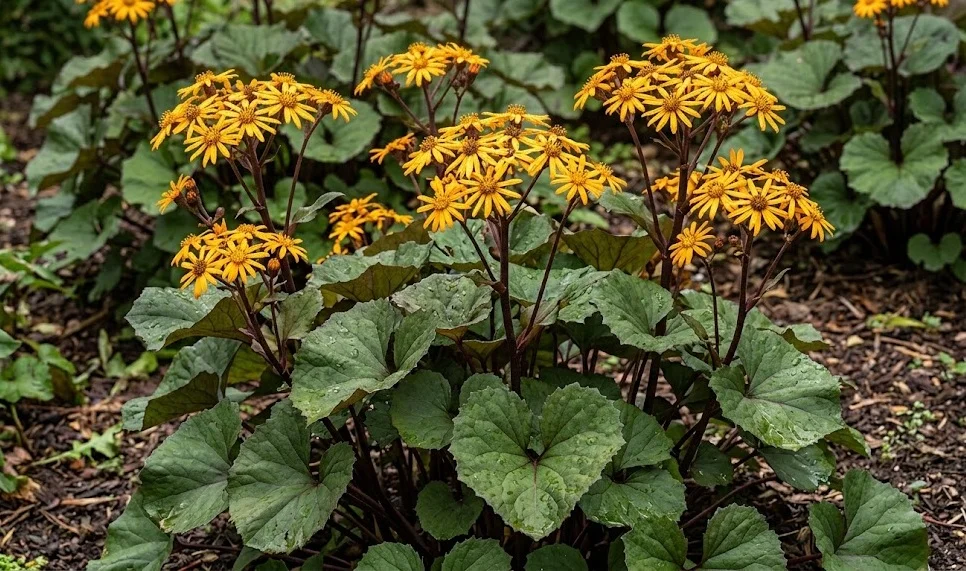
In very deep shade, the Chinese leopard plant may survive, but it will likely not reach its full aesthetic potential. The growth rate will be much slower, and the plant may produce fewer of its characteristic yellow flowers. The foliage might also become a lighter shade of green and the stems could become somewhat leggy as the plant stretches toward the light. Finding that “sweet spot” of bright but indirect light will yield the most robust and impressive results.
More articles on this topic
Recognizing and managing light stress
One of the most obvious signs that your Chinese leopard plant is receiving too much light is the appearance of bleached or brown patches on the leaves. This leaf scorch typically starts at the edges or in the center of the largest leaves that are most exposed to the sun. Unlike disease-related spots, these patches will feel dry and crispy to the touch and will not spread once the light issue is corrected. While the damaged leaves will not recover, new growth will be healthy if the plant is moved or shaded.
Wilting is another common reaction to light stress, even when the soil is adequately moist. On a hot, sunny day, the large leaves may go completely limp as a way to reduce their surface area and protect themselves from further moisture loss. If the plant is correctly situated, it should recover its turgidity as soon as the sun moves away and the air cools down. Persistent afternoon wilting is an indicator that the plant is under constant stress and its long-term health may be at risk.
If you find that your plant is struggling with its current exposure, there are several ways you can intervene to improve the situation. You can plant taller, more sun-tolerant perennials or shrubs on the sunward side of the leopard plant to provide a living screen. Temporary shade structures, such as a trellis or even a simple piece of lattice, can also be very effective during the hottest months. In extreme cases, the best course of action is to transplant the specimen to a more suitable, shaded location during the cool of the autumn or spring.
Conversely, if your plant is showing signs of being in too much shade, you might need to perform some light pruning of nearby trees or shrubs. Thinning out the canopy of a large tree can allow more dappled light to reach the garden floor without creating a direct sun gap. You can also use light-colored mulches or nearby light-colored walls to reflect a bit more indirect light toward the plant. Observing the plant’s response to these small changes will help you fine-tune its environment for the best possible growth.
More articles on this topic
Seasonal variations in light exposure
It is important to remember that the light patterns in your garden are not static and will change significantly as the seasons progress. A spot that is perfectly shaded in the early spring before the trees have leafed out may become much darker by midsummer. Conversely, as the sun’s path across the sky changes, an area that was once shaded might suddenly find itself in a path of direct sunlight. Professional gardeners monitor these changes throughout the year to ensure their plants remain in their ideal light zone.
During the early spring, the Chinese leopard plant can actually benefit from a bit more light as it begins its initial growth spurt. The cooler air temperatures mean that the sun’s rays are less likely to cause damage even without a full leaf canopy overhead. This extra energy helps the plant to establish its first set of leaves quickly and build strength for the coming season. As the temperatures rise and the sun becomes more intense, the developing tree canopy naturally provides the increasing shade the plant requires.
In the late summer and autumn, the angle of the sun becomes lower, which can sometimes lead to unexpected light penetration under the edges of a shade canopy. You should be particularly vigilant during this time for any new signs of leaf scorch. As the days grow shorter, the plant’s light needs decrease along with its overall metabolic activity. The transition into dormancy is a time when light management becomes less critical, but the lessons learned during the peak season should be noted for future years.
When designing a new garden bed, it is often helpful to observe the shadow patterns at different times of the day and during different months before planting. This proactive approach allows you to place your Chinese leopard plants in locations where they will be naturally protected as the seasons change. Matching the plant’s physiological needs to the dynamic light environment of your garden is one of the most rewarding aspects of professional horticulture. By respecting its preference for the shade, you ensure a spectacular and healthy display of this unique perennial.