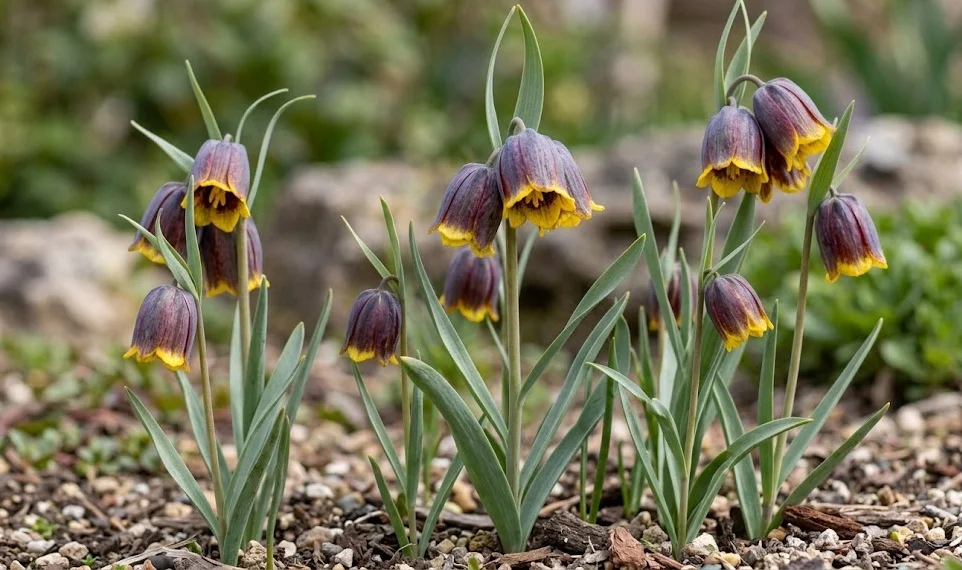

Success with the Assyrian fritillary starts with a precise planting technique and a strategic approach to future expansion. These bulbs are distinctive for their dark, bell-shaped flowers and their preference for specific environmental conditions during the establishment phase. Proper placement in the garden ensures that the plant has the resources it needs to thrive through several seasons. Understanding the mechanics of planting and the methods of propagation is essential for any serious horticultural enthusiast.
The best time to plant these bulbs is in the early autumn when the soil is still warm but the air is cooling. This window of time allows the root system to begin developing before the ground freezes for the winter. It is important to handle the bulbs with care, as they can be somewhat fragile and susceptible to bruising. Placing them in the ground at the correct depth will provide the necessary insulation against extreme temperature shifts.
Optimal planting time and depth
Choosing the right depth for the bulbs is a critical decision that influences both survival and flowering success. Generally, these bulbs should be placed at a depth that is roughly three times their own height. This deep planting protects the core of the bulb from surface temperature fluctuations and small foraging animals. Space the bulbs a few inches apart to allow for natural spread and air circulation as they grow.
The orientation of the bulb during planting also plays a significant role in how the shoot emerges. Ensure the pointed end is facing upward, as this is the primary growth point for the upcoming season. If the soil is particularly heavy, adding a small handful of grit at the bottom of the planting hole can improve drainage. Firm the soil gently over the bulbs to eliminate air pockets but avoid packing it too tightly.
Propagation by offsets
One of the most reliable ways to increase a collection of Assyrian fritillaries is through the division of bulb offsets. Over several years, a mature bulb will naturally produce smaller “bulblets” around its base as part of its life cycle. These offsets can be carefully detached during the dormant period in late summer or early autumn. This method ensures that the new plants will be identical to the parent in both color and form.
More articles on this topic
When separating the offsets, it is vital to use a sharp, clean tool to minimize damage to the tissue. Only take the offsets that have already developed their own small root system or are easily detached from the main bulb. These smaller bulbs should be replanted immediately at a slightly shallower depth than the mature ones. It may take a year or two of growth before these offsets are large enough to produce their first flowers.
Growing from seeds
Propagating Assyrian fritillaries from seed is a task that requires a high level of patience and consistent care. The seeds should be harvested as soon as the pods turn brown and start to split open in early summer. Sowing the seeds fresh often leads to higher germination rates compared to using dried or stored seeds. Use a well-draining seed compost and cover the seeds with a very thin layer of fine grit.
The containers should be kept in a cold frame or a sheltered spot outdoors to undergo a natural period of winter chilling. Germination typically occurs in the following spring as the temperatures begin to fluctuate. Young seedlings look very much like blades of grass and should not be disturbed during their first year of growth. It can take up to four or five years for a seed-grown plant to reach blooming size.
Establishing young plants
Once the new plants have emerged, whether from offsets or seeds, they need a stable environment to mature. Consistent moisture levels during the spring growth phase are necessary to prevent the young bulbs from drying out. However, as the foliage begins to yellow, the water should be reduced to mimic the natural onset of dormancy. Protecting these young specimens from aggressive weeds will ensure they do not have to compete for vital nutrients.
More articles on this topic
Labeling the areas where young bulbs are growing is a practical step to avoid accidental disturbance during the off-season. In the second or third year, a light application of a potassium-rich fertilizer can help speed up the development of the bulb. Once the plants reach flowering size, they can be moved to their permanent positions in the garden. This gradual establishment process builds a strong foundation for a healthy and vibrant horticultural display.