
Growing common rue in a home garden requires a balance between understanding its hardy nature and respecting its chemical potency. This evergreen subshrub is valued for its distinctive bluish-green foliage and historical significance in herbal medicine. While it is relatively low-maintenance, providing the right environment is key to ensuring its longevity and aesthetic appeal. Successful cultivation begins with recognizing that this plant thrives on a degree of neglect once it is properly established.
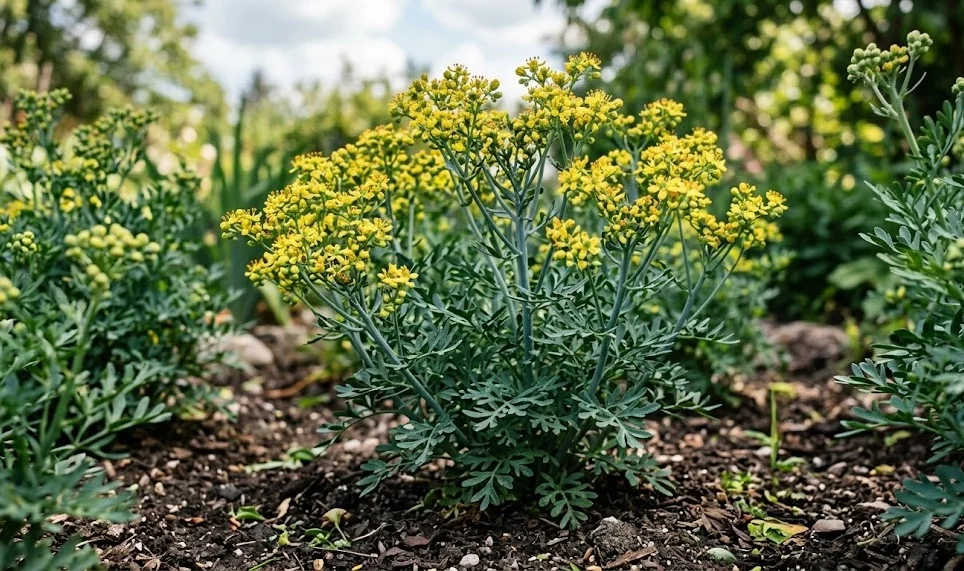
The aesthetic appeal of common rue lies in its delicate, fern-like leaves that provide a unique texture to any landscape. These leaves possess a bitter aroma that serves as a natural deterrent for many common garden pests. Gardeners often appreciate how the cool tones of the foliage contrast beautifully with the bright yellow flowers that appear in midsummer. Beyond its looks, the plant is a sturdy survivor that can withstand challenging conditions if its basic needs are met.
Proper placement is the foundation of long-term care because this plant does not like to be moved once its deep taproot has developed. You should choose a spot that offers excellent drainage and plenty of sunlight to mimic its native Mediterranean habitat. When the plant is situated correctly, it develops a woody base that supports its upright growth habit throughout the year. Taking the time to observe your garden’s microclimate will pay dividends as the rue matures into a dense, attractive shrub.
Safety is a critical component of caring for common rue that every gardener must take seriously. The plant contains furanocoumarins, which can cause severe skin irritation or blistering when touched in direct sunlight. It is essential to wear gloves and long sleeves whenever you are handling the plant or working nearby. Educating family members and guests about the plant’s properties ensures that its presence in the garden remains a source of joy rather than a health hazard.
Environmental adaptation and hardiness
Common rue is remarkably adaptable to various environmental stresses, making it a favorite for those in unpredictable climates. It can handle intense heat and significant periods of drought without showing signs of distress or wilting. This resilience comes from its deep-reaching root system, which seeks out moisture far below the soil surface. Even in poor or rocky soils where other plants might struggle, rue often manages to find enough nutrients to sustain its growth.
More articles on this topic
The plant’s cold tolerance is also quite impressive for a Mediterranean native, though it has its limits in extreme northern regions. In most temperate zones, it remains evergreen or semi-evergreen, providing structural interest during the bleak winter months. If the temperature drops significantly below freezing for extended periods, the upper stems may die back, but the roots usually survive. Understanding these local limits helps you decide if additional winter protection is necessary for your specific location.
Air quality and urban conditions rarely bother this plant, which makes it suitable for city gardens or roadside plantings. It is not particularly sensitive to salt spray, which is a significant advantage for coastal gardeners looking for reliable foliage. The waxy coating on the leaves helps the plant retain moisture and protects it from atmospheric pollutants. This ruggedness allows it to serve as a consistent backdrop in various landscape designs regardless of the surrounding environmental challenges.
Wind resistance is another hallmark of the rue plant, thanks to its sturdy stems and compact growth habit. It can serve as a low-level windbreak for more delicate herbs or flowers in exposed garden beds. While it appreciates a bit of shelter from the harshest gusts, it does not suffer from broken branches as easily as more brittle shrubs. This makes it an excellent choice for open hillsides or gardens that lack significant natural protection from the elements.
Soil quality and preparation
The most important factor regarding soil for common rue is drainage, as the plant cannot tolerate “wet feet” for any length of time. Heavy clay soils are the primary enemy of this herb, as they trap moisture and lead to rapid root decay. If your garden has heavy soil, you should consider planting in raised beds or incorporating plenty of grit and sand. Ideally, the soil should be loose enough for water to pass through quickly while still providing structural support.
More articles on this topic
In terms of fertility, common rue is surprisingly unpretentious and often performs better in leaner soils. Overly rich soil, especially those high in nitrogen, can lead to lush but weak growth that is more susceptible to disease. The plant has evolved to thrive in lime-rich, alkaline environments, though it can tolerate a slightly acidic to neutral pH. Testing your soil before planting can help you determine if a small application of lime is needed to optimize the conditions.
Preparing the site involves clearing away weeds and ensuring the ground is deeply cultivated to accommodate the taproot. You should avoid adding heavy amounts of organic matter like fresh manure, which can hold too much moisture and provide excessive nutrients. Instead, a light tilling with some aged compost is usually sufficient to give the plant a healthy start. Ensuring the area is free of competing aggressive roots will allow the young rue to establish itself without unnecessary stress.
Mulching is a practice that requires a specific approach when dealing with common rue to avoid trapping humidity around the crown. Instead of using moisture-retaining wood chips or bark, consider using pea gravel or crushed stone as a mulch. This inorganic material helps keep the roots cool and suppresses weeds while allowing the soil to breathe and dry out efficiently. It also creates a clean, professional look that complements the architectural nature of the plant’s foliage.
Seasonal maintenance routines
Spring is the time for renewal and is when you should focus on cleaning up any winter damage. As new growth begins to emerge at the base, you can assess which stems have survived the cold and which need to be removed. This is also the best time to apply a very light layer of compost around the base if the plant seems to be losing vigor. Avoiding heavy intervention during the early spring allows the plant to transition naturally into its primary growing phase.
During the height of summer, maintenance is largely about monitoring for extreme stress and managing the flowering process. While the yellow flowers are attractive to pollinators like butterflies, they can be removed if you prefer to maintain a compact foliage shape. Deadheading the spent blooms prevents the plant from self-seeding excessively, which can become an issue in some climates. It also directs more energy back into the root system and the development of the blue-green leaves.
Autumn involves preparing the plant for the upcoming dormant period by gradually reducing any supplemental care. You should stop any fertilization well before the first frost to prevent the stimulation of tender new growth that would be killed by the cold. Clearing away fallen debris from around the base of the plant helps prevent fungal spores from overwintering in the soil. This simple act of hygiene goes a long way in ensuring a healthy start when the next growing season arrives.
Winter care is mostly hands-off, as the plant enters a period of rest and slow metabolism. In areas with heavy snowfall, you might need to gently brush off significant accumulation to prevent the branches from splaying or breaking. If you live in a region with extremely cold winds and no snow cover, a temporary screen can protect the foliage from desiccation. Mostly, the plant should be left undisturbed so that it can maintain its internal temperature and energy reserves.
Long-term health and vitality
As common rue ages, it naturally develops a woody structure that can sometimes become leggy or sparse at the base. To maintain long-term vitality, you must be willing to perform regular, thoughtful pruning every few years. This encourages the plant to produce fresh, vibrant stems from the crown, keeping the overall look dense and healthy. A plant that is neglected for too long may become unsightly and lose its resistance to environmental stressors.
Monitoring the color of the foliage is a great way to gauge the overall health of your rue over the years. Deep bluish-green leaves indicate a healthy plant, while yellowing or pale foliage may suggest a drainage issue or a nutrient deficiency. Taking a proactive approach to these visual cues allows you to make minor adjustments before they become major problems. A healthy plant is much more capable of fending off pests and recovering from unexpected weather events.
Crop rotation is not usually a concern for a perennial like rue, but being mindful of its neighbors is important for long-term success. It is known to have allelopathic properties, meaning it can inhibit the growth of certain nearby plants, particularly some legumes and basil. Giving the rue its own space or pairing it with compatible neighbors like roses ensures a harmonious garden environment. This spatial management helps prevent the rue from becoming a dominant or detrimental force in your landscape design.
Finally, knowing when it is time to replace a plant is a mark of an expert gardener. While common rue is a long-lived perennial, it may eventually lose its vigor after a decade or more of growth. If the woody core becomes overly brittle or the foliage production drops significantly despite good care, it might be time to start a new specimen. By propagating your own cuttings, you can ensure a continuous presence of this fascinating herb in your garden for generations.
Managing growth and form
Common rue has a naturally mounded growth habit that can reach about two to three feet in both height and width. Left to its own devices, it will form a soft, rounded shrub that looks excellent in borders or as a low hedge. However, you can influence this form through selective pinching of young stems to encourage more branching. This results in a much fuller plant that provides better coverage and a more formal appearance if that is your goal.
In many gardens, rue is used as a structural element that provides consistency throughout the changing seasons. Its evergreen nature makes it a valuable “anchor” plant that holds the visual interest when other perennials have died back. Because it doesn’t sprawl or climb, it stays relatively contained within its assigned space, making it easy to manage. Regular observation ensures that it doesn’t start leaning too far toward a light source, which could ruin its symmetrical shape.
The plant’s height can be managed to suit the specific needs of your garden layout. If you are using it as a foreground plant, you might want to keep it shorter through more frequent trimming. Conversely, in the middle of a bed, you can allow it to reach its full potential to provide a backdrop for shorter herbs. The flexibility of rue’s growth habit is one of the reasons it has remained a staple in European garden design for centuries.
If you notice the center of the plant starting to open up or “flop,” it is usually a sign that it is getting too much water or shade. Correcting the environment is the first step, but you can also provide a small amount of physical support with a low circular stake if needed. However, the best solution is usually a good pruning to encourage a stronger, more upright woody base. A well-grown rue should be self-supporting and robust, standing firm even after a heavy rainstorm.
Integration into the garden ecosystem
Common rue plays a fascinating role in the garden’s ecology, acting as both a deterrent and a host. It is famously used as a host plant for the larvae of the Giant Swallowtail butterfly, providing them with essential nutrients. While the caterpillars will eat some of the foliage, the plant is usually vigorous enough to recover quickly. Encouraging this interaction adds a level of dynamic life to your garden that goes beyond simple aesthetics.
The strong scent of the leaves is a natural repellent for many unwanted visitors, including some cats and dogs who dislike the aroma. It has also been used historically to keep away certain types of flies and beetles that can plague nearby vegetable crops. By strategically placing rue near more vulnerable plants, you can create a natural protective barrier. This integrated pest management approach reduces the need for chemical interventions in your outdoor space.
From a design perspective, rue pairs exceptionally well with plants that have silver or purple foliage. Consider planting it alongside lavender, sage, or dark-leaved heucheras to create a sophisticated color palette. The cool tones of the rue foliage make nearby warm-colored flowers, like yellow coreopsis or orange marigolds, pop with intensity. It is a versatile companion that enhances the beauty of everything around it without demanding center stage.
Lastly, the historical and cultural context of rue adds a layer of intellectual depth to its presence in the garden. Known as the “Herb of Grace,” it has been featured in literature and folklore for its supposed protective and purifying qualities. Sharing these stories with visitors makes the garden a more engaging and educational space. Cultivating common rue is not just about growing a plant; it is about maintaining a living connection to botanical history and traditional garden wisdom.