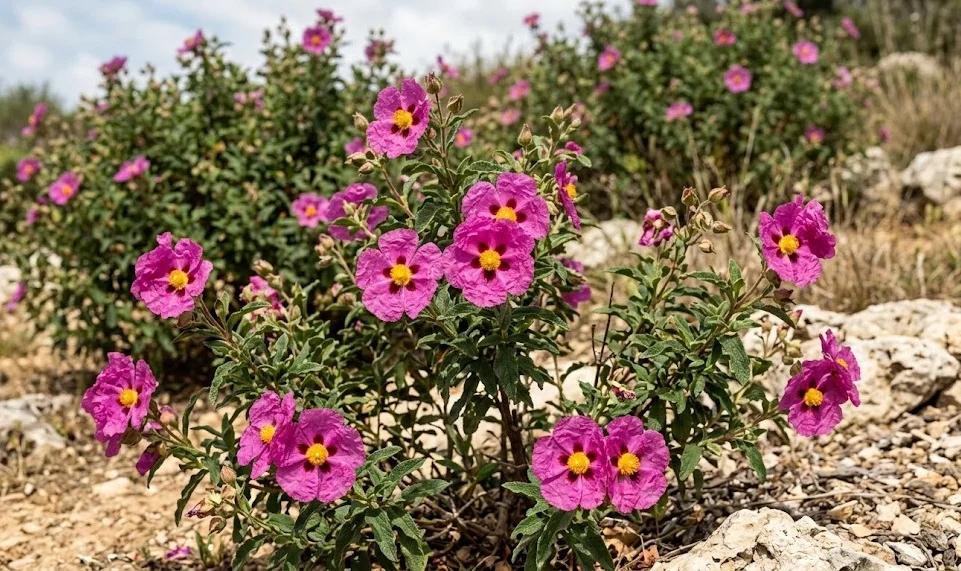

Pruning and cutting back of the purple rockrose are tasks that require a gentle touch and precise timing to avoid damaging the shrub’s natural beauty. Unlike some garden plants that can be cut to the ground and bounce back, rockroses do not typically sprout from old wood. This means that improper pruning can lead to permanent bare patches or even the death of the plant. However, when done correctly, light trimming can help maintain the plant’s shape, encourage better flowering, and extend its overall lifespan in your garden.
Timing the annual pruning
The most important rule for pruning the purple rockrose is to always do it immediately after the flowering season has finished. In most regions, this means you will be reaching for your shears in the mid to late summer months. Pruning at this time allows the plant enough time to produce new growth and harden off before the arrival of the first winter frosts. If you wait until the autumn or winter to prune, you risk cutting off the buds for next year’s flowers or leaving the plant vulnerable to cold damage.
You should avoid pruning in the early spring unless you are only removing dead wood that was killed during the winter. Because the plant develops its flower buds on the previous year’s growth, a heavy spring pruning will result in a summer with no flowers. This is a common mistake that can lead gardeners to believe their plant is unhealthy when it was simply pruned at the wrong time. Patience is a virtue when it comes to managing the growth cycle of Mediterranean shrubs.
Light “deadheading,” or removing the spent flower heads, can be done throughout the blooming season if you have the time and inclination. While this doesn’t necessarily extend the blooming period, it does keep the plant looking tidy and prevents the energy-intensive production of seeds. However, for a large shrub, this can be a tedious task, and it is perfectly acceptable to let the flowers fade naturally. The choice depends on whether you prefer a formal, manicured look or a more natural, wild appearance.
Finally, keep an eye on the weather forecast before you decide to start your major annual pruning session. It is best to prune on a dry day when the humidity is low to ensure that the cuts dry quickly and don’t become an entry point for disease. Avoid pruning during periods of extreme heat or drought, as the plant is already stressed and may not have the resources to heal properly. Choosing the right moment for your intervention ensures the best possible outcome for the plant’s health and aesthetics.
More articles on this topic
Techniques for maintaining shape and size
When you are ready to prune, your goal should be to “tip” or “shear” the green, leafy growth rather than cutting back into the thick, woody stems. You should never cut into the “dead zone” of the plant, which is the interior area where no green leaves are present. Because the purple rockrose lacks dormant buds on its older wood, it cannot regenerate if you cut it back too hard. Instead, focus on removing the top one-third of the current year’s green growth to encourage bushiness.
Use sharp, bypass-style hand pruners for most of your work, as they make clean cuts that heal much faster than anvil-style shears. For larger shrubs or for a more uniform look, you can use hedge shears to lightly shape the outer canopy of the mound. Always step back frequently to look at the overall shape of the plant from a distance to ensure you are maintaining a balanced form. The ideal shape for a rockrose is a natural, rounded mound that looks graceful rather than strictly geometric.
If you find a branch that is crossing through the center of the plant or rubbing against another, you can remove it at its base if necessary. This helps improve air circulation and light penetration into the interior of the shrub, which is vital for long-term health. However, be careful not to create a large “hole” in the canopy that the plant may never be able to fill back in. Strategic, minimal cuts are always better than aggressive thinning for this particular species.
For gardeners who want a more informal look, you can simply pinch back the tips of the new shoots with your fingers during the growing season. This “soft pruning” encourages the plant to branch out without the need for heavy tools or major interventions. It is a great way to keep a young plant from becoming too leggy and to develop a dense structure from the very beginning. The more you work with the plant’s natural growth habit, the easier the maintenance will be over time.
More articles on this topic
Rejuvenation and handling older specimens
As a purple rockrose reaches the end of its typical ten to fifteen-year lifespan, it may naturally start to look woody, sparse, or misshapen. At this stage, you must decide whether to attempt a light rejuvenation or to simply replace the plant with a fresh specimen. While you can’t perform a “hard” rejuvenation like you might with a rose or a lilac, you can sometimes extend the plant’s life with careful management. This involves a multi-year plan of very light thinning to encourage a bit of new growth from the base.
Start by removing only the oldest, most unproductive branches one at a time over several seasons. This “staggered” approach prevents the plant from going into shock and allows the remaining foliage to support the root system. You should also focus on providing the best possible environmental conditions to give the aging plant every advantage. Sometimes, a well-timed application of light mulch or a deep watering during a drought can do more for an old plant than any amount of pruning.
If the center of the plant has become completely bare and the branches are sprawling outward, the plant may have reached the point of no return. This is a natural part of the lifecycle for many Cistus hybrids and is not a sign of failure on your part. In this situation, the best “pruning” you can do is to remove the old plant and prepare the site for a new one. Fresh, young rockroses grow quickly and will soon fill the space with a vitality that an old, woody specimen can no longer provide.
Keep some cuttings from your favorite older plants so you can continue their lineage in your garden even after the original shrub is gone. This “cyclical” approach to gardening ensures that you always have healthy, vigorous plants on display while respecting the natural limits of each specimen. Learning when to let go is just as much a part of expert gardening as knowing when to prune. By following these professional guidelines, you can ensure that your purple rockroses always look their absolute best in every stage of their lives.