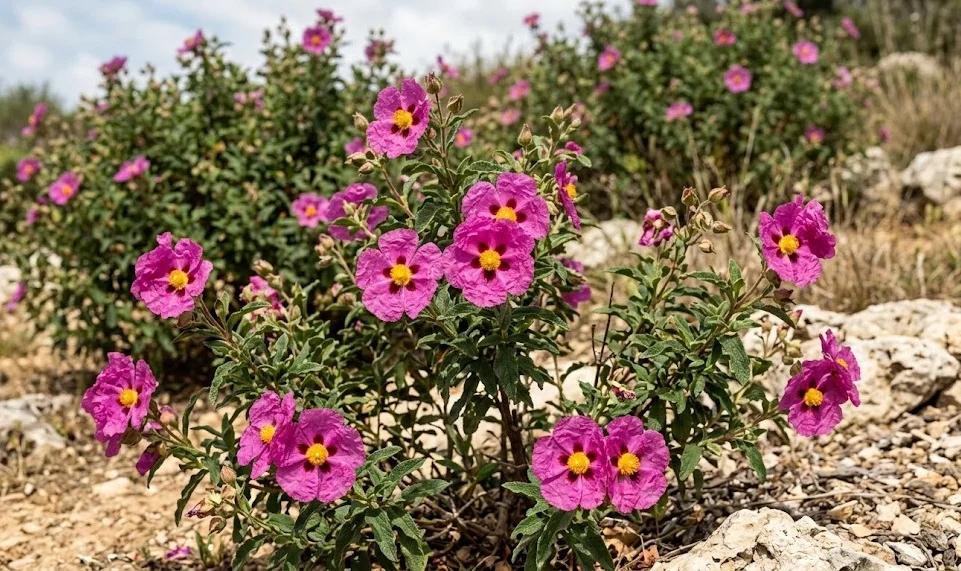

Care of the purple rockrose is a rewarding endeavor for any gardener who appreciates the rugged beauty of Mediterranean landscapes. This hybrid shrub is well-known for its striking pink blossoms and its ability to thrive in environments where many other plants might struggle. Successfully maintaining this plant requires a deep understanding of its natural habitat and its specific physiological needs throughout the changing seasons. By following professional guidelines, you can ensure that your garden remains vibrant with the unique presence of this resilient species.
Understanding the natural habitat of rockroses
The origin of these plants lies in the sun-drenched coastal regions of the Mediterranean where they have adapted to harsh conditions. They naturally grow in rocky, poor soils that offer excellent drainage and very little organic matter compared to forest soils. Replicating these conditions in a domestic garden is the primary secret to keeping them healthy over many years. You should always prioritize mimics of their native dry climate to prevent common issues like root rot or fungal growth.
The climate in which they evolved is characterized by hot, dry summers and mild, wet winters. This cycle dictates the growth patterns of the shrub and its blooming period during late spring and early summer. Because they are adapted to low humidity, they perform exceptionally well in coastal gardens where salt spray might affect other plants. Understanding this background helps you appreciate why they require so little intervention once they are fully established in the landscape.
Maintaining the proper air circulation around the plant is just as important as the soil it sits in. In their natural setting, they are often exposed to sea breezes that keep the foliage dry and prevent pathogens from taking hold. If you plant them in a crowded border, they may lose their lower leaves due to a lack of light and airflow. Always give them enough space to reach their full spread without being smothered by aggressive neighboring species.
Finally, you must realize that these shrubs are relatively short-lived compared to long-lasting perennials or trees. A typical specimen may provide peak performance for about ten to fifteen years before it begins to look woody or sparse. Professional gardeners often plan for this by having younger plants ready to take their place in the garden design. Knowing the lifecycle of the shrub allows you to manage your landscape expectations and maintain a consistent aesthetic.
More articles on this topic
Soil management and site preparation
The foundation of successful care begins with selecting the right spot in your garden layout. These shrubs absolutely require a site that offers full sun exposure for at least six to eight hours every day. If the location is too shady, the plant will become leggy and produce far fewer flowers than it otherwise would. You should observe your garden throughout the day to identify the areas that receive the most intense light.
Soil texture is perhaps the most critical factor when it comes to the long-term survival of the purple rockrose. They prefer a sandy or gravelly soil that allows water to pass through the root zone almost instantly. If your garden has heavy clay soil, you must take steps to improve the drainage before you even think about planting. Adding grit, perlite, or crushed stone is often more effective than simply adding organic compost which can hold too much moisture.
Adjusting the soil pH is generally not necessary unless your ground is extremely acidic or alkaline. These plants are remarkably tolerant of a wide range of pH levels, though they often lean toward slightly acidic to neutral environments. You should avoid over-fertilizing the soil during the preparation phase because rich soil can actually lead to weak growth. The goal is to provide a lean environment that encourages the plant to develop a deep and hardy root system.
Before placing the plant in the ground, ensure that the area is free from competitive weeds that might steal resources. The root system of a young rockrose is sensitive and does not like to be disturbed once it starts to spread. Preparing a wide planting area rather than a small hole will help the lateral roots expand more easily into the surrounding earth. This initial investment in soil preparation pays off significantly as the plant matures and becomes more self-sufficient.
More articles on this topic
Seasonal maintenance and monitoring
During the first growing season, you must keep a close eye on the hydration levels of the new transplant. While the plant is drought-tolerant once established, it needs consistent moisture to develop its initial root architecture. You should check the soil depth every few days during particularly hot or dry spells to ensure it hasn’t dried out completely. Once you see new green growth appearing, you can gradually reduce the frequency of your intervention.
As the seasons change, you will notice the plant responding to shifts in temperature and light intensity. In the spring, the shrub will begin to push out fresh leaves and develop the buds that will soon become flowers. This is the best time to inspect the plant for any winter damage or dead wood that needs to be cleared away. Keeping the center of the plant clean of debris helps maintain the health of the internal branches.
The blooming period is usually the highlight of the year, with flowers appearing in quick succession throughout the late spring. Each individual flower only lasts for a day, but the plant produces so many that it remains covered in color for weeks. You do not need to deadhead these flowers to encourage more blooms, as the plant is genetically programmed to produce a set amount. However, removing the spent petals can keep the plant looking tidy if you prefer a more formal appearance.
In the autumn, the growth of the shrub will naturally slow down as it prepares for the cooler months ahead. This is a good time to apply a thin layer of mulch around the base, though you must keep it away from the stem. The mulch helps regulate soil temperature but should be inorganic, such as gravel, to avoid holding moisture against the bark. Monitoring the plant during this transition ensures that it enters the dormant phase in the best possible condition.
Managing growth habits and aesthetics
The natural shape of the purple rockrose is somewhat mounded and spreading, which makes it an excellent groundcover or border plant. To maintain this attractive form, you should monitor how the branches are developing over time. Sometimes, a single branch might grow faster than the others, creating an asymmetrical look that can be easily corrected. Gentle guidance in the early years will help define the structure of the mature specimen.
Because these plants can become quite wide, you need to ensure they are not encroaching on walkways or other vital garden features. If you notice the shrub is getting too large for its assigned space, you can perform light trimming to keep it in check. It is important to do this after the flowering season has ended to avoid cutting off potential buds. Always use sharp, sterilized tools to make clean cuts that heal quickly without inviting disease.
The foliage of the purple rockrose is evergreen, providing year-round interest even when the flowers are long gone. The leaves have a slightly sticky resin that gives them a unique texture and a pleasant, herbal scent when touched. This resin also acts as a natural defense mechanism against herbivores and certain types of environmental stress. Appreciating these subtle characteristics adds to the overall enjoyment of having the plant in your collection.
As the plant ages, it may begin to show some bare patches in the center of the mound. This is a natural part of the aging process for many Mediterranean shrubs and can be managed with strategic planting. You can place smaller, sun-loving perennials around the base to hide the woody stems and create a layered look. Alternatively, replacing the plant every decade or so will keep the garden looking fresh and invigorated.
Environmental stressors and resilience
Despite their hardy nature, rockroses can still face challenges from extreme weather events. Unusual cold snaps or prolonged periods of high humidity can put significant stress on the plant’s metabolic processes. You should be prepared to provide temporary protection if a severe frost is predicted in your region. Using a frost cloth or a temporary shelter can prevent the evergreen leaves from suffering from desiccation or freeze burn.
In very hot climates, the plant may enter a semi-dormant state during the peak of summer to conserve water. During this time, the leaves might appear slightly duller or even curl inward to reduce the surface area exposed to the sun. This is a perfectly normal survival strategy and does not necessarily mean the plant is dying or needs more water. Once the temperatures drop in the evening or later in the season, the plant will regain its usual vigor.
High winds can also be a factor, especially if the plant is grown in an exposed coastal or hilltop location. While they are adapted to breezes, a powerful storm can sometimes break the brittle stems of an older rockrose. Planting them in groups or near a windbreak can provide some collective protection against the strongest gusts. Checking the structural integrity of the plant after a major weather event is always a wise practice for any gardener.
Air quality and pollution are generally not major concerns for this species, as it is quite tough. It can handle the typical atmospheric conditions of urban environments as long as its basic light and soil requirements are met. This makes it a versatile choice for city gardens, rooftop terraces, or public parks where maintenance might be infrequent. Its ability to tolerate various environmental pressures is one of its most valuable attributes for modern landscaping.
Interaction with local wildlife and ecology
One of the great benefits of growing this shrub is its positive impact on local pollinators like bees and butterflies. The large, nectar-rich flowers are highly attractive to a wide variety of beneficial insects that help your entire garden flourish. You will often see several different species of bees visiting the blooms throughout the morning hours. Providing a food source for these creatures is an excellent way to support local biodiversity in your neighborhood.
Interestingly, the resinous leaves are often ignored by deer and rabbits, making it a “deer-resistant” choice for many regions. If you live in an area where wildlife frequently grazes on garden plants, the rockrose is a safe and beautiful option. The bitter taste and sticky texture of the foliage act as a natural deterrent that keeps most herbivores at bay. This allows the plant to grow undisturbed in areas where more succulent plants would be quickly devoured.
The plant also plays a role in soil stabilization, particularly on slopes or banks where erosion might be a concern. Its extensive root system helps hold the soil together and prevents it from washing away during heavy rain events. Using rockroses for this purpose combines aesthetic beauty with practical land management solutions. They are often used in “fire-wise” landscaping because their moisture-retention strategies can make them less flammable than some other dry-climate shrubs.
Insects that might be considered pests are rarely a major issue for a healthy, well-sited purple rockrose. When the plant is grown in the correct conditions, its natural defenses are usually sufficient to repel most common garden invaders. By fostering a healthy ecosystem around the plant, you encourage natural predators like ladybugs to take care of any minor infestations. This ecological approach to gardening reduces the need for chemical interventions and promotes a healthier environment for everyone.
Advanced care tips for enthusiasts
For those who want to take their rockrose care to the next level, experimenting with different microclimates can be fascinating. You might find that a plant positioned against a south-facing stone wall grows much faster due to the reflected heat. Observing these subtle differences helps you become a more intuitive gardener who understands the nuances of light and warmth. Each garden has its own unique set of conditions that can be optimized for specific plant species.
Collecting and comparing different hybrids within the Cistus genus can also provide a deeper appreciation for the purple rockrose. While the purple variety is stunning, seeing how it relates to its parent species offers insight into its hybrid vigor. Many collectors enjoy creating a “Cistus walk” where various forms are displayed together to highlight their diverse flower colors and leaf shapes. This creates a cohesive Mediterranean theme that looks professional and well-planned.
Recording the blooming dates and weather conditions each year can help you predict future garden cycles. You might notice that a particularly wet winter leads to a more profuse flowering season the following spring. Keeping a simple garden journal allows you to track the long-term health and performance of your shrubs. This data is invaluable for making informed decisions about pruning, watering, and eventual plant replacement.
Sharing your passion for these plants with the local community or gardening clubs can also be very rewarding. Since they are easy to grow and visually impressive, they are often a great topic for garden tours or educational workshops. Encouraging others to plant drought-tolerant species like the rockrose helps promote sustainable gardening practices on a wider scale. Your expertise can inspire others to create beautiful, low-maintenance landscapes that thrive in our changing climate.