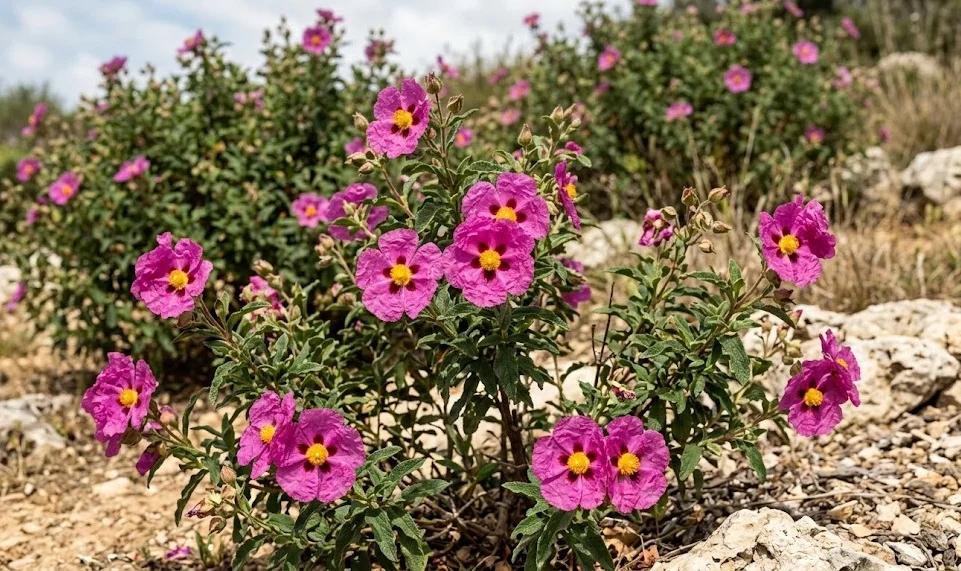

Light requirements of the purple rockrose are perhaps the most influential factor in determining how the plant will look and perform in your garden. As a species that evolved in the open, sun-baked landscapes of the Mediterranean, it is physiologically “wired” to demand high levels of solar radiation. Without enough light, the plant cannot produce the energy it needs for its signature floral display or its dense, attractive foliage. Understanding how to manage and optimize light exposure is the foundation of professional-grade rockrose care.
The importance of full sun exposure
To see the purple rockrose at its absolute best, you must provide it with a location that receives full sun for the majority of the day. In horticultural terms, “full sun” typically means a minimum of six to eight hours of direct, unfiltered sunlight. The intensity of the light is just as important as the duration, with afternoon sun being particularly valuable for energy production. A plant grown in these conditions will be compact, sturdy, and covered in a profusion of bright pink blossoms.
The plant’s leaves are covered in a sticky resin that helps protect them from the intense ultraviolet rays of the sun. This resin is a natural adaptation that allows the rockrose to thrive in conditions that would scorch or dehydrate many other species. In fact, the plant actually seems to enjoy the heat that comes along with direct sunlight, using it to drive its metabolic processes. When you provide ample light, you are essentially giving the plant the fuel it needs to reach its full genetic potential.
Sunlight also plays a critical role in the timing and abundance of the flowering season. The development of flower buds is triggered by a combination of day length and the cumulative amount of light the plant has received in the preceding months. In a sunny spot, you will notice that the buds form early and open in a spectacular, synchronized display. A sun-drenched plant is not just healthier; it is a more effective piece of living art in your landscape design.
Finally, full sun helps keep the foliage dry and reduces the likelihood of fungal diseases that thrive in damp, shaded environments. The UV rays act as a natural disinfectant, killing off spores before they can take hold on the leaves. By choosing the sunniest spot in your garden, you are using the environment to do most of the maintenance work for you. This synergy between the plant and the sun is the secret to low-maintenance gardening success.
More articles on this topic
Effects of shade on blooming and growth
When a purple rockrose is planted in an area that receives too much shade, the negative effects become apparent very quickly. The most obvious sign is “etiolation,” where the stems become long, thin, and weak as the plant tries to “reach” toward the light. This results in a leggy, unattractive appearance that lacks the dense, mounded form that makes the species so desirable. A shaded plant will often flop over under its own weight because the wood never develops the necessary strength.
Flowering is the first thing to suffer when light levels are insufficient for the plant’s needs. You may find that a rockrose in partial shade produces only a handful of flowers, or in some cases, none at all. The flowers that do appear may be smaller and less vibrant in color compared to those grown in full sun. Since the blooms are the primary reason many people grow this shrub, failing to meet its light requirements can be a major disappointment.
In addition to poor growth and flowering, a shaded rockrose is much more vulnerable to pests and diseases. The lack of air circulation and the presence of lingering moisture on the leaves create an ideal habitat for aphids and mildew. The plant’s internal defenses are also weakened because it is essentially in a state of chronic energy deficiency. Over time, a shaded rockrose will become increasingly sparse and may eventually die off as it loses the battle for resources.
If you have a rockrose that is currently struggling in the shade, you should consider moving it to a sunnier location or pruning back nearby trees to let more light in. While these shrubs don’t always transplant well once they are mature, sometimes a move is the only way to save the plant. Alternatively, you can use the shaded spot for a different species and start fresh with a new rockrose in a better location. Understanding the limits of the plant’s tolerance for shade will save you a lot of frustration in the long run.
More articles on this topic
Seasonal changes in light intensity
It is important to remember that the light levels in your garden will change significantly as the seasons progress from spring to winter. A spot that seems perfectly sunny in the height of summer might be cast into deep shadow during the late autumn as the sun moves lower in the sky. You should observe your potential planting sites at different times of the year to get a true sense of their light profile. This long-term perspective is what separates an expert gardener from a casual observer.
During the winter months, when the purple rockrose is dormant, the lower light levels are less of a concern than they are during the growing season. However, because the plant is evergreen, it still needs some light to maintain its basic physiological functions throughout the cold months. An area that is completely blocked from the sun all winter can become too cold and damp, increasing the risk of winter damage. Aim for a site that provides at least some direct light even on the shortest days of the year.
As spring arrives and the plant wakes up, the rapidly increasing light intensity acts as a signal for the start of the new growth cycle. This is when the plant is most sensitive to its light environment, as it needs a massive amount of energy to produce new leaves and flowers. If the spring is unusually cloudy or if the plant is being shaded by early-leafing trees, the initial growth may be stunted. Monitoring these seasonal transitions helps you understand why your plant might be behaving differently from year to year.
You can also use reflective surfaces, such as light-colored walls or pale gravel, to “amplify” the available light in a borderline location. The reflected light from a south-facing wall can provide an extra boost of warmth and energy that the rockrose will greatly appreciate. This technique is particularly useful if you live in a cooler climate where every bit of solar energy counts. By becoming a “manager of light,” you can create a microclimate that allows your purple rockrose to flourish in a wide variety of garden settings.