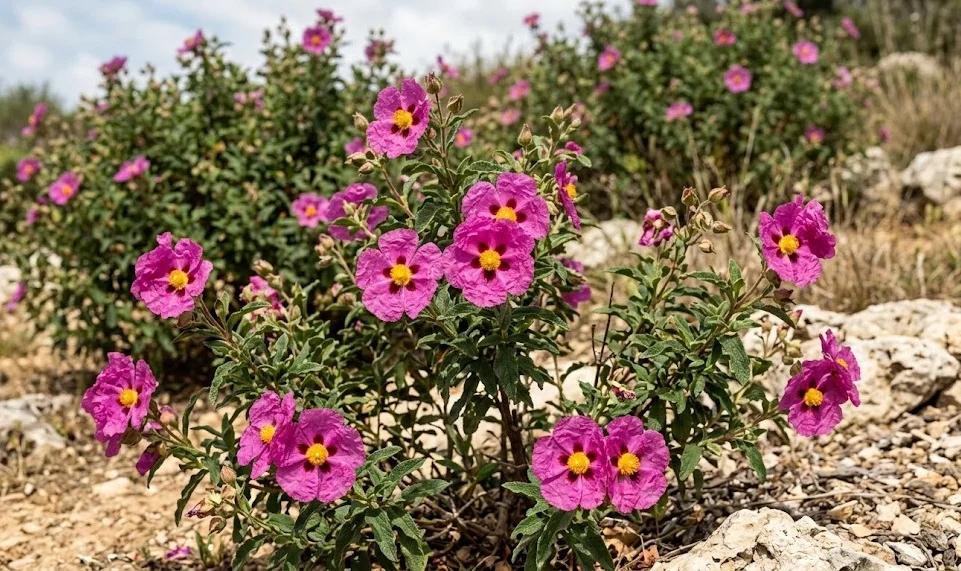

Planting and propagation of the purple rockrose are essential skills for any gardener looking to expand their collection of these Mediterranean beauties. This particular hybrid is prized for its resilience and striking floral display, making it a staple in water-wise landscapes. Whether you are starting with a nursery-bought specimen or trying to create new plants from your own stock, the process is straightforward but requires attention to detail. By following professional techniques, you can ensure a high success rate and a garden filled with vibrant, healthy shrubs.
Selecting the ideal planting location
The first step in a successful planting project is identifying the location that best suits the biological needs of the shrub. You must choose a spot that receives full sun for most of the day to ensure maximum flower production. Shadows from trees or buildings can cause the plant to grow unevenly and reduce its overall vitality over time. A south-facing or west-facing slope is often the most desirable position for these light-loving plants.
Beyond light, you must consider the physical space the mature shrub will eventually occupy in your garden. The purple rockrose has a spreading habit and can easily reach a width of three to four feet when fully grown. If you plant it too close to a path or a smaller neighbor, you will find yourself constantly pruning it back, which can stress the plant. Allow for adequate airflow between plants to prevent the buildup of humidity that can lead to leaf diseases.
Soil drainage is the final piece of the location puzzle that you cannot afford to ignore during the planning phase. If the area pools water after a rainstorm, it is not a suitable spot for this species without significant modification. You can test the drainage by digging a small hole and filling it with water to see how quickly it disappears. Ideally, the water should drain away within an hour to ensure the roots never sit in stagnant moisture.
If your chosen location has heavy or compacted soil, consider creating a raised bed or a mound to improve the drainage. This elevation allows gravity to pull excess water away from the root crown, mimicking the rocky hillsides of the Mediterranean. Using a mix of native soil and horticultural grit can create the perfect texture for root expansion. Once you have identified and prepared the perfect spot, the actual planting process becomes much easier and more likely to succeed.
More articles on this topic
The professional planting process
When you are ready to plant your purple rockrose, start by digging a hole that is twice as wide as the current root ball but no deeper. It is a common mistake to plant shrubs too deep, which can lead to stem rot at the base of the plant. The top of the root ball should be exactly level with the surrounding soil surface when the hole is filled. This ensures that the delicate transition zone between the roots and the stem stays dry and healthy.
Carefully remove the plant from its container, being mindful not to damage the root system which can be somewhat brittle. If the roots are circling the inside of the pot, gently loosen them with your fingers to encourage them to grow outward. Place the plant in the center of the hole and check its orientation to ensure the best side is facing your primary viewing area. Taking a moment to get the positioning right will result in a much better visual outcome as the plant grows.
Fill the space around the root ball with a mixture of the native soil you removed and a small amount of mineral grit if needed. You should avoid adding heavy organic fertilizers or rich potting soil to the planting hole, as this can discourage the roots from exploring the surrounding earth. Firm the soil gently with your hands to remove any large air pockets, but do not pack it down so hard that you crush the roots. The goal is to provide a stable base while maintaining a porous structure for water and air.
Immediately after planting, give the shrub a thorough watering to help settle the soil and hydrate the roots. Even though the plant will eventually be drought-tolerant, this initial drink is vital for overcoming the stress of transplantation. You may want to add a thin layer of gravel mulch around the base to help keep the soil temperature stable and suppress weeds. Monitor the new plant daily for the first week to ensure it isn’t showing signs of wilting or shock.
More articles on this topic
Propagation through softwood cuttings
If you already have a healthy purple rockrose and want to create more, taking softwood cuttings is the most effective method. This process is best done in late spring or early summer when the plant is actively growing and the new stems are still flexible. Choose healthy, non-flowering shoots that are about four to six inches long for the best results. Using a sharp, sterilized knife or shears will ensure the parent plant and the cutting are not exposed to infection.
Strip the leaves from the bottom half of the cutting to expose the nodes where new roots will eventually form. Some gardeners like to dip the cut end into a rooting hormone powder to speed up the process, although rockroses often root well without it. Insert the cutting into a small pot filled with a very well-draining medium, such as a mix of peat and perlite. Make sure the medium is moist but not soaking wet, as excess water will cause the cutting to rot.
Place the pots in a warm, bright location that is out of direct sunlight, which could dry out the cuttings too quickly. Using a propagator lid or a simple plastic bag can help maintain the humidity levels around the foliage while the roots are developing. You should check the moisture levels regularly and mist the leaves if they start to look dry or limp. In about four to six weeks, you should start to see signs of new growth or feel resistance when you gently tug on the cutting.
Once the cuttings have established a strong root system, they can be moved into individual pots with a standard well-draining soil mix. Gradually acclimate the young plants to outdoor conditions by placing them in a sheltered spot for a few hours each day. This process, known as “hardening off,” prevents the tender new growth from being scorched by the sun or wind. After a few weeks of acclimation, your new purple rockroses will be ready to be planted in their permanent garden homes.
Growing from seeds and long-term establishment
While propagation from cuttings is faster, growing purple rockrose from seeds can be a fascinating project for dedicated gardeners. The seeds are small and often require a bit of scarification or a “heat shock” to mimic the effects of a wildfire, which naturally triggers germination in the wild. You can achieve this by briefly soaking the seeds in hot water before sowing them on the surface of a seed-starting mix. Do not cover them deeply, as they often need some light to trigger the germination process.
Keep the seed trays in a warm environment and maintain consistent moisture without letting the soil become waterlogged. Germination can be irregular, with some seeds sprouting in a few weeks while others may take several months. Once the seedlings have developed their first set of true leaves, they are ready to be thinned or moved into larger containers. Be very careful during this stage, as the young roots are incredibly delicate and prone to damage from handling.
As the young plants grow, they should be kept in a sunny location and watered carefully to encourage steady development. It usually takes a year or two for a seed-grown rockrose to reach a size where it is hardy enough to survive in the open garden. During this time, you can shape the young plant with light pinching to encourage a bushy, well-branched habit. This early training ensures that the mature shrub will have a dense and attractive form once it is fully established.
Whether grown from cuttings or seeds, the final goal is to get the plant successfully established in its permanent location. During the first two years in the ground, the young shrub will focus heavily on root development rather than top growth. You should resist the urge to over-water or over-fertilize during this period, as the plant needs to learn to survive on its own. Once it reaches maturity, the purple rockrose will require very little from you other than occasional monitoring and appreciation of its beauty.