
Pruning is perhaps the most essential maintenance task for achieving a high-yielding and long-lived basil plant. Beyond simple harvesting, strategic cutting back influences the plant’s hormonal balance, directing energy away from reproduction and toward lush vegetative growth. Professional horticulturists view pruning as a form of architectural training that prevents the plant from becoming leggy and prone to collapse. By understanding the specific growth points of the basil plant, any grower can significantly increase their harvest and maintain a vibrant, aromatic herb throughout the entire season.
Fundamental principles of pinching
The primary goal of pruning basil is to encourage a “bushy” growth habit by stimulating the development of lateral branches. In its natural state, a basil plant will focus on terminal growth, reaching upward on a single stem until it eventually flowers and dies. Pinching off the top set of leaves forces the plant to redirect its growth hormones to the dormant buds located in the leaf axils. This results in the formation of two new stems where there was previously only one, effectively doubling the plant’s future productivity.
A professional approach to pinching begins early, usually when the seedling has developed its third or fourth set of true leaves. At this stage, the main stem is soft and easy to remove with just the thumb and forefinger or a small pair of sterilized snips. The cut should be made just above the highest node that has visible side shoots emerging. Removing only the very tip of the plant ensures that the delicate seedling is not overly stressed while still receiving the signal to branch out.
Consistent pinching should continue throughout the vegetative phase of the plant’s life cycle to maintain its compact shape. Every time a branch reaches about ten centimeters in length, its terminal bud should be removed to encourage further subdivision. This creating a dense canopy of foliage that is much more efficient at capturing light than a tall, sparse plant. Regular maintenance also prevents the plant from becoming “top-heavy,” which can lead to broken stems during wind or heavy rain.
The physiological response to pruning is almost immediate, with the lateral buds showing significant growth within just a few days. Because basil is a fast-growing annual, it can tolerate frequent pinching as long as it is provided with adequate water and nutrients. Professional growers often schedule their pruning sessions every two weeks to keep up with the plant’s rapid development. This proactive management is the key to preventing the plant from reaching the “bolting” stage, where it begins to produce undesirable flowers.
More articles on this topic
Managing the flowering process
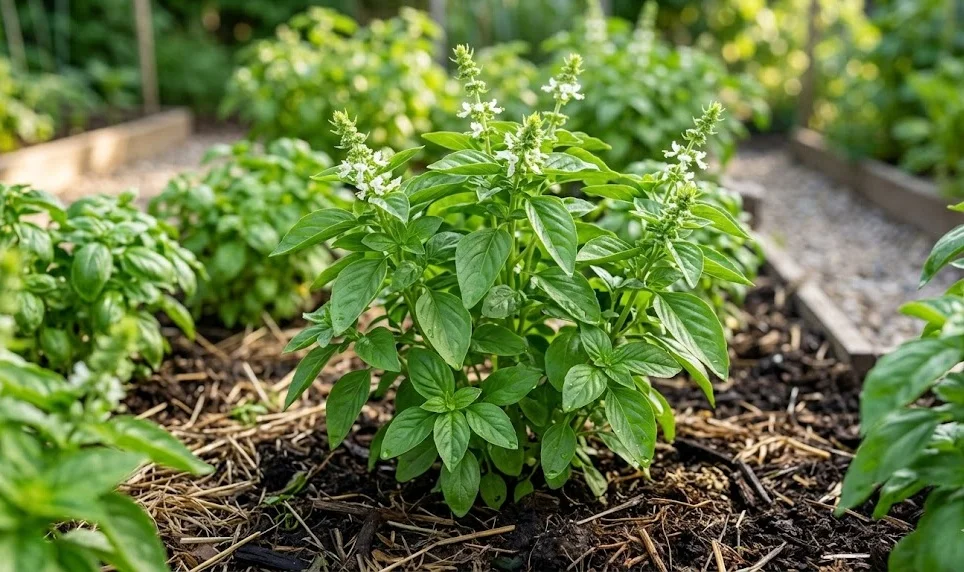
Flowering is a natural part of the basil plant’s life cycle, but it is generally discouraged in culinary cultivation. Once a basil plant begins to produce flower spikes, the chemical composition of the leaves changes, often resulting in a bitter or woody flavor. The plant also stops producing new leaves as it shifts all its resources into seed production and eventual senescence. Professional pruning techniques are designed to delay this process for as long as possible by removing flower buds as soon as they appear.
Early signs of flowering include a change in the shape of the top leaves, which become smaller and more pointed, followed by the emergence of a central stalk. This stalk should be cut back immediately, along with the top few inches of the stem it is growing on. Simply pinching the very tip of the flower spike is often insufficient, as the plant may try to regrow the flower from the same node. Cutting back to a lower, healthy set of leaves is a more effective way to reset the plant’s vegetative state.
In some cases, if a plant has been neglected and has developed significant flowering spikes, a more drastic “rejuvenation prune” may be necessary. This involves cutting the entire plant back by up to half its height, leaving behind several healthy nodes for regrowth. While this can be a shock to the plant, it is often the only way to restore the quality of the foliage for the remainder of the season. Following such a heavy prune with a light application of nitrogen-rich fertilizer can help the plant recover more quickly.
For those who wish to save seeds or attract pollinators, a few plants can be allowed to flower toward the end of the season. However, these plants should be kept separate from the main harvest crop to avoid accidental mixing of bitter and sweet leaves. The flowers themselves are edible and have a concentrated basil flavor, making them a unique addition to salads and garnishes. Managing the reproductive cycle of the basil through careful pruning is a fundamental skill for any professional herbalist.
More articles on this topic
Structural and rejuvenation pruning
Structural pruning is used to maintain the overall health and airflow within the basil plant’s canopy. As the plant becomes denser through regular pinching, the interior leaves may become shaded and start to yellow or rot. Removing some of the smaller, weaker branches from the center of the plant allows light and air to penetrate more deeply. This practice not only improves the health of the individual leaves but also reduces the risk of fungal infections like powdery mildew.
The lower leaves of the basil plant are often the first to show signs of age, disease, or pest damage. Periodically thinning these bottom-most leaves keeps the plant looking tidy and prevents soil-borne pathogens from splashing onto the foliage. This also makes it easier to monitor the moisture level of the soil and apply water directly to the base of the plant. Professional growers treat this as a “hygienic” pruning that supports the long-term vitality of the entire specimen.
As the season progresses, basil plants can become woody at the base, which reduces the quality and quantity of the harvest. A strategic mid-season cutback can help revitalize an older plant and stimulate a flush of tender, new growth. By cutting the stems back to about fifteen centimeters above the soil line, the grower can “reboot” the plant’s development. This is particularly effective in warm climates where the growing season is long enough to allow for a second peak of production.
Proper tool maintenance is a professional requirement for any pruning task, as dull or dirty shears can damage the plant and spread disease. Always use sharp, bypass-style pruners or scissors to ensure a clean cut that heals quickly without tearing the delicate stem tissue. Disinfecting the blades with rubbing alcohol between different plants is a standard precaution against the transmission of bacterial and viral pathogens. Taking care of the tools is just as important as taking care of the plants themselves.
Optimizing harvest through pruning
Professional harvesting is essentially a form of pruning that is timed to coincide with the plant’s peak nutritional and flavor levels. Instead of picking individual leaves, which can stress the plant and leave it looking ragged, it is better to harvest entire stem segments. By cutting a stem just above a node, you are performing a maintenance task while also collecting your harvest. This ensures that every time you take from the plant, you are also encouraging it to grow back more vigorously.
The best time to perform a major harvest prune is in the morning, shortly after the dew has evaporated but before the heat of the day sets in. At this time, the plant is fully hydrated and the concentration of essential oils in the leaves is at its highest. Avoid pruning or harvesting during the hottest part of the afternoon, as the open wounds can lead to excessive moisture loss and wilting. Early morning pruning allows the “wounds” on the stem to calloused over during the day in a controlled manner.
For plants grown for commercial use, a systematic approach to harvesting is used to ensure a consistent supply and uniform plant size. Entire rows may be cut back to a specific height using mechanical or hand shears to maintain a level canopy. This allows the grower to predict the timing of the next harvest and simplifies the management of large-scale herb production. Even for the home gardener, adopting a regular harvesting schedule is the best way to keep the basil plant productive and healthy.
After any significant pruning or harvest, the basil plant will benefit from a thorough watering and a light application of nutrients. The sudden loss of foliage reduces the plant’s photosynthetic capacity, and it needs extra resources to rebuild its leaf area. Monitoring the regrowth carefully for the first few days will ensure that the plant has responded well to the treatment. With proper pruning techniques, a single basil plant can provide an abundance of fresh leaves for many months, far exceeding its natural unmanaged yield.