
Proper irrigation and nutrient management are the two most influential factors in determining the growth rate and flavor quality of a basil crop. As a plant with high transpiration rates and rapid vegetative development, basil requires a consistent supply of both water and essential minerals. Professional growers approach these tasks with a focus on precision, aiming to provide exactly what the plant needs without causing environmental stress. Mastering the delicate balance between hydration and nutrition is essential for any serious herbalist or agricultural professional.
Principles of effective irrigation
Basil is a moisture-loving plant, but it is extremely sensitive to anaerobic soil conditions caused by overwatering. The goal of a professional watering schedule is to maintain a consistent level of moisture in the root zone without reaching the point of saturation. Ideally, the top centimeter of soil should be allowed to dry out slightly before the next application of water. This approach encourages the roots to grow deeper into the profile in search of moisture, resulting in a more resilient plant.
The method of delivery is just as important as the amount of water provided during each session. Overhead watering should be avoided whenever possible, as wet foliage is highly susceptible to fungal pathogens like downy mildew. Applying water directly to the base of the plant using a drip system or a narrow-spouted watering can is the professional standard. If watering must be done by hand, it is best to do so early in the morning so any accidental splashes on the leaves have time to evaporate.
In container gardening, the dynamics of water management change significantly due to the limited volume of the growing medium. Potted basil plants can dry out very quickly, especially in porous terracotta containers or during periods of extreme heat. Checking the weight of the pot or using a moisture meter can provide a more accurate assessment of the plant’s needs than a simple visual check. Ensuring that excess water can drain freely from the bottom of the container is non-negotiable for preventing root rot.
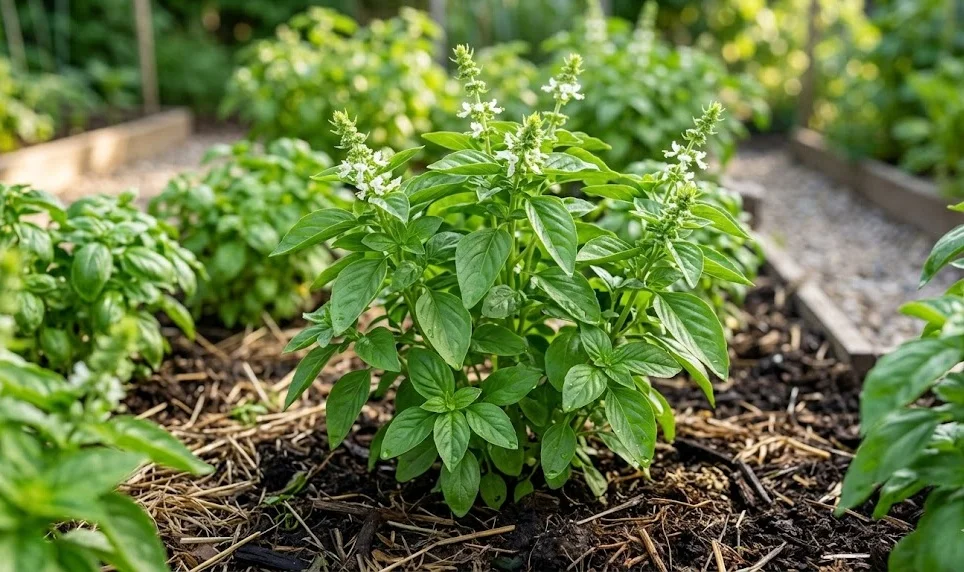
Environmental conditions such as wind, temperature, and light intensity directly influence how much water the basil plant consumes. On a hot, breezy day, the rate of evaporation from the soil and transpiration from the leaves increases dramatically. Cultivators must be prepared to adjust their irrigation frequency daily to compensate for these variables. Using a layer of organic mulch can help stabilize soil moisture levels, reducing the frequency of watering and protecting the roots from temperature extremes.
More articles on this topic
Managing moisture-related stress
Underwatering basil leads to immediate physiological changes that can permanently affect the quality of the harvest. The first sign of drought stress is wilting, as the plant loses turgor pressure in its cells and the stems begin to droop. If the stress continues, the leaf edges may turn brown and crispy, and the plant may prematurely bolt in an attempt to produce seeds before it dies. While basil can often recover from a single episode of wilting, repeated stress will result in tough, bitter leaves.
Overwatering is often more dangerous than drought because its effects are hidden beneath the soil surface until the damage is severe. When roots are submerged in water for too long, they lose the ability to take up nutrients and eventually begin to decay. Visible symptoms of overwatering include yellowing of the leaves, a soft or mushy stem base, and a general lack of vigor despite wet soil. Professional intervention usually involves allowing the soil to dry out completely and potentially applying a fungicide to the root zone.
The quality of the water used can also impact the health of the basil plant over time. Water that is high in chlorine or fluoride can cause localized tissue death, often appearing as small spots on the leaf surfaces. In areas with hard water, the buildup of calcium and magnesium salts in the soil can eventually interfere with the uptake of other essential nutrients. Using filtered water or allowing tap water to sit for twenty-four hours before use can mitigate some of these chemical issues.
Monitoring the humidity of the air surrounding the plant is a subtle but effective part of moisture management. In very dry indoor environments, basil may benefit from being placed on a tray of pebbles filled with water to increase localized humidity. However, this should never be confused with misting the leaves, which carries the aforementioned risks of fungal infection. Finding the “sweet spot” where the roots are hydrated and the air is humid but the foliage remains dry is the hallmark of an expert grower.
More articles on this topic
Essential nutrient requirements
Basil is classified as a heavy feeder because it must produce a high volume of green tissue in a very short growing season. Nitrogen is the most critical element for this process, as it is a primary component of chlorophyll and the proteins required for leaf expansion. A steady supply of nitrogen ensures that the plant remains in a vegetative state and produces the lush, succulent leaves that are prized for culinary use. However, excessive nitrogen can lead to rapid, weak growth that is more attractive to pests like aphids.
Phosphorus and potassium are also required in significant quantities to support the overall structural integrity and metabolic health of the plant. Phosphorus is particularly important during the early stages of growth for root development and energy transfer within the plant’s cells. Potassium regulates the opening and closing of the stomata, which controls the plant’s water balance and resistance to environmental stress. A balanced nutritional approach prevents the plant from becoming lopsided in its development.
Secondary nutrients and trace elements, such as calcium, magnesium, and iron, play supporting but vital roles in basil physiology. Calcium is necessary for building strong cell walls, which helps prevent the plant from flopping over as it grows taller. Magnesium is the central atom in the chlorophyll molecule, making it essential for the photosynthesis process that powers all growth. Deficiencies in these micronutrients often show up as specific patterns of yellowing or spotting on the leaves, requiring targeted supplementation.
The pH of the soil or growing medium significantly affects the availability of these nutrients to the basil roots. If the soil is too acidic or too alkaline, certain elements become chemically locked and cannot be absorbed by the plant. Maintaining a pH between 6.0 and 7.0 is generally considered ideal for maximizing nutrient uptake in basil. Regular soil testing is a professional practice that allows for precise adjustments to the soil chemistry before deficiencies become visible.
Selecting and applying fertilizers
When it comes to choosing a fertilizer for basil, organic options are often preferred by professionals for their slow-release properties and soil-building benefits. Liquid seaweed extracts and fish emulsions are popular choices because they provide a broad spectrum of nutrients in a form that is easily absorbed. These organic liquids can be applied every two weeks during the growing season to provide a consistent nutritional boost. Compost teas are another excellent way to introduce both nutrients and beneficial microbes to the root zone.
Synthetic fertilizers can be used effectively if they are applied with caution and according to the manufacturer’s instructions. A balanced, water-soluble NPK formula (such as 10-10-10) is suitable for basil, but it should often be diluted to half-strength to avoid the risk of salt burn. These products provide an immediate nutrient hit, which can be useful if a plant is showing clear signs of a deficiency. However, they do not contribute to long-term soil health and can lead to nutrient leaching if used excessively.
The timing of fertilizer application is crucial for maximizing its effectiveness and minimizing waste. It is best to apply nutrients during the active growing phase, typically from late spring through mid-summer. Avoid fertilizing plants that are already stressed by drought or disease, as they may not be able to process the additional nutrients correctly. Always water the soil thoroughly before and after applying granular fertilizers to help dissolve the minerals and move them down to the roots.
For basil grown in containers, regular fertilization is even more important because the limited soil volume is quickly depleted of nutrients. Since every watering event leaches some minerals out of the bottom of the pot, container-grown plants require more frequent feeding than those in the ground. A “weakly, weekly” approach—applying a highly diluted fertilizer once a week—is a professional strategy for maintaining consistent growth in pots. This method ensures the plant always has a fresh supply of nutrients without the danger of a sudden chemical shock.
Advanced nutritional strategies
Professional growers sometimes use foliar feeding as a supplemental method to deliver nutrients directly to the basil leaves. This technique involves spraying a very fine mist of diluted liquid fertilizer onto the foliage, where it is absorbed through the stomata. Foliar feeding can provide a quick remedy for certain micronutrient deficiencies, such as iron or zinc, that may be restricted by soil conditions. However, this should only be done in the early morning or late evening to prevent the sun from burning the wet leaves.
Soil amendments like biochar or mycorrhizal fungi can be used to enhance the efficiency of the fertilization program. Biochar acts as a long-term reservoir for nutrients and water, preventing them from washing away and making them available to the plant over a longer period. Mycorrhizal fungi form a symbiotic relationship with the basil roots, effectively extending the root system and improving the uptake of phosphorus and water. These “living” amendments are becoming standard in high-end organic basil production.
Adjusting the nutrient balance based on the intended use of the basil is another professional-level consideration. For example, some studies suggest that limiting nitrogen late in the season can actually increase the concentration of aromatic oils in the leaves. While this might result in slightly smaller plants, the flavor intensity of the harvest is often superior. This type of precision management requires a deep understanding of the plant’s life cycle and a willingness to experiment with different feeding schedules.
Finally, the end of the fertilization cycle should be timed carefully to coincide with the natural cooling of the season. As the days shorten and growth slows down, the plant’s demand for nutrients decreases significantly. Continuing to fertilize late into the autumn can encourage soft, new growth that is highly vulnerable to frost damage. Stopping all supplemental feeding about four weeks before the expected first frost allows the plant to naturally transition into its end-of-season phase.