
The quality and duration of light that this architectural perennial receives are fundamental factors in determining its overall vigor and the abundance of its flowers. While it is celebrated for its versatility and its ability to adapt to various garden settings, finding the “sweet spot” for light exposure is a hallmark of professional horticultural care. In its native habitat, it often grows in open woodlands or along stony slopes, suggesting a preference for conditions that balance brightness with occasional shelter. Understanding how the plant responds to different light intensities allows the gardener to place it where it can truly shine as a landscape focal point.
Ideally, the plant thrives in a position that offers full sun for a portion of the day, preferably during the morning hours when the air is cooler. This exposure provides the energy needed for robust leaf production and the development of the massive flower spikes that are the plant’s trademark. However, in regions with particularly intense summer heat, some dappled shade during the afternoon can be highly beneficial to prevent the foliage from scorching. The goal is to maximize photosynthesis while minimizing the stress caused by excessive evaporation and heat.
In contrast to many other sun-loving perennials, this species shows a remarkable tolerance for partial shade, making it an excellent choice for those tricky spots in the garden. In shaded locations, the leaves often become even larger and a deeper, darker green, as the plant tries to capture as much available light as possible. However, there is a trade-off, as plants grown in significant shade may produce fewer flower spikes and have a less upright habit. A professional gardener must decide whether the primary goal is the dramatic foliage or the stunning floral display when choosing a planting site.
Managing light exposure also involves considering the seasonal changes in the sun’s path and the surrounding vegetation. A spot that is perfectly sun-drenched in the spring may become deeply shaded in the summer once nearby trees have fully leafed out. Conversely, a winter-shade area might receive too much direct sun in the early spring before the plant has developed its full resilience. Observing these shifts throughout the year is essential for ensuring the plant remains healthy and productive for many decades to come.
Ideal sun exposure and flowering
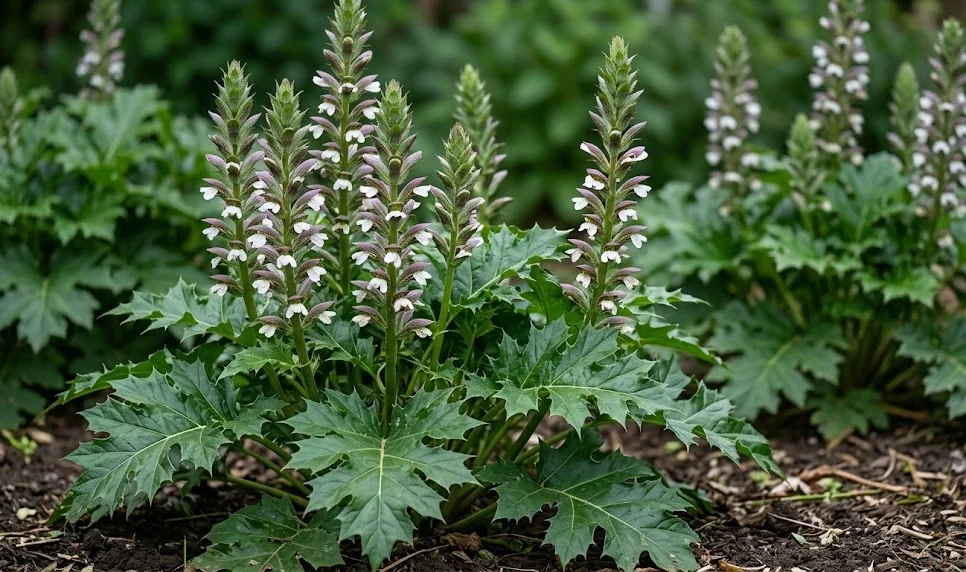
For the most spectacular floral display, providing at least six hours of direct sunlight is generally recommended by professional growers. This level of light ensures that the plant has enough stored energy to produce multiple tall, sturdy flower spikes during the mid-summer months. Sun-drenched plants tend to have a more compact and upright growth habit, which better showcases the architectural details of the leaves and blooms. The purplish bracts of the flowers also tend to develop a more intense color when exposed to brighter light.
More articles on this topic
When the plant is grown in full sun, the gardener must be extra vigilant about soil moisture levels to compensate for the higher rate of transpiration. The large leaves act like solar panels, and without a steady supply of water from the roots, they can quickly become parched and brittle at the edges. Using a thick layer of organic mulch can help to keep the root zone cool even when the foliage is in direct sunlight. This combination of bright light and cool roots is the secret to achieving the best results with this species.
If a plant in full sun starts to show signs of persistent wilting that does not recover overnight, it may be receiving more heat than it can handle. In such cases, providing some temporary shade during the hottest part of the day can help the plant recover its balance. Long-term solutions might include planting a smaller, light-textured shrub nearby to provide a “moving” shadow as the sun crosses the sky. This subtle management of the light environment is a key part of creating a successful and resilient garden design.
Reflected light from light-colored walls or paved areas can also play a role in the plant’s health and should be taken into account. While this extra light can be beneficial in cooler climates, it can significantly increase the temperature and light intensity in warmer regions. Placing the plant a few feet away from such surfaces can provide a more temperate environment while still allowing for plenty of brightness. It is these small adjustments that distinguish a professional planting from a casual one.
Dealing with deep shade and foliage growth
While the plant is often marketed as shade-tolerant, it is important to distinguish between “partial shade” and “deep, permanent shade.” In very dark areas, such as under a dense evergreen canopy, the plant may survive but it will rarely reach its full majestic potential. The leaves may become thin and lose their glossy sheen, and the plant will likely fail to produce any flowers at all. If a specimen is struggling in deep shade, moving it to a brighter location is often the only way to restore its vigor.
More articles on this topic
In partial shade, such as the edge of a woodland or under a high-canopy deciduous tree, the plant can be a stunning addition to the landscape. The softened light in these areas often results in a more lush and expansive foliage display that remains green for longer into the autumn. This is a popular strategy for gardeners who prioritize the architectural beauty of the leaves over the flower spikes. The key is to ensure that the plant still receives a few hours of “filtered” sunlight through the branches above.
One advantage of a shadier position is the reduced need for frequent watering, as the soil tends to stay moist for longer without the drying effect of the direct sun. This makes the plant a more low-maintenance option for parts of the garden that are difficult to reach with a hose. However, the gardener should still monitor the soil, as large trees can often compete with the plant for both water and nutrients. Providing extra compost each spring can help to offset this competition and keep the plant healthy.
Airflow is even more critical in shadier locations, as the lack of direct sun means the leaves stay wet for longer after rain or dew. To prevent fungal issues, ensure that shadier plants are not crowded and have plenty of room for air to circulate around the entire clump. If the foliage becomes too dense, selectively removing a few of the older, lower leaves can improve light penetration to the center of the crown. This proactive grooming helps to maintain the plant’s health even in less-than-ideal light conditions.
Sun scorch and environmental adaptation
Environmental adaptation is a slow process, and moving a plant from a shaded greenhouse to a full-sun garden spot can result in immediate leaf scorch. This manifests as bleached or brown patches on the upper surface of the leaves where the tissue has been literally burned by the sun. To avoid this, new plants should be gradually acclimated to their final light levels over a period of a week or two. This “hardening off” process allows the leaf cuticle to thicken and develop its natural protection against intense light.
Established plants can also suffer from scorch during sudden, extreme heatwaves if they are not adequately hydrated. When the demand for water from the leaves exceeds the ability of the roots to supply it, the tissue at the edges of the lobes is the first to suffer. While these brown edges are permanent for the current season, they do not usually threaten the long-term survival of the plant. Removing the most damaged leaves and increasing the watering frequency will help the plant produce healthy new growth.
Interestingly, the plant’s light requirements can change slightly as it matures and develops its deep, expansive root system. A young specimen might need more protection from the afternoon sun than an older, well-established clump that has access to more reliable water reserves. This is why it is often beneficial to provide some temporary shade for the first year or two after planting. As the plant becomes more integrated into the garden, it will naturally become more resilient to light and temperature fluctuations.
Ultimately, the light requirements of this perennial should be seen as a spectrum rather than a single fixed point. By observing how the plant responds to its specific location, the gardener can make informed decisions about its care and placement. Whether it is basking in the morning sun or providing a cool, architectural presence in a shaded corner, this species remains one of the most versatile and rewarding plants in the garden. Its ability to adapt to different light environments is a testament to its enduring strength and classical beauty.