
The intensity and duration of sunlight are perhaps the most critical factors in determining the success of your dwarf morning glory. These plants are true sun-seekers, having evolved in the bright, open landscapes of the Mediterranean region where light is abundant. Understanding their specific light requirements will help you choose the best location in your garden to ensure a spectacular and long-lasting display of flowers. Without adequate light, these plants will struggle to produce their iconic blooms and may become weak and susceptible to various problems.
In an ideal world, the dwarf morning glory should receive at least six to eight hours of direct, unfiltered sunlight every day. Full sun provides the energy necessary for the plant to produce the pigments that give the flowers their intense blue, white, and yellow colors. It also promotes a compact, bushy growth habit that is much more attractive than the leggy appearance found in shaded areas. If you can provide a spot with southern exposure, your plants will be the happiest and most productive members of your garden.
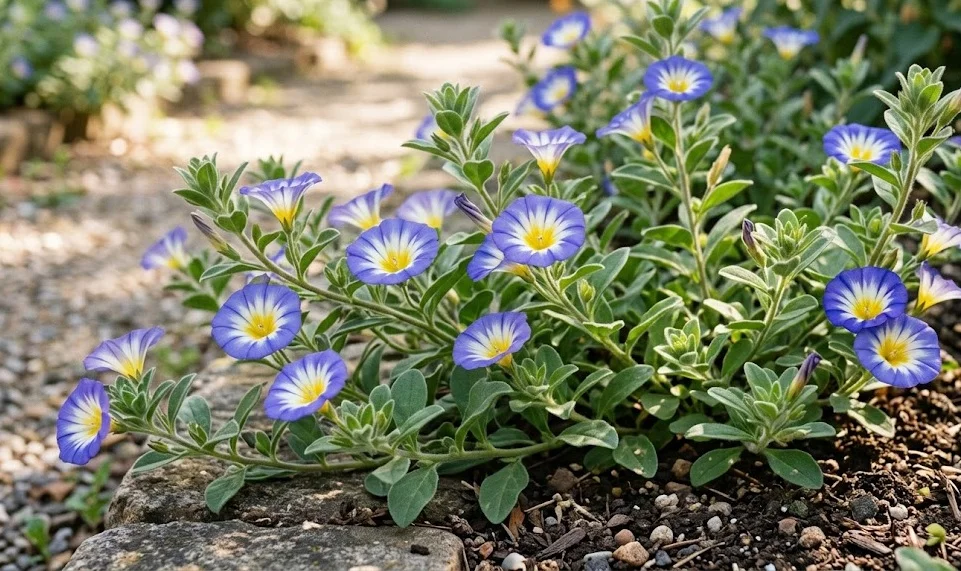
Light also plays a vital role in the daily behavior of the flowers, which are famous for their response to the sun’s movement. Each morning, as the first rays of light hit the buds, they slowly unfurl to reveal their intricate patterns and vibrant hues. By late afternoon or early evening, as the light intensity fades, the flowers close up, having completed their brief but beautiful display. This daily rhythm is a direct reflection of the plant’s intimate relationship with light and the energy it provides.
While they are remarkably heat-tolerant, providing a tiny bit of protection during the absolute harshest midday sun can sometimes be beneficial in very hot climates. If the temperatures consistently soar above ninety degrees Fahrenheit, a location that gets full morning sun and a touch of dappled shade in the late afternoon might prevent the foliage from scorching. However, never sacrifice too much light, as blooming will quickly decline if the plant feels it is in the shade. It is always a balance between providing enough energy for flowers and protecting the plant from extreme environmental stress.
Optimizing light in different garden settings
If you have a garden that is partially shaded by large trees or buildings, you can still grow dwarf morning glories by being strategic with their placement. Look for “pockets” of light that move across your garden throughout the day and place your containers or planting beds there. Even a few extra hours of sunlight can make a significant difference in the health and appearance of your plants. Using reflective surfaces, such as light-colored walls or garden mirrors, can also help increase the amount of ambient light available to your flowers.
More articles on this topic
Container gardening offers the ultimate flexibility when it comes to managing light requirements for your plants. If you notice that a particular spot is getting too much shade as the season progresses and the sun’s angle changes, you can simply move the pots to a brighter location. This is especially useful in urban environments where shadows from neighboring buildings can be unpredictable. Being able to follow the sun ensures that your plants always have the energy they need to keep producing those stunning tricolor blossoms.
Hanging baskets are another great way to maximize light exposure, as they can be positioned to catch the sun from multiple angles. When choosing a spot for a hanging basket, make sure it isn’t tucked under a deep eave or a thick tree canopy that will block the light. Rotating the basket every few days will ensure that all sides of the plant receive an equal amount of sunlight, promoting even growth and flowering all the way around. This simple habit keeps your display looking balanced and beautiful from every perspective.
For those with very limited sunlight, such as on a north-facing balcony, it might be challenging to get a heavy flush of blooms from this particular species. In such cases, you might consider using supplemental grow lights if you are determined to enjoy their beauty. While nothing beats the power of the natural sun, modern LED grow lights can provide a surprisingly effective alternative for smaller displays. However, for most outdoor gardeners, simply finding the sunniest spot available is the best and most natural way to ensure success.
Signs of inadequate or excessive light
Learning to recognize how your plants react to different light levels will help you become a more intuitive and successful gardener. If your dwarf morning glory is not getting enough light, the most obvious sign will be a lack of flowers and a “leggy” growth habit. The stems will become long and thin as the plant literally tries to stretch toward the nearest light source. You might also notice that the leaves are a paler green than they should be, indicating a lower level of chlorophyll production.
More articles on this topic
Excessive light, especially when combined with high temperatures and low humidity, can also cause some visible symptoms. The most common sign is “leaf scorch,” where the edges of the leaves turn brown and crispy or develop bleached, white patches. You might also see the flowers wilting much earlier in the day than usual as the plant struggles to maintain its internal water balance. If you see these signs, it is an indication that the plant is under stress and might need a little more water or a slightly more sheltered location.
The color of the flowers can also be an indicator of the light quality they are receiving. In very bright, clear light, the colors will be at their most intense and vibrant, creating a high-contrast look that is truly spectacular. If the light is too dim, the colors might appear washed out or less defined, and the yellow center of the flower might be smaller. Observing these subtle details will help you understand the needs of your plants and adjust your care routine accordingly throughout the season.
Finally, remember that the light requirements of your plants will change as they grow and the seasons progress. A spot that was in full sun in May might be in partial shade by July as the surrounding vegetation grows and the sun’s path across the sky shifts. Regularly checking on your plants and being willing to make adjustments is part of the ongoing process of gardening. Each season is a new opportunity to learn more about the complex and beautiful relationship between light, life, and the stunning dwarf morning glory.