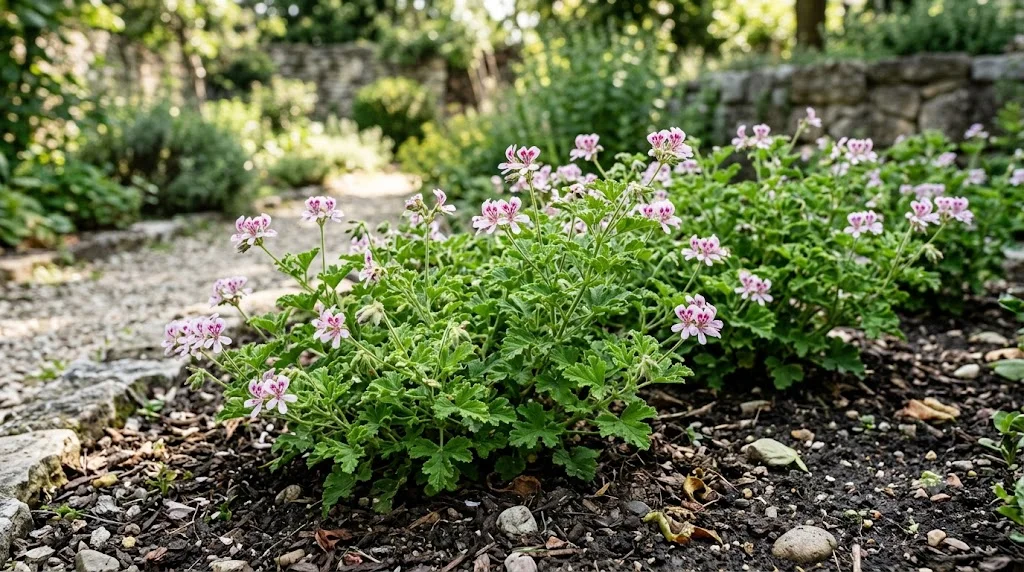

Pruning keeps a lemon-scented geranium dense, balanced and productive by encouraging fresh shoots from active buds. Without regular trimming, the plant often develops long stems, sparse lower growth and an unstable, top-heavy crown. Light pinching during the growing season is more effective than waiting until extensive correction becomes necessary. Careful cutting also provides healthy material for propagation and renewal.
The plant responds best when pruning is carried out during active growth. Spring is the main season for structural work because increasing light supports rapid recovery. Smaller adjustments can continue through summer. Heavy autumn pruning should be avoided because wounds heal slowly as growth declines.
Young shoots are flexible and easy to shape. Older woody stems require more caution because they may not produce new growth from completely bare sections. Leaving several healthy nodes below each cut improves the chance of branching. The final shape should remain open enough for light and air to reach the centre.
Clean, sharp tools produce smooth cuts that heal quickly. Blunt scissors crush tissues and leave ragged wounds. Disinfect blades before moving between plants, especially when disease is suspected. Soft shoot tips can often be pinched cleanly with fingers.
Timing pruning for the best response
Carry out the main cutback when fresh spring growth begins. The plant has greater energy reserves and longer days in which to recover. Remove winter-damaged shoots first, then evaluate the remaining framework. Avoid reducing every branch to the same height, because a slightly varied structure looks more natural.
More articles on this topic
Summer pruning should be lighter and more frequent. Pinching the tip of a growing shoot removes apical dominance and encourages side branches. This creates a fuller plant with more aromatic leaves. Repeat the process selectively rather than trimming every shoot at once.
Flowers can be removed after fading. Cut the stalk close to its point of origin without damaging nearby leaves. Deadheading improves appearance and reduces unnecessary seed formation. It also creates space for new vegetative shoots.
Stop major pruning several weeks before the expected end of the growing season. Late cuts may stimulate tender shoots that do not mature before winter. Only damaged, diseased or badly placed stems should be removed in late autumn. Final shaping can wait until spring.
Using correct pruning techniques
Begin by removing dead, weak and crossing stems. Cuts should be made just above a healthy leaf node or outward-facing bud. Leaving a long bare stub creates an unattractive section that may die back. Cutting too close can damage the bud needed for regrowth.
More articles on this topic
Shorten overly long branches by approximately one-third when moderate shaping is required. Severely leggy plants may need a stronger reduction, but the work should be distributed across several stages. Retain green leaves on each major branch whenever possible. Photosynthetic foliage helps support recovery.
Thin the centre if stems are crowded. Removing a few entire shoots from their base is often better than shortening every branch. This improves ventilation and allows light to reach inner leaves. A clear structure also makes pest inspection easier.
Collect healthy shoot tips for cuttings as pruning progresses. Choose non-flowering sections with firm, undamaged growth. Prepare and plant them promptly so that they do not dehydrate. Propagation turns routine pruning into an opportunity to produce replacement plants.
Rejuvenating an old or leggy plant
An older plant with woody, leafless stems requires careful assessment. Scratch a very small section of bark to determine whether the tissue beneath remains green. Completely dry branches should be removed. Living stems can be shortened above any visible buds or leafy side shoots.
Do not cut the entire plant back to bare wood unless no other option exists. Lemon-scented geraniums may respond inconsistently from old stems. A staged approach preserves enough foliage to sustain the roots. Shorten part of the plant first and wait for new shoots before reducing the remainder.
After rejuvenation, place the plant in bright light and maintain moderate moisture. Do not overwater in an attempt to force recovery because reduced foliage uses less water. Begin light feeding only when new growth is clearly developing. Strong fertilizer applied too early can stress damaged roots.
Very old specimens are often best renewed through cuttings. Root several healthy tips before carrying out severe pruning. If the parent plant recovers, the cuttings provide additional plants. If it fails, the original fragrance and characteristics are still preserved.