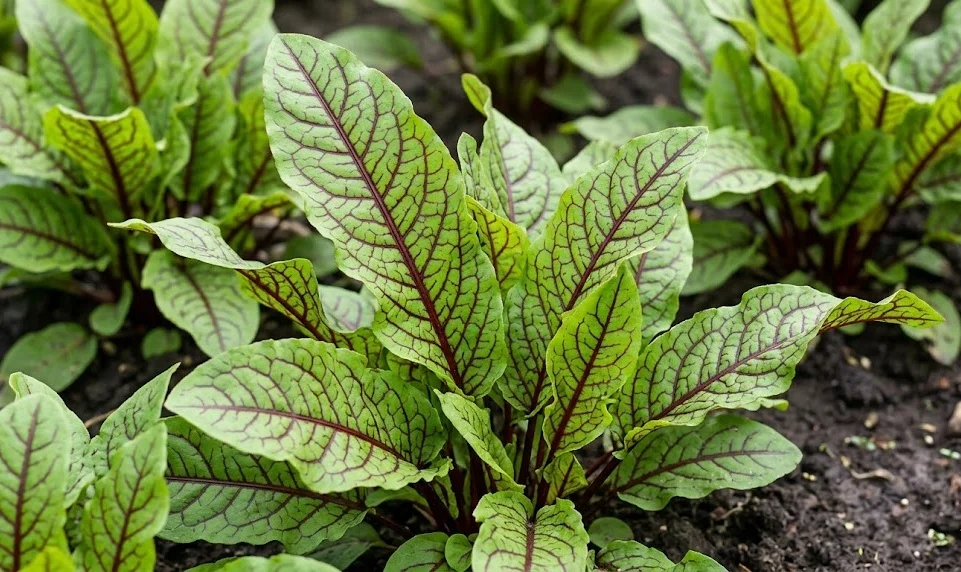

Pruning red-veined sorrel is simple, but it has a major effect on leaf quality and plant longevity. Regular cutting keeps the clump fresh, delays flowering, improves air movement, and removes pest habitat. The plant responds well when cuts are clean and the central crown is protected. Good pruning is less about shaping and more about renewal.
The plant naturally produces leaves from a basal crown. This means pruning should preserve the growing point while removing outer leaves, flower stems, and tired foliage. Cutting too low into the crown can weaken recovery. Cutting too little can leave the plant congested and unproductive.
Red-veined sorrel is usually harvested and pruned at the same time. Each picking session is an opportunity to remove old, damaged, or oversized leaves. This routine keeps the plant attractive in both edible and ornamental settings. It also reduces the chance of hidden slug damage.
Timing depends on growth stage. Spring pruning is light and selective, summer cutting focuses on controlling flowers and stress, and autumn cleanup prepares the plant for winter. In every season, the aim is to keep the plant actively renewing itself. A clean, open clump is easier to manage and more productive.
Harvest pruning
Harvest pruning should focus on the outer leaves. These are usually the oldest and largest leaves, while the center contains the next flush of growth. Remove leaves close to the base without cutting into the crown. This keeps the plant producing continuously.
More articles on this topic
Clean tools are important. Scissors, herb snips, or a small harvest knife make neater cuts than rough pulling. Ragged wounds dry poorly and can invite decay in damp weather. Clean cuts also make harvested leaves easier to wash and use.
Do not remove all leaves unless the plant is being renovated. A complete cutback can work on vigorous plants, but repeated hard cutting weakens the crown. Leaving some healthy leaves allows photosynthesis to continue. This supports faster regrowth and better root reserves.
Harvest frequency should match the plant’s growth rate. In cool, moist spring weather, picking may be frequent. During heat or drought, slow down and let the plant recover. Pruning should work with the plant’s energy, not against it.
Removing flower stems and tired foliage
Flower stems should be cut as soon as they appear unless seed is desired. Flowering redirects energy from leaf production and often reduces eating quality. The stem can be cut near its base with clean scissors. Removing it early is easier than dealing with a tall, woody stalk later.
More articles on this topic
Tired foliage should also be removed regularly. Yellow, torn, spotted, or slug-damaged leaves do not help the plant much. They can shade new growth and trap moisture around the crown. Removing them improves both hygiene and appearance.
Summer pruning requires judgment. If the plant is heat-stressed, avoid cutting too aggressively. Removing too much foliage can expose the crown and soil to more heat. Instead, remove only flower stems and poor-quality leaves until cooler weather returns.
Autumn cleanup should be thorough but not brutal. Remove collapsed leaves and old stems before winter wetness sets in. Leave healthy leaves if the plant is still actively growing in mild weather. Final cleanup can be completed in early spring when new shoots begin.
Renovation and long-term renewal
Older clumps sometimes need renovation. Signs include small leaves, a woody center, repeated bolting, and poor recovery after harvest. A hard cutback may refresh a vigorous plant, but division is often more effective. Renovation works best in spring or early autumn.
For a simple cutback, trim the plant to a short framework above the crown. Water afterward and apply a light compost mulch around, not over, the crown. New leaves should appear when conditions are favorable. Avoid hard renovation during extreme heat.
For a congested clump, lift and divide the plant. Keep the strongest outer sections and discard exhausted centers. Replant divisions into refreshed soil with good moisture. This method restores vigor better than repeated trimming of an aging crown.
Pruning should always support renewal. The best plants are not the ones left untouched, but the ones guided through regular harvest, flower removal, cleanup, and occasional division. Red-veined sorrel rewards this attention with fresh leaves and a polished appearance. In a well-managed garden, pruning becomes a quiet habit rather than a major seasonal chore.