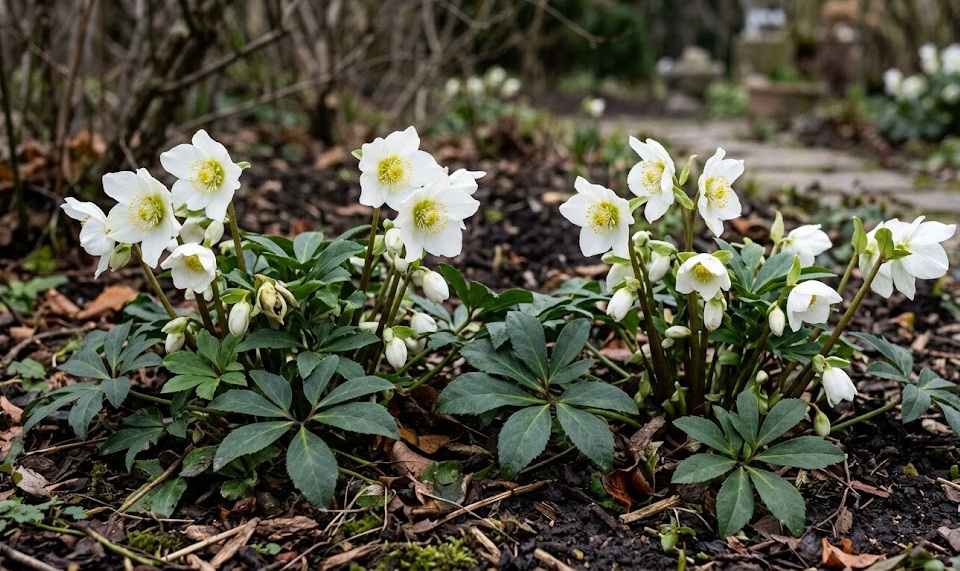

Maintaining the correct balance of moisture and nutrients is the secret to producing those iconic, heavy-blooming winter roses that every gardener covets. While these plants are known for their resilience in the face of snow and frost, their internal systems are quite sensitive to the quality and quantity of what they receive from the soil. A professional approach involves moving away from a “one size fits all” schedule and instead learning to read the subtle signs the plant gives you. This article will detail the expert techniques for hydrating and feeding your plants to ensure they remain healthy and productive year after year.
Watering is perhaps the most misunderstood aspect of caring for this species, as many people assume that a winter-blooming plant doesn’t need much hydration. In reality, the most critical period for moisture is during the late summer and early autumn when the flower buds are forming deep within the crown. If the plant is allowed to suffer from drought during these months, the winter display will be sparse and the blossoms will be much smaller. Providing a deep, thorough soak once a week during dry spells is far more effective than light daily sprinkling.
Understanding moisture requirements and drainage
The key to proper hydration is consistency, as extreme fluctuations between bone-dry and soaking-wet soil can stress the plant’s vascular system. You want the soil to feel like a wrung-out sponge—damp to the touch but not dripping with excess water. In the spring and autumn, natural rainfall is often sufficient, but you should always be ready to step in during unseasonably dry periods. Using a rain gauge can help you track exactly how much water your garden is receiving from nature.
Drainage is just as important as the water itself, as these plants will quickly succumb to root rot if they sit in waterlogged soil. If you have heavy clay in your garden, you must take steps to improve the structure by adding grit and organic matter. Planting on a slight slope or in raised beds can also help ensure that excess water moves away from the crown of the plant. During the winter, when evaporation is low, ensuring that the soil doesn’t become a swamp is vital for the plant’s survival.
Applying water directly to the base of the plant, rather than over the foliage, is a professional tip that helps prevent fungal issues. Wet leaves, especially in the shaded areas where hellebores thrive, can become a breeding ground for spots and blights. Drip irrigation or soaker hoses are ideal for providing the slow, steady hydration that the roots crave without getting the rest of the plant wet. If you must water by hand, try to do it in the early morning so any accidental splashes can dry off before nightfall.
More articles on this topic
During the coldest parts of winter, the ground may freeze, making it impossible for the roots to take up water even if the soil is technically moist. This is why it is so important to ensure the plant is well-hydrated in the weeks leading up to the first hard freeze. A well-hydrated plant has a higher concentration of sugars in its cells, which acts like a natural antifreeze. This internal protection allows the foliage to remain evergreen and the flowers to withstand the weight of ice and snow.
Nutrient needs for vigorous winter blooms
Feeding your black hellebore is less about providing a quick boost and more about building long-term soil health and fertility. These plants are relatively slow growers, and their nutrient requirements reflect this steady pace of life. A single, well-timed application of organic fertilizer in the early spring is usually enough to support a full year of growth. Look for a product that is balanced or slightly higher in phosphorus to encourage strong root development and plentiful flower buds.
Organic options, such as well-rotted garden compost, leaf mold, or aged manure, are almost always superior to synthetic chemical fertilizers. These organic materials release their nutrients slowly as they are broken down by soil organisms, providing a constant but gentle supply of food. They also improve the overall structure of the soil, increasing its ability to hold both water and air. A two-inch layer of compost spread around the base of the plant each spring is one of the best things you can do for its health.
In addition to the annual compost mulch, some gardeners find that a handful of bone meal or seaweed meal can provide an extra benefit. These natural amendments are rich in trace minerals that are often missing from standard garden soil. If you notice that your plants are looking a bit yellow or lackluster, it might be a sign that they need a bit more magnesium or iron. Always test your soil before adding specific minerals to avoid creating an imbalance that could be harmful.
More articles on this topic
Avoid the temptation to fertilize late in the autumn or during the winter months when the plant is in its peak flowering phase. Adding nitrogen at this time can encourage soft, sappy growth that is easily damaged by frost and more attractive to pests like aphids. The goal is to have all the “food” already in the soil and available for the plant to use when it naturally needs it. By following the plant’s natural rhythm, you ensure that it remains strong and resilient against the elements.
Choosing between organic and mineral fertilizers
The debate between organic and mineral fertilizers often comes down to the long-term goals of the gardener. Mineral fertilizers provide nutrients in a form that is immediately available to the plant, which can be useful if you are trying to correct a severe deficiency quickly. However, they do nothing to improve the soil structure and can actually harm beneficial soil life if used excessively. For a plant that lives as long as a hellebore, the long-term health of the soil should always be the priority.
Organic fertilizers, while slower to act, build a living soil that supports the plant in a more holistic way. They encourage the growth of mycorrhizal fungi, which form a symbiotic relationship with the hellebore roots and help them absorb nutrients and water more efficiently. This hidden network is a vital component of a healthy garden ecosystem. When you feed the soil, you are essentially feeding the plant’s natural support system, leading to a much more stable environment.
If you do choose to use a commercial mineral fertilizer, look for a slow-release granular formula that is designed for perennials. Avoid liquid feeds that provide a sudden “hit” of nutrients, as this is contrary to the plant’s slow and steady nature. Apply the granules according to the package instructions, being careful not to let them touch the delicate crown or the leaves of the plant. Always water the area thoroughly after applying any concentrated fertilizer to help it reach the root zone.
Ultimately, the best approach is often a combination of a rich organic mulch supplemented with natural minerals like rock dust. This provides the best of both worlds: a healthy soil structure and a full spectrum of the elements the plant needs to thrive. Over time, you will find that a well-mulched garden needs very little in the way of additional “feeding.” This low-intervention approach is not only easier for the gardener but also better for the environment and the health of the plants.
Identifying and correcting signs of imbalance
A professional gardener is always looking for the subtle visual cues that indicate a plant is not getting exactly what it needs. Yellowing leaves with green veins, a condition known as chlorosis, is often a sign of iron or manganese deficiency, usually caused by the soil being too alkaline. While hellebores like alkaline soil, there is a limit, and sometimes a bit of chelated iron can help clear up the problem. On the other hand, leaves that turn purple or reddish might be a sign of phosphorus deficiency, especially in cold, wet soil.
Stunted growth and a lack of flowers are often the result of general under-feeding or poor soil structure that prevents root expansion. If your plant has been in the same spot for years without any mulch or compost, it may have simply exhausted the local supply of nutrients. Adding a fresh layer of organic matter can often revitalize an old clump within a single growing season. Be patient, as it takes time for the plant to process these new resources and turn them into visible growth.
Over-fertilizing can also show visible symptoms, such as leaves that are unusually large and dark green but very soft and floppy. These plants are often the first to be attacked by black spot or other fungal diseases because their cell walls are weak. If you suspect you have over-done the fertilizer, the best thing to do is to water deeply to help leach away the excess salts and skip the next scheduled feeding. It is always better to slightly under-feed a hellebore than to over-feed it.
Regularly testing your soil’s pH and nutrient levels is the most professional way to ensure you are providing the right environment. Most local agricultural extensions or garden centers offer simple testing kits that can give you a clear picture of what is happening under the surface. This scientific approach takes the guesswork out of gardening and prevents the waste of money on unnecessary fertilizers. By understanding the chemistry of your garden, you can tailor your care routine to meet the exact needs of your black hellebore.
Developing a sustainable long-term feeding strategy
Consistency is the most important part of any long-term strategy for watering and fertilizing your garden. Rather than trying to do everything at once, focus on small, regular tasks that build upon each other over the years. A simple routine of checking moisture levels during your weekly garden walk and applying a layer of compost every spring will take you very far. This approach is sustainable for you as a gardener and provides the steady environment that the plants need.
As your garden matures, you may find that you need to intervene less and less as the natural cycles take over. The fallen leaves from nearby trees become mulch, and the soil life becomes more efficient at recycling nutrients. This “woodland floor” effect is the ultimate goal for a hellebore enthusiast. It creates a self-sustaining system that requires minimal input while producing maximum beauty. This is the hallmark of a truly professional and ecologically minded garden design.
Remember that weather patterns can vary significantly from year to year, and your care routine should be flexible enough to adapt. A particularly rainy spring might mean you can skip a scheduled watering, while a long, hot autumn will require extra vigilance. Staying in tune with the rhythm of the seasons and the specific needs of your plants is what separates a master gardener from a beginner. Your black hellebores will be the living proof of the care and attention you provide.
Sharing your successes and observations with other gardeners is a great way to refine your strategy and learn new tips. Every garden has its own unique microclimate, and what works for a neighbor might be slightly different for you. By keeping a garden journal, you can track which fertilizers worked best and how the plants responded to different watering schedules. This wealth of personal data will be your most valuable tool as you continue to cultivate your winter garden for many decades to come.