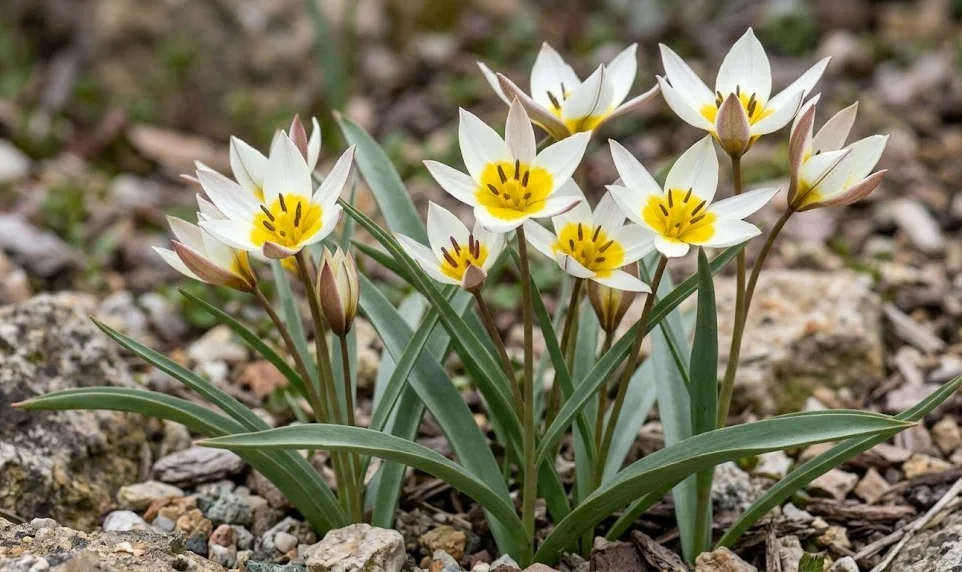

The Turkestan tulip depends on strong seasonal light to flower well, build firm bulbs, and maintain its compact, graceful habit. It is an early-flowering species, so it takes advantage of bright spring conditions before many taller plants begin full growth. Although it can tolerate a little light shade, it performs best in open sun. Understanding its light needs is essential for choosing the right position and keeping the plant vigorous over several years.
Full sun and spring performance
Full sun is the most reliable exposure for strong flowering. In bright conditions, stems stay shorter, flowers open fully, and foliage develops enough energy to recharge the bulb. The plant’s starry blooms are especially attractive when sunlight encourages them to spread wide. In dull or shaded positions, the flowers may remain less open.
Morning sun is particularly valuable in cool spring climates. It dries dew from leaves and reduces the risk of fungal issues. It also warms the soil gradually, encouraging steady growth. A site that receives sun from morning through early afternoon is often excellent.
The plant does not need intense summer sun because it is dormant by then. Its main demand for light comes from shoot emergence until leaf yellowing. This means spring light is more important than year-round exposure. A summer-shaded site may still work if it is bright during the tulip’s active season.
Avoid planting where evergreen shrubs, walls, or dense fences create prolonged shade. These conditions reduce flowering and weaken bulbs over time. Even if the first year’s bloom is acceptable, later performance may decline. The bulb needs repeated seasons of good light to remain strong.
More articles on this topic
Light shade and naturalistic planting
Light shade can be acceptable under deciduous trees or shrubs. The key is timing. If the tulip receives direct or bright filtered light before the canopy fills in, it can complete much of its growth successfully. This makes it useful in woodland-edge gardens with open spring conditions.
Competition from tree roots must be considered. Even when light is sufficient, dry root-filled soil can reduce vigor. Adding bulbs to the outer edge of tree canopies is usually better than planting close to trunks. The soil should remain workable and not excessively depleted.
Naturalistic plantings often use species tulips among low grasses and early perennials. This can be very effective if companions are not too dense. The tulip’s leaves must continue receiving light after flowers fade. Plants that quickly smother the foliage should be avoided.
In gravel gardens, the Turkestan tulip often receives ideal light. The open structure allows sun to reach the small leaves, and the mineral surface reflects warmth. These conditions encourage compact growth and good bulb ripening. The result is often more reliable than in heavily mulched ornamental beds.
More articles on this topic
Recognizing poor light conditions
Weak flowering is one of the clearest signs of insufficient light. The plant may produce leaves but few or no blooms. Stems may stretch and lean toward the brightest direction. Over time, bulbs may become smaller because they cannot store enough energy.
Leaves that remain thin, pale, or floppy can also indicate poor exposure. However, these symptoms may overlap with excess moisture or nutrient imbalance. Look at the whole planting environment before deciding the cause. Shade combined with wet soil is especially damaging.
If nearby perennials have expanded, they may be stealing light after the tulip flowers. This is easy to overlook because the flowers appear before many plants reach full size. The post-flowering leaf period is just as important as the bloom itself. Clearing space around fading tulip foliage can improve next year’s display.
When light is inadequate, moving the bulbs is often the best solution. Wait until the foliage has died back before lifting them. Replant in a brighter, better-drained site in autumn. A sunnier position usually improves flowering within the next growing cycle.