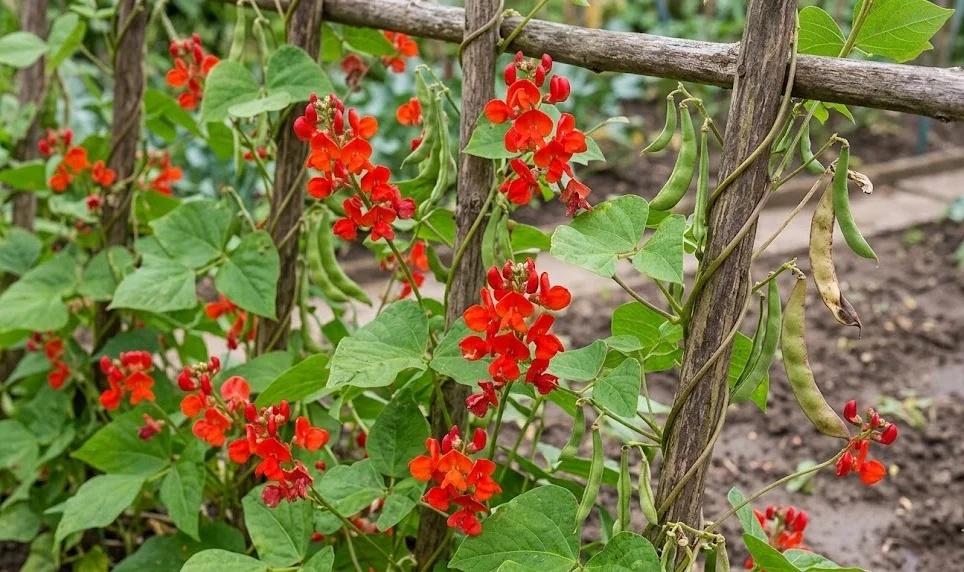

Scarlet runner beans reward attentive care with rapid growth, ornamental flowers, and generous pods, but they perform best when their basic needs are understood from the beginning. This climbing bean is more than a decorative vine, because it can serve as a productive vegetable, a pollinator-friendly flowering plant, and a seasonal screen in the garden. Its care depends on balanced soil moisture, steady nutrition, strong support, and regular harvesting. When these elements work together, the plants stay healthier, flower longer, and produce better-quality pods.
Scarlet runner beans are naturally vigorous climbers, and that growth habit should guide every care decision. They need space to climb rather than sprawl, because tangled stems close to the soil are more prone to disease and slug damage. A tall trellis, sturdy poles, netting, or an arched support allows air to move through the foliage. Good air circulation is one of the simplest ways to reduce fungal pressure during humid weather.
The plant is often grown as an annual vegetable in temperate gardens, although it can behave as a short-lived perennial in mild, frost-free climates. This difference matters because care routines change depending on whether the goal is pod production, seed saving, ornamental flowering, or overwintering. In most home gardens, the plant is sown in spring and removed after frost blackens the foliage. In protected or warmer sites, the root crown may survive and resprout if winter conditions remain gentle.
Scarlet runner beans also differ slightly from common French beans in their flowering behavior and temperature preferences. They generally tolerate cooler conditions better than many snap beans, which makes them valuable in regions with mild summers. However, very hot weather can interfere with flower set and cause blossoms to drop before pods form. Consistent water, light shade during extreme heat, and pollinator activity all help improve pod formation.
Choosing the right growing site
A successful scarlet runner bean crop starts with a site that offers warmth, light, and shelter from damaging wind. The stems grow quickly once established, but young plants can be bruised or broken by harsh gusts. A fence line, vegetable bed edge, or protected border often provides the right balance of exposure and shelter. The site should still remain open enough to prevent stagnant, damp air around the leaves.
More articles on this topic
The soil should be fertile, moisture-retentive, and well drained. Scarlet runner beans dislike standing water around their roots, yet they also suffer when the soil dries out repeatedly during flowering and pod development. A loamy soil enriched with compost is ideal because it holds moisture without becoming heavy or airless. If the soil is sandy, organic matter helps reduce drought stress and nutrient leaching.
Before planting, it is useful to observe how sunlight moves across the bed during the day. Scarlet runner beans perform best with generous light, but they are not as unforgiving as some heat-loving crops. In hot regions, a position with morning sun and slight afternoon protection can improve flowering. In cooler regions, full sun is usually preferable because it encourages strong growth and earlier cropping.
Avoid placing scarlet runner beans in soil where beans or peas have recently struggled with root diseases. Crop rotation lowers the risk of soil-borne problems accumulating in the bed. A gap of several years between legume crops is a sound practice in productive vegetable gardens. Rotation also helps balance soil fertility, because beans have different nutrient demands from brassicas, tomatoes, or leafy crops.
Preparing the soil before planting
Scarlet runner beans respond strongly to well-prepared soil, especially during their early establishment phase. The bed should be loosened deeply enough for roots to explore without obstruction. Compacted soil limits root growth, reduces oxygen availability, and makes irrigation less effective. Breaking up hard layers before planting supports better resilience during dry or wet spells.
More articles on this topic
Compost is the most useful soil amendment for scarlet runner beans because it improves structure while supplying a broad range of nutrients. Mature garden compost, well-rotted manure, or leaf mold can be incorporated before sowing. Fresh manure should be avoided because it may scorch roots and encourage overly leafy growth. A moderate, steady nutrient supply is better than a sudden flush of nitrogen.
Soil pH also influences nutrient availability and root health. Scarlet runner beans generally prefer a near-neutral to slightly acidic soil, although they can tolerate a reasonable range if drainage and fertility are good. Very acidic soil may reduce nodulation and limit nutrient uptake. Where soil is known to be acidic, a soil test is more reliable than guessing.
Because beans can associate with nitrogen-fixing bacteria, many gardeners assume they need no feeding at all. In reality, the plant still requires phosphorus, potassium, calcium, magnesium, sulfur, and trace elements for flowering, pod development, and disease resistance. Nitrogen fixation also depends on suitable soil conditions and compatible bacteria. Compost-based preparation creates a better foundation than relying on nitrogen fixation alone.
Providing strong support
Support should be installed before or at planting time, not after the vines have begun to tangle. Scarlet runner beans can become heavy when mature, especially after rain or when loaded with pods. Thin canes, weak string, or unstable frames may collapse just when the crop is at its peak. A structure of tall poles, strong netting, or rigid trellis panels gives the plants a reliable framework.
Traditional bean teepees work well when the base is wide and the poles are firmly anchored. The vines naturally twine around vertical supports, so they rarely need much tying once they find the frame. However, young shoots may need gentle guidance during the first few weeks. Soft twine or clips can be used carefully without constricting the stems.
Rows of scarlet runner beans can be trained on A-frame supports, which make harvesting easier from both sides. This arrangement also reduces the risk of a solid wall of foliage becoming too dense. When leaves dry quickly after rain, foliar diseases are less likely to spread. A support that allows access is just as important as one that allows climbing.
In ornamental gardens, scarlet runner beans can be grown over arches, pergolas, or decorative obelisks. Their red, orange, white, or bicolored flowers can create a striking vertical feature. When grown this way, care should still prioritize productivity and airflow. Decorative placement should not sacrifice the practical needs of the plant.
Watering for steady growth
Scarlet runner beans need consistent moisture, especially from flowering onward. Irregular watering often leads to flower drop, tough pods, and interrupted growth. The goal is not to keep the soil constantly wet, but to prevent repeated cycles of drought and saturation. Deep watering encourages roots to reach downward rather than staying shallow.
Mulching is one of the best ways to stabilize soil moisture around runner beans. Straw, shredded leaves, grass clippings used thinly, or compost mulch can reduce evaporation and moderate soil temperature. Mulch also prevents soil from splashing onto lower leaves during rain or irrigation. This helps lower the spread of some disease organisms.
Water should be applied at the base of the plants whenever possible. Wetting the foliage repeatedly can create conditions that favor fungal and bacterial diseases. Morning watering is better than evening watering because any splashed leaves dry more quickly. Drip irrigation, seep hoses, or careful hand watering are all suitable methods.
Container-grown scarlet runner beans require closer attention than those planted in open ground. Pots dry out faster, especially when plants are large and transpiring heavily. A large container with good drainage and moisture-retentive compost is essential. Small pots often cause stress, poor flowering, and reduced cropping.
Feeding and nutrient management
Scarlet runner beans do not need excessive fertilizer, but they do benefit from balanced nutrition. Too much nitrogen encourages lush foliage at the expense of flowers and pods. This can make the plant look impressive while reducing its usefulness as a crop. A balanced organic fertilizer or compost-rich soil is usually enough for strong growth.
Potassium is especially important during flowering and pod formation. Adequate potassium supports water regulation, disease tolerance, and the movement of sugars within the plant. Garden compost often supplies some potassium, but hungry soils may need additional support. Wood ash can raise pH and should be used cautiously, while commercial organic potassium sources should be applied according to label rates.
Phosphorus supports root development and early establishment, but it should not be applied blindly in large amounts. Many garden soils already contain sufficient phosphorus. Excess phosphorus can interfere with micronutrient uptake and contribute to environmental problems. A soil test is the best guide for long-term fertility management.
Liquid feeding can be useful when plants are grown in containers or poor soil. A diluted, balanced feed applied during active growth may help maintain vigor. Once flowering begins, a tomato-type feed can be useful if the plants appear hungry and soil fertility is limited. Feeding should supplement good soil preparation, not replace it.
Training, harvesting, and routine maintenance
Training scarlet runner beans is mainly about guiding the young vines and preventing overcrowding. Once the shoots begin twining, they usually climb without much help. Any stems growing away from the support can be gently redirected. Broken, diseased, or badly tangled growth can be removed to improve plant health.
Regular harvesting is essential if tender pods are the goal. Young pods are best picked before they become fibrous and before the seeds swell too much. Frequent picking signals the plant to keep flowering and producing. If pods are left to mature fully, the plant shifts more energy toward seed development.
Pods should be harvested carefully to avoid tearing the vines. Holding the stem with one hand while picking with the other reduces damage. Harvesting in dry weather is preferable because wet foliage is more easily bruised and disease can spread more readily. A sharp pair of scissors can be helpful when pods are firmly attached.
Leaving some pods to mature is useful when saving seed. Select healthy plants with desirable traits, such as good flavor, reliable flowering, and strong disease resistance. Allow pods to dry on the plant if weather permits, then finish drying them indoors if needed. Properly dried seeds should be stored in a cool, dry, dark place.
Preventing stress and extending productivity
The most productive scarlet runner bean plants are those that avoid major stress during flowering and cropping. Drought, heat, poor pollination, nutrient imbalance, and pest pressure can all reduce yield. Many problems appear first as flower drop, yellowing leaves, or misshapen pods. Regular observation allows small issues to be corrected before they become serious.
Pollinators play a major role in pod set, because scarlet runner bean flowers are attractive to bees and other insects. Growing nectar-rich companion plants nearby can increase pollinator visits. Avoiding insecticides during flowering is also important. Even organic sprays can harm beneficial insects if used carelessly.
Extreme heat can be one of the most frustrating causes of poor pod set. In hot spells, flowers may fall despite healthy foliage and adequate watering. Temporary shade cloth during the hottest part of the day can help in exposed gardens. Maintaining even soil moisture also reduces heat stress around the root zone.
At the end of the season, old vines should be cleared away and composted only if they are healthy. Diseased material is better removed from the growing area. Supports should be cleaned, dried, and stored if they are reusable. Good end-of-season hygiene reduces pest and disease carryover into the next crop.