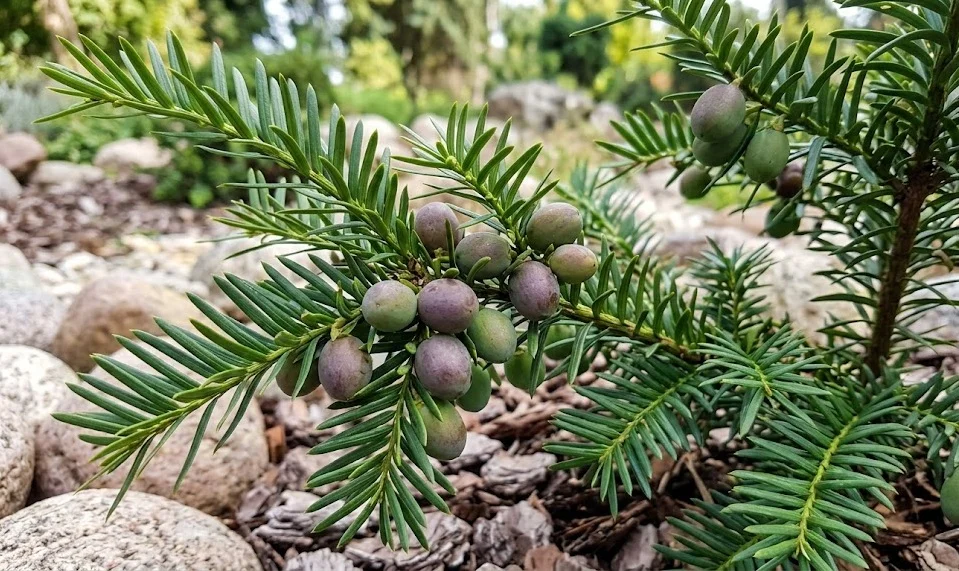

Japanese plum yew is reasonably hardy in suitable climates, but winter success depends strongly on shelter, soil moisture, and root protection. The plant is more vulnerable to cold, dry wind than to ordinary winter temperatures in a well-chosen site. Young plants and container specimens need more attention because their roots are less insulated. With correct preparation, this evergreen can pass through winter with dense foliage and minimal browning. Arnold Arboretum+2Missouri Botanikus Kert+2
Understanding winter stress
Winter stress in evergreen shrubs is often a moisture problem. Needles continue to lose water during sunny, windy, or dry winter weather. When the soil is frozen or very cold, roots cannot replace that moisture quickly. The result is browning that may not become obvious until late winter or early spring.
Japanese plum yew is especially sensitive to exposed wind in marginal sites. Cold air alone may not be the main issue. Drying wind strips moisture from the foliage and intensifies temperature swings. A sheltered location greatly improves winter performance.
Newly planted specimens are more vulnerable because their root systems are still limited. They have not yet explored the surrounding soil for stored moisture. This makes autumn watering and mulch particularly important. A plant that enters winter hydrated is better prepared for stress.
Winter damage should not be confused with disease too quickly. Browning on the exposed side of the plant often reflects wind or sun injury. Random shoot collapse may require closer inspection, but broad directional damage usually points to weather. Diagnosis should consider the site before assuming infection.
More articles on this topic
Preparing plants in autumn
Autumn preparation begins with watering during dry periods. Deep watering before the ground cools helps the plant store moisture in the root zone. This is especially important after a dry summer or in sandy soil. Avoid shallow sprinkling, which does little for deeper roots.
Fertilization should stop well before autumn. Late nitrogen encourages soft growth that may not harden before winter. Mature, firm tissue withstands cold better than tender new shoots. Spring is the appropriate time for feeding.
Mulch should be checked and renewed if it has broken down. A moderate organic layer insulates soil, reduces temperature swings, and conserves moisture. Keep mulch away from direct contact with the stems. Crown ventilation remains important even in winter.
Inspect the plant for damaged or crossing branches before severe weather arrives. Light corrective pruning can prevent weak shoots from breaking under snow. However, heavy pruning should be avoided in autumn. The plant should enter winter with as much healthy foliage as possible.
More articles on this topic
Protecting plants during winter
In exposed gardens, a temporary windbreak can be very effective. Burlap screens fixed to stakes can reduce wind without wrapping the foliage tightly. Air movement should be slowed, not completely sealed off. Tight wrapping can trap moisture and cause additional problems.
Snow can be both protective and damaging. Light snow insulates the root zone and shields lower branches. Heavy wet snow may bend or split stems. Brush it off gently with an upward motion before it freezes hard.
Avoid using de-icing salts near Japanese plum yew. Salt spray and salty runoff can damage evergreen foliage and roots. Plants near paths, driveways, or roads should be protected from splash zones. Fresh water can help leach salts from soil when weather allows.
Container-grown plants require special protection because roots are exposed to colder temperatures than roots in the ground. Move pots to a sheltered wall, unheated greenhouse, cold frame, or protected corner. Insulate the container with burlap, straw, or bubble wrap around the pot rather than around the foliage. Water occasionally during mild spells if the mix becomes dry.
Spring recovery and assessment
Do not rush to prune winter-browned branches at the first sign of damage. Wait until spring growth begins and living tissue is easier to identify. Some browned tips may not recover, but the underlying stems may still be alive. Careful timing prevents unnecessary removal.
Once active growth resumes, remove dead, brittle, or clearly damaged shoots. Cut back to healthy tissue using clean tools. Avoid shearing the whole plant to hide damage. Selective pruning preserves a more natural form.
Spring watering is important after a dry winter. The plant may need help restoring normal moisture balance before warm weather arrives. Mulch can be refreshed lightly after cleanup. A gentle compost application may support recovery if the root system is healthy.
Severe winter damage often indicates a site problem. If injury repeats every year, the plant may need more shelter, better autumn watering, or relocation. In marginal climates, a protected microclimate can make the difference between survival and attractive performance. Long-term success depends on matching the evergreen to the site rather than fighting exposure every winter.