
The Japanese plum yew is one of the most valuable evergreen shrubs for gardens where shade, heat, and year-round structure must be balanced carefully. Its dark, glossy needles bring a calm architectural presence to borders, woodland plantings, courtyards, and sheltered foundation beds. Unlike many needled evergreens, it performs reliably in partial shade and can tolerate deeper shade better than most conifers. Good care begins with understanding that this is a slow, durable plant that rewards patience, steady moisture, and protection from harsh exposure. Missouri Botanikus Kert+2Négyévszakos Növénysegéd+2
Understanding the growth habit and garden value
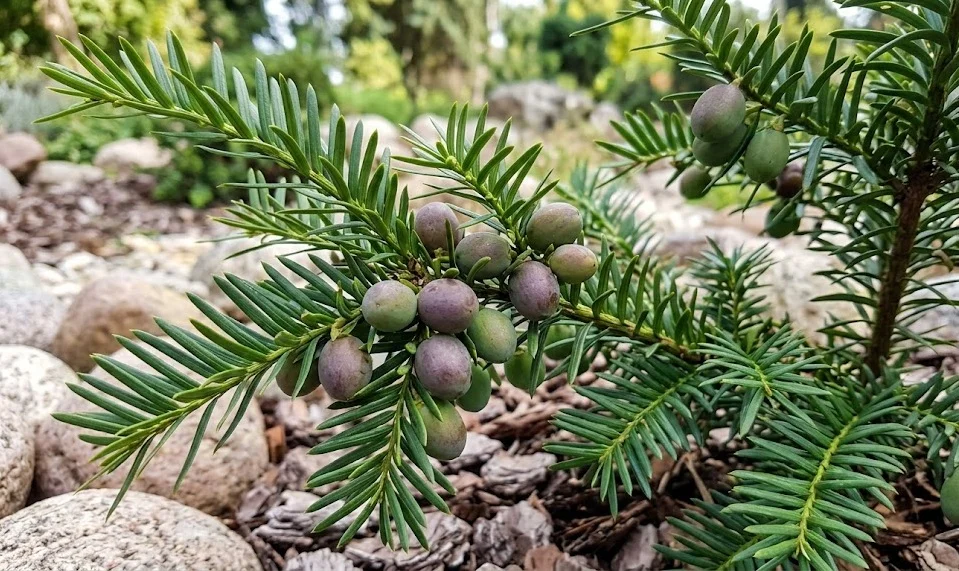
Japanese plum yew develops as a dense evergreen shrub or, with patient training, as a small tree. Its branches carry narrow, leathery needles that resemble yew foliage but often appear softer and more layered in the landscape. The plant grows slowly, which makes it especially useful where a permanent, controlled form is desired. This slow development also means early care has a long influence on the mature shape.
The drupaceous form is appreciated for its strong, natural character and its ability to fit into refined shade compositions. It can anchor mixed borders without becoming visually heavy. In a woodland-style garden, it works well with ferns, hostas, hellebores, epimediums, and shade-tolerant grasses. In a more formal design, it can provide a dark evergreen background behind flowering shrubs or seasonal perennials.
Its fruiting habit adds another layer of interest, although fruit production requires compatible male and female plants. Female plants may produce olive-like or plum-like fruits when pollination is successful. These fruits are decorative, but they should not be the main reason for planting it in most ornamental gardens. The stronger design value lies in its foliage, shade tolerance, and long-lived structure.
Because the plant grows at a measured pace, it should not be treated like a fast-filling screen shrub. It is better used where permanence, texture, and reliability matter more than immediate height. Young plants may seem modest for several seasons before their structure becomes impressive. Once established, however, they can become some of the most dependable evergreens in a shaded garden.
More articles on this topic
Choosing the right site
The best site for Japanese plum yew is one that offers partial shade, filtered light, or gentle morning sun with protection from harsh afternoon heat. In cool, moist climates, it can cope with more direct sun, but in hot gardens it usually performs better with shade during the hottest part of the day. Full shade is tolerated, although growth may become slower and looser. The finest foliage color usually appears where light is bright but not scorching.
Shelter from cold, drying winds is especially important in exposed gardens. Winter wind can remove moisture from evergreen needles faster than the roots can replace it. This often leads to browning, especially on plants facing open northern or eastern winds. A position near a wall, fence, woodland edge, or mixed shrub planting usually provides better protection.
Soil should be moist but well drained, because the roots dislike sitting in stagnant water. A sandy loam enriched with organic matter is ideal, but the plant is adaptable when drainage is adequate. Heavy clay can be improved by loosening a broad planting area and incorporating composted organic matter. The goal is not to create a soft planting pocket, but to improve the whole rooting zone.
Avoid low spots where winter water collects or where irrigation runoff repeatedly saturates the soil. Even a tough evergreen can decline if its roots remain airless for long periods. Raised beds, gentle slopes, or amended woodland edges are often safer than compacted depressions. The plant’s tolerance should never be confused with a preference for poor conditions.
More articles on this topic
Soil preparation and planting environment
Before planting, prepare the soil across a wide area rather than only digging a narrow hole. Japanese plum yew forms a steady root system that benefits from loosened soil beyond the original root ball. Compost, leaf mold, or well-rotted bark can improve moisture retention while preserving aeration. Fresh manure and strong fertilizers should be avoided at planting time because they can stress tender roots.
The soil reaction may range from mildly acidic to neutral, and the plant can tolerate a broader range when structure and drainage are good. Extremely alkaline soil may reduce nutrient availability, especially where irrigation water is also hard. A yearly mulch of leaf mold or composted bark helps buffer the root zone naturally. This approach is more stable than frequent corrective chemical treatments.
Planting depth is critical for long-term success. The top of the root ball should sit level with, or slightly above, the surrounding soil surface. Planting too deeply can reduce oxygen around the crown and encourage root problems. After positioning the plant, backfill gently and water thoroughly to settle soil around the roots.
Mulch should be applied after planting, but it must not be piled against the stems. A layer of organic mulch helps moderate soil temperature, conserve moisture, and reduce weed competition. Keep a clear ring around the crown so the stem bases remain dry and well ventilated. Renewing the mulch lightly each year is better than applying one thick layer at once.
Watering for establishment and maturity
Newly planted Japanese plum yew needs consistent moisture during the first growing season. Water deeply rather than sprinkling the surface, because deep watering encourages roots to move outward and downward. The soil should remain evenly moist but never waterlogged. During warm, dry periods, checking the soil with a finger or trowel is more reliable than following a fixed calendar.
Established plants have better drought tolerance, but they still look best when protected from prolonged dryness. In summer heat, drought stress may show as dull foliage, slight needle browning, or reduced growth. These symptoms often appear slowly, so prevention is easier than recovery. A deep soaking before severe dry spells helps maintain a healthy evergreen canopy.
Watering should be adjusted according to soil texture. Sandy soils drain quickly and may need more frequent irrigation, while clay soils retain moisture longer but can become poorly aerated. Loam with good organic content usually offers the best balance. The aim is to keep the root zone comfortably moist without excluding oxygen.
Late-season watering is also important before winter, especially in regions with dry autumn weather. Evergreens continue to lose moisture through their foliage during winter, even when growth has slowed. A well-hydrated plant enters cold weather with stronger resilience. This practice is particularly useful for younger plants and specimens growing near walls or under roof overhangs.
Feeding and nutrient management
Japanese plum yew is not a heavy feeder, and excessive fertilization can produce soft growth that is less resilient. A modest spring feeding is usually enough when the soil is reasonably fertile. Slow-release balanced fertilizer can be used lightly around the drip line. Compost or leaf mold often provides a gentler and more natural nutrient supply.
The condition of the foliage is a useful guide to nutrition. Healthy plants carry deep green needles with a firm, glossy texture. Pale foliage may suggest poor soil, root stress, excessive water, or nutrient imbalance. It is better to diagnose the growing conditions before applying strong fertilizer.
Avoid late-summer and autumn applications of high-nitrogen fertilizer. New growth encouraged too late in the season may not harden properly before winter. This can increase the risk of cold injury and browning. Spring is the safest time for any meaningful feeding.
Container-grown plants need more careful nutrient management because potting mixes lose fertility over time. A controlled-release fertilizer in spring can maintain steady growth without forcing the plant. Regular flushing with clean water helps prevent salt accumulation in containers. The plant should still be fed lightly, because slow, sturdy growth is more desirable than rapid extension.
Seasonal maintenance through the year
Spring care begins with inspection. Remove winter-damaged, broken, or browned shoots once it is clear which parts are dead. Check mulch depth and refresh it if necessary. This is also the best season to apply compost or a light slow-release fertilizer.
Summer care focuses on water, shade balance, and heat stress prevention. During hot spells, the plant benefits from steady soil moisture and protection from reflected heat. Paved areas, pale walls, and south-facing foundations can intensify stress. If foliage begins to scorch, improving moisture and shade is more effective than pruning immediately.
Autumn is a good time to assess structure and prepare the plant for cold weather. Remove fallen leaves that collect densely inside the shrub, especially if they remain wet. Water during dry autumn periods before the soil becomes cold. Avoid stimulating new growth with fertilizer at this stage.
Winter care is mostly protective rather than active. In windy sites, temporary screens can reduce drying damage. Snow should be brushed off gently if it bends branches heavily, but frozen branches should not be forced. Plants in containers may need insulation around the pot to prevent root freezing.
Long-term landscape care
Because Japanese plum yew grows slowly, long-term care is more about guidance than correction. Choose the correct spacing at planting so the plant can mature naturally. Crowding it too closely with vigorous shrubs creates competition and poor air movement. A well-spaced plant develops a fuller, more elegant form.
Pruning should remain light and purposeful. The plant usually does not need regular hard pruning, and its natural habit is often its best feature. Remove damaged, crossing, or awkward shoots selectively. This preserves texture while preventing the shrub from becoming congested.
In mixed plantings, monitor neighboring plants as they mature. Fast-growing deciduous shrubs or aggressive perennials can shade the base too heavily or compete for water. Thinning nearby growth may be more beneficial than pruning the plum yew itself. Good companions should enhance the evergreen structure without overwhelming it.
A mature Japanese plum yew can become a quiet focal point in a shaded garden. Its beauty is not loud or seasonal, but steady and architectural. With appropriate siting, moderate watering, and restrained maintenance, it remains handsome for many years. It is a plant for gardeners who value permanence, texture, and calm evergreen depth.