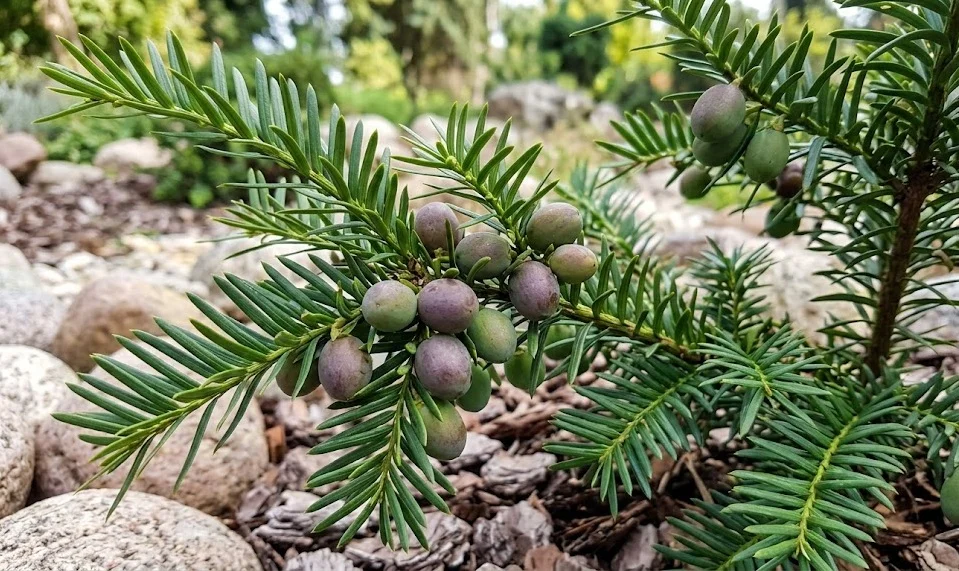

Japanese plum yew grows best when its root zone remains evenly moist, well aerated, and protected from extremes. It can tolerate some drought after establishment, but that tolerance should not be mistaken for indifference to water. Feeding should be moderate, because the plant naturally grows slowly and does not respond well to being pushed aggressively. The goal is durable, dense, dark-green foliage rather than rapid, soft extension. Négyévszakos Növénysegéd+2Fairview Garden Center+2
Water needs during establishment
The first growing season is the most important period for watering. Newly planted Japanese plum yew relies on the original root ball while new roots slowly enter the surrounding soil. Water should reach the full depth of the root zone rather than wetting only the surface. Deep irrigation encourages roots to develop beyond the planting hole.
Check soil moisture regularly during the first year. The surface may appear dry while the root zone is still moist, or it may look damp while deeper soil is compacted and airless. A small trowel or soil probe gives a more accurate picture. Irrigation decisions should be based on actual soil condition rather than habit.
During warm weather, young plants may need weekly deep watering. In sandy soil or windy positions, water may be needed more often. In heavy soil, watering must be less frequent but still thorough when required. The correct rhythm is determined by drainage, temperature, rainfall, and plant size.
Avoid frequent shallow watering. It encourages roots to remain near the surface, where they are more vulnerable to heat and drought. It can also keep mulch and surface soil too wet, which favors crown issues. Slow soaking at longer intervals is usually more effective.
More articles on this topic
Watering established plants
Once established, Japanese plum yew becomes more forgiving. It can tolerate short dry periods, especially in shaded sites with mulched soil. Even so, prolonged drought can reduce shoot growth and dull the foliage. A plant that receives occasional deep watering during dry spells usually remains denser and greener.
Established shrubs should be watered before visible stress becomes severe. Needle browning often develops after the plant has already experienced sustained moisture shortage. Recovery can be slow because the plant does not replace damaged foliage quickly. Preventive watering is therefore more valuable than rescue watering.
Morning is the best time to irrigate. Water applied early has time to soak into the root zone while foliage dries during the day. Wetting the foliage is usually unnecessary and can be avoided by using drip irrigation or a slow hose at soil level. This approach conserves water and reduces leaf wetness.
Winter and autumn moisture should not be ignored. Evergreens continue to lose water in cold weather, especially when wind and sun are strong. If autumn is dry, deep watering before the ground cools can reduce winter burn. This is particularly important for young plants and containers.
More articles on this topic
Soil moisture, mulch, and drainage
Mulch is one of the most useful tools for managing moisture around Japanese plum yew. A layer of composted bark, shredded leaves, or leaf mold reduces evaporation and moderates soil temperature. It also limits weeds that compete for water. The mulch should be broad rather than piled high.
Good drainage is just as important as moisture retention. Roots need oxygen, and saturated soil can suffocate them. A plant growing in poorly drained soil may show symptoms similar to drought, including dull foliage and dieback. This happens because damaged roots cannot supply water efficiently.
In clay soil, watering should be slow and carefully monitored. Clay can hold water for a long time, especially after heavy rain. Irrigating automatically without checking soil moisture may create chronic wetness. Raised planting areas can be helpful where drainage is naturally poor.
In sandy soil, the challenge is the opposite. Water drains quickly, and nutrients can leach away more easily. Organic matter and mulch help create a more stable root environment. Deep watering remains necessary, but it may be needed at shorter intervals during dry weather.
Fertilizing in garden soil
Japanese plum yew usually needs only light feeding in good garden soil. A spring application of compost around the root zone can support steady growth. If a fertilizer is used, choose a balanced slow-release product and apply it at a modest rate. More is not better for a slow-growing evergreen.
Strong nitrogen feeding can produce weak, lush shoots. These shoots may be more vulnerable to cold, drought, and mechanical damage. Dense, firm growth is preferable to rapid extension. A restrained feeding program keeps the plant in character.
Observe the whole plant before deciding to fertilize. Pale foliage may result from root stress, drought, waterlogging, or incorrect light exposure. Fertilizer will not correct those problems. Improving soil structure and moisture management often solves more issues than adding nutrients.
Do not fertilize late in the growing season. Late feeding can encourage tender growth that has little time to harden before winter. This is especially risky in colder parts of the plant’s range. Spring feeding is safer and more aligned with natural growth.
Feeding container-grown plants
Container-grown Japanese plum yew needs more attention because roots are confined. Nutrients are depleted faster in pots than in open ground. A controlled-release fertilizer applied in spring can provide steady nutrition. Liquid feeding can be used occasionally, but it should be dilute.
The potting mix must drain freely while holding enough moisture. A heavy, poorly drained mix can cause root decline, especially in cool weather. A bark-based mix with mineral components often performs better than dense garden soil. Containers should always have clear drainage holes.
Watering and feeding are closely linked in pots. Frequent watering can leach nutrients, while infrequent watering can concentrate salts. Periodic flushing with plain water helps reduce salt buildup. This is especially useful when using tap water with high mineral content.
Potted plants should not be overfed to compensate for slow growth. Slow growth is part of the plant’s natural habit. A compact, healthy container specimen is more valuable than one with stretched, weak shoots. Regular repotting or root pruning may eventually be needed as the plant matures.