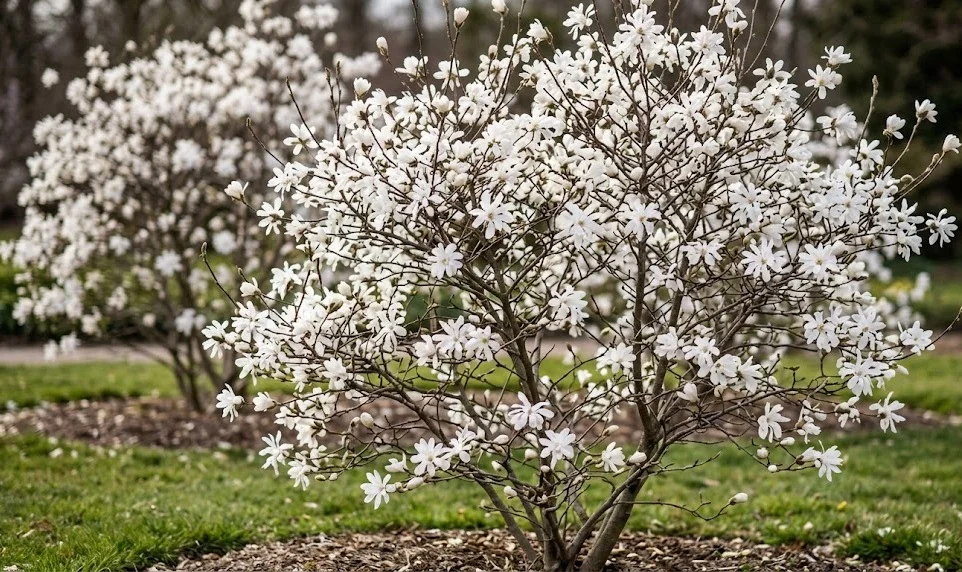

Pruning star magnolia is mostly a matter of restraint, timing, and respect for the plant’s natural form. Unlike shrubs that need regular hard cutting, star magnolia usually looks best when its layered branches are allowed to develop gradually. Poor pruning can remove next year’s flowers, create awkward regrowth, or expose the plant to unnecessary stress. A careful, selective approach keeps the shrub healthy while preserving its elegant spring display.
When and why to prune
The best time to prune star magnolia is shortly after flowering. At this point, the spring display has finished and the plant still has time to heal during the growing season. Pruning at this time also reduces the risk of removing the next season’s flower buds. Late summer, autumn, and winter pruning should generally be avoided.
The main reasons for pruning are health, structure, and space management. Dead, broken, rubbing, diseased, or badly crossing branches can be removed. Light shaping may be useful when a young plant is developing its framework. Routine annual cutting is not necessary if the plant is already balanced.
Star magnolia sets flower buds well before the next spring. Careless pruning after bud formation can greatly reduce flowering. This is a common reason for disappointment in otherwise healthy plants. Understanding the plant’s growth cycle prevents unnecessary loss of bloom.
A mature shrub should not be forced into a tight formal shape. Its beauty comes from natural branching and early flowers along bare stems. Shearing destroys this character and encourages congested outer growth. Selective pruning with hand tools is far better than clipping.
More articles on this topic
How to make correct cuts
Use clean, sharp pruning tools to make smooth cuts. Ragged wounds heal more slowly and can invite disease. Small branches can be cut with secateurs, while thicker wood may require loppers or a pruning saw. Tools should be disinfected after cutting diseased material.
Cuts should be made just outside the branch collar. This allows the plant to seal the wound naturally. Leaving long stubs leads to dieback and an untidy appearance. Cutting too close to the trunk can damage protective tissue.
When removing a larger branch, use a staged cutting method. First reduce the weight of the branch to prevent tearing. Then make the final cut cleanly at the correct point. This is safer for both the plant and the gardener.
Step back frequently while pruning. It is easy to remove too much when working close to the canopy. Viewing the shrub from several angles helps preserve symmetry. The best pruning often looks almost invisible afterward.
More articles on this topic
Cutting back older or overgrown plants
Older star magnolias may become crowded, misshapen, or too large for their space. Even then, drastic cutting is risky. The plant may respond with weak shoots or may recover slowly. Gradual correction over several seasons is usually safer.
Start by removing dead, damaged, and crossing branches. This often improves the structure without severe intervention. Next, consider whether one or two poorly placed older branches can be removed at their origin. Avoid taking out too much living wood in a single year.
If height or spread must be reduced, cut back to suitable side branches rather than leaving bare stumps. This keeps the outline more natural and supports better regrowth. Random topping should be avoided because it creates ugly branching and weak points. The plant should still look like a star magnolia after pruning.
Some overgrown plants are better improved through surrounding garden changes. Moving nearby plants, widening the bed, or adjusting paths may be preferable to harsh pruning. A star magnolia that has outgrown its place may be signaling that the original space was too small. Working with the plant’s natural habit gives the best long-term result.