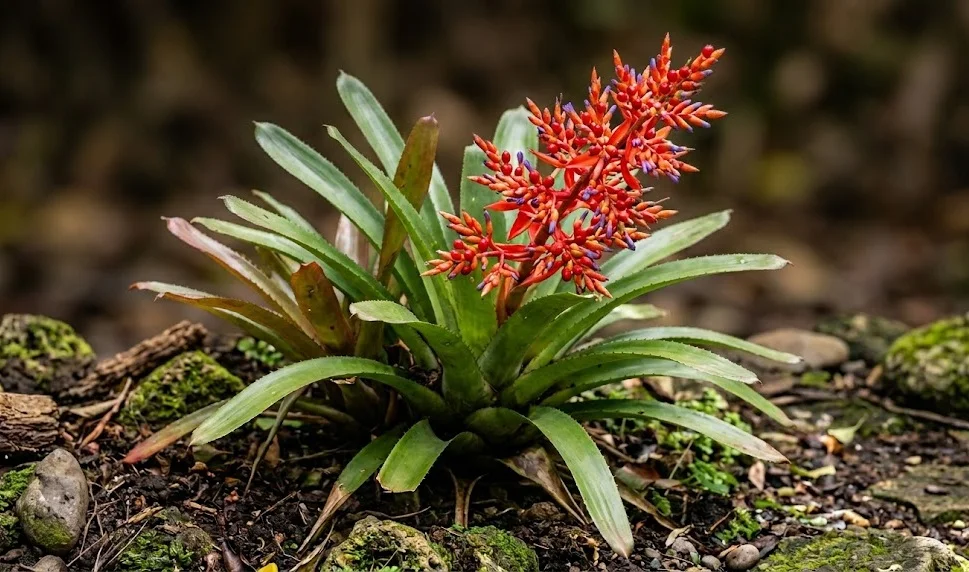

Pruning is a vital aspect of maintenance that keeps the coral berry bromeliad looking its best and ensures the overall health of the specimen. Unlike traditional shrubs or trees, pruning this bromeliad is more about the removal of spent or damaged tissues rather than shaping the plant’s growth. Proper technique and the use of the right tools are essential to prevent the introduction of diseases during the pruning process. A professional approach to trimming not only improves the plant’s aesthetics but also directs its energy toward the production of new, healthy offsets.
Post-bloom maintenance and stalk removal
The most significant pruning task for any coral berry bromeliad owner is the removal of the flower stalk once it has finished its display. After the vibrant berries have finally faded and the stalk turns brown and dry, it no longer serves a biological purpose for the plant. Leaving the dead stalk in place can attract pests or harbor fungal spores, and it detracts from the plant’s architectural beauty. Removing it cleanly is the first step in transitioning the plant into its next life phase of producing offspring.
To remove the spent flower stalk, you should use a sharp, sterilized knife or a pair of long-handled pruning shears. Follow the stalk down into the central cup as far as you can safely reach without damaging the surrounding healthy leaves. Make a clean, horizontal cut to remove the entire inflorescence in one piece. If the stalk is still somewhat fleshy, you may want to wait a few more weeks until it is completely dry and brittle, at which point it may even pull out with a gentle tug.
Once the stalk is removed, it is a good idea to flush the central tank with fresh water to remove any debris or juices that may have been released during the cut. This helps prevent the growth of bacteria in the reservoir and keeps the core of the plant clean and healthy. You may notice that the mother plant stops producing new leaves from the center after this point, which is normal. She will now begin to redirect all her energy to the base of the plant to support the growth of new pups.
It is important to remember that the mother plant will not bloom again, but she should not be discarded immediately after the flower stalk is removed. She will continue to live for many months, providing vital nutrients and protection to the young offsets as they develop. Your role as a professional gardener is to keep the mother plant as healthy as possible during this time to ensure the next generation is strong. Pruning the flower stalk is just the beginning of this transition, not the end of the plant’s useful life.
More articles on this topic
Leaf pruning and aesthetic maintenance
Throughout the year, individual leaves of the coral berry bromeliad may become damaged, diseased, or simply reach the end of their natural lifespan. Lower leaves, in particular, often turn brown and dry out as the plant focuses its resources on the newer growth in the center. Removing these unsightly leaves keeps the specimen looking tidy and prevents them from becoming a hiding place for pests like mealybugs. Regular aesthetic maintenance ensures that your plant always looks like it belongs in a professional botanical display.
When trimming a leaf that has only brown tips, you can use sterilized scissors to cut away the dead portion. Try to follow the natural curve and shape of the leaf to make the cut as inconspicuous as possible. Leave a tiny sliver of brown tissue rather than cutting into the healthy green part to avoid creating a fresh wound that could be vulnerable to infection. This “tip-trimming” is a quick and easy way to significantly improve the appearance of a plant that has suffered from low humidity or minor physical damage.
If an entire leaf has turned brown or is heavily damaged by pests or disease, it should be removed completely at the base. Gently pull the leaf away from the main stem; if it is fully dead, it will often detach easily with a slight tug. If it is still firmly attached, use a sharp knife to carefully cut it away as close to the base as possible. Be extremely careful not to nick the stem or the surrounding healthy leaves, as any damage to the main structure can be a entry point for pathogens.
Always ensure that your pruning tools are thoroughly cleaned with rubbing alcohol or a bleach solution before and after each use. This is the most effective way to prevent the spread of diseases from one plant to another in your collection. Even if a plant looks healthy, it could be harboring microscopic spores that are easily transferred on the blades of your shears. Professional standards of hygiene are the best way to maintain a long-term, successful indoor garden free of chronic health issues.
More articles on this topic
Tool sterilization and professional technique
The quality of the tools you use for pruning the coral berry bromeliad can have a significant impact on the plant’s recovery and overall health. Dull blades can crush and tear the plant’s delicate vascular tissues, leading to slow healing and an increased risk of rot. Investing in a high-quality, sharp horticultural knife and a pair of precision snips is a wise move for any serious collector. Keeping these tools well-maintained and sharpened will ensure that every cut you make is clean and professional.
Sterilization should be an automatic part of your pruning routine, not an occasional afterthought. A quick wipe with a 70% isopropyl alcohol pad is usually sufficient to kill most common pathogens found in a home environment. For more serious work, such as treating a diseased plant, you should soak your tools in a 10% bleach solution for several minutes. This level of care protects your entire collection and is a practice followed by professional greenhouse managers and botanical garden curators worldwide.
When making a cut, always aim for a single, smooth motion rather than a sawing or hacking action. This minimizes the surface area of the wound and allows the plant to seal the area much more quickly through its natural defenses. If you are removing a large leaf or a thick flower stalk, you can dust the fresh cut with a little bit of ground cinnamon or a specialized fungicidal powder. This acts as a natural “bandage” that prevents fungal spores from taking hold in the moist, exposed tissue.
Finally, take the time to observe the plant for a few days after any significant pruning or cutting back. Look for any signs of bleeding, unusual discoloration, or the onset of rot at the site of the cuts. If the plant is in a high-humidity environment, you may want to temporarily improve the air circulation to help the wounds dry and callous over. By following these professional techniques, you ensure that pruning is a beneficial process that enhances the life and beauty of your coral berry bromeliad.