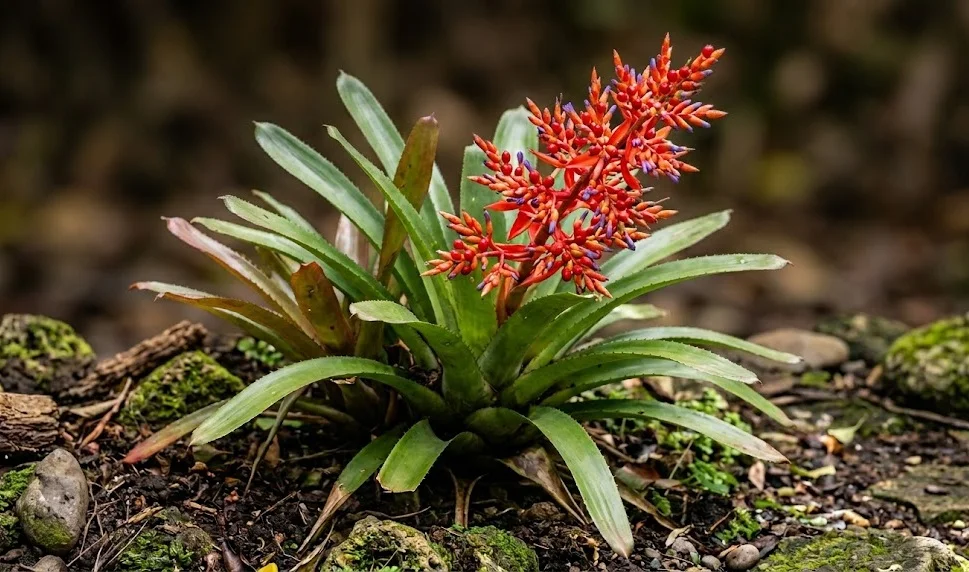

The coral berry bromeliad is a plant defined by its relationship with light, as this energy source dictates its growth rate, foliage color, and flowering potential. In its native tropical habitat, it lives under a canopy of trees where it receives bright, filtered sunlight throughout the day. Translating this natural environment to an indoor setting requires a precise understanding of light intensity and duration. Providing the correct light exposure is the most effective way to ensure your bromeliad remains a stunning, professional-quality specimen for years to come.
Finding the perfect light intensity
The ideal light for a coral berry bromeliad can best be described as “bright, indirect sunlight,” which provides energy without the heat of direct rays. In a professional indoor setting, this often means placing the plant near a large window where it can see the sky but is not hit by direct beams of sun. If the light is too intense, the leaves will lose their deep green or reddish tones and may even develop permanent, unsightly scorch marks. On the other hand, if the light is too dim, the plant will become “leggy” and lose the compact, architectural form that makes it so attractive.
East-facing windows are often perfect for this species, as they provide gentle morning sun that is unlikely to burn the delicate foliage. The light intensity in the morning is sufficient to trigger the plant’s metabolic processes without the extreme UV levels found later in the day. If you only have access to south-facing windows, you must use a sheer curtain to diffuse the light and protect the plant during the peak hours of 11:00 AM to 3:00 PM. This filtered approach mimics the dappled shade of the rainforest and is the safest way to provide high-energy light.
A simple way to test the light intensity is the “shadow test,” which provides immediate feedback on the quality of the light in a specific spot. Hold your hand about a foot above the plant’s leaves during the brightest part of the day; a soft, blurry shadow indicates the perfect level of indirect light. If the shadow is sharp and distinct, the light is too direct and the plant should be moved further back from the window. If the shadow is almost non-existent or very faint, the spot is likely too dark to support healthy, long-term growth.
Seasonality also plays a major role in how you manage the light for your coral berry bromeliad throughout the year. In the winter, you can move the plant much closer to the window or even allow some direct sun, as the light intensity is significantly lower. In the summer, you must be much more vigilant about shielding the plant from the heat and the power of the sun’s rays. Adjusting the plant’s position by just a few feet as the seasons change can make a dramatic difference in its overall health and the vibrancy of its colors.
More articles on this topic
Signs of light stress and aesthetic changes
The leaves of the coral berry bromeliad act as a living barometer, providing clear visual cues when the light levels are not optimal. If the plant is receiving too much light, you will notice the leaves becoming pale, yellowish, or even bleached in appearance. In extreme cases, direct sun will cause dry, brown, or white patches to form where the leaf tissue has literally been cooked by the sun. These marks are permanent and will not heal, so it is vital to respond to the early signs of lightening foliage before irreversible damage occurs.
Conversely, a lack of sufficient light leads to its own set of problems that can ruin the plant’s professional appearance. The most obvious sign of low light is the loss of any reddish or bronze pigmentation, with the plant turning a dull, dark green as it tries to maximize its remaining chlorophyll. The new leaves will also emerge much thinner and longer than the older ones, and the overall rosette will lose its tight, symmetrical shape. This “stretching” or etiolation is a desperate attempt by the plant to find a better light source.
Light also plays a critical role in the plant’s ability to produce its iconic flower spike and the subsequent “berries.” Without enough energy from light, the plant may never reach the point where it can successfully initiate the flowering process. If you have a mature plant that refuses to bloom despite proper watering and fertilization, a lack of light is the most likely culprit. Gradually increasing the light exposure over several weeks can often provide the boost the plant needs to finally produce its stunning inflorescence.
Regularly rotating the pot by 90 degrees every week is a professional trick to ensure all sides of the plant receive equal light exposure. This prevents the plant from leaning toward the light source and helps it maintain a perfectly balanced and attractive silhouette. It also ensures that all the leaves are photosynthesizing efficiently, which contributes to the overall vigor and disease resistance of the specimen. This simple maintenance task is often the difference between a mediocre plant and a show-quality masterpiece.
More articles on this topic
Supplemental and artificial lighting options
In many homes or office environments, natural light is insufficient to keep a coral berry bromeliad thriving year-round. Fortunately, modern lighting technology has made it easier than ever to supplement natural light with high-quality artificial sources. LED grow lights are the preferred choice for professional gardeners because they can be tuned to provide the specific spectrum of light that plants need. These lights produce very little heat, which is essential for preventing the foliage from drying out or burning when the light source is nearby.
When setting up artificial lights, it is important to consider the “photoperiod,” or the number of hours the light is on each day. A coral berry bromeliad typically thrives with 12 to 14 hours of consistent light, followed by a period of total darkness. Using a simple plug-in timer can automate this process, ensuring the plant receives a reliable daily dose of energy without you having to remember to flip a switch. This consistency mimics the natural cycles of the tropics and helps regulate the plant’s internal biological clock.
The distance between the light source and the plant is another critical factor that determines the intensity of the light reaching the leaves. Most LED grow lights should be placed between 12 and 24 inches above the top of the bromeliad for optimal results. If the light is too far away, its intensity drops off rapidly and provides very little benefit to the plant. If it is too close, it can still cause heat stress or light burn even if the bulbs themselves don’t feel hot to the human touch.
Finally, consider the aesthetic impact of your lighting setup, as your plant is likely a decorative element in your space. Many modern grow lights are designed to be visually appealing or can be integrated into existing light fixtures using specialized bulbs. Choosing a light with a “warm white” or “full-spectrum” output will make the plant’s colors look natural and vibrant, whereas older “blurple” (blue and purple) lights can make the plant look unnatural and difficult to appreciate. Professional lighting should enhance the beauty of your coral berry bromeliad while providing the life-sustaining energy it requires.