
Maintaining the vitality of this unique evergreen requires a deep understanding of its natural habitat and specific growth patterns. The Chinese holly is prized for its architectural form and distinctive foliage, making it a standout addition to any professional landscape or home garden. To ensure it thrives, one must pay close attention to the balance of nutrients, water, and environmental conditions throughout the year. Developing a consistent routine is the primary step toward achieving a specimen that looks healthy and vibrant in every season.
A professional approach to gardening starts with the recognition that every plant species has its own set of biological demands. You should spend time observing how your holly reacts to changes in temperature and light throughout the spring and autumn months. Proper care is not just about reacting to problems, but rather creating a stable environment where the plant can sustain itself naturally. By following a structured maintenance plan, you will find that this shrub becomes more resilient against common stressors and environmental fluctuations.
Success in the long term depends heavily on the quality of the surrounding ecosystem you provide for the roots and foliage. You need to look beyond the surface and consider how the soil structure and local microclimate influence the plant’s metabolic processes. It is often the small adjustments in care that lead to the most significant improvements in leaf color and berry production. Consistency is your most powerful tool when managing a plant that lives for several decades under the right conditions.
Education is an ongoing process when dealing with specialized ornamental shrubs like this particular holly variety. You should familiarize yourself with the specific needs of the evergreen family to better interpret the signals your plant is sending. Whether it is a subtle yellowing of the leaves or a slower growth rate, these are indicators that require a professional touch. Taking the time to master these nuances will elevate your gardening skills and ensure the longevity of your botanical investment.
Establishing ideal soil conditions
The foundation of any successful care regimen begins with the medium in which the roots are anchored and nourished. You must ensure that the soil is rich in organic matter and maintains a slightly acidic to neutral pH level for optimal health. Heavy clay soils can be problematic because they restrict airflow and trap too much moisture around the delicate root system. Incorporating well-rotted compost or leaf mold into the planting area will significantly improve the drainage and nutrient availability.
More articles on this topic
Monitoring the moisture levels within the soil is a task that requires both precision and a bit of intuition. You should feel the soil several inches below the surface to determine if it is truly time to provide more hydration. Soil that remains waterlogged for extended periods will eventually lead to root rot, which is often fatal for this species. Conversely, soil that dries out completely can cause the leaves to drop prematurely and weaken the plant’s overall structure.
Nutrient density is another critical factor that you cannot afford to overlook if you want a lush appearance. Using a slow-release fertilizer designed for acid-loving plants will provide a steady supply of minerals over several months. You should avoid high-nitrogen fertilizers late in the growing season, as this can stimulate soft growth that is vulnerable to frost. A balanced approach to soil chemistry ensures that the plant has everything it needs to build strong cell walls and glossy leaves.
Compaction is a silent threat that often goes unnoticed until the plant begins to show visible signs of decline. You should avoid heavy foot traffic around the base of the holly to keep the soil structure loose and porous. If the ground has become too hard, gentle aeration can help oxygen reach the roots more effectively and improve water penetration. Keeping the soil healthy is a continuous job that pays off with a much more robust and aesthetically pleasing shrub.
Seasonal maintenance cycles
As the seasons transition, your care strategy must adapt to the changing physiological needs of the evergreen foliage. During the spring, the focus shifts toward supporting new growth and ensuring the plant recovers from the winter dormancy. You should inspect the branches for any damage caused by cold winds and prepare the soil for the active growing phase. This is the best time to apply a fresh layer of mulch to help regulate temperatures and retain moisture.
More articles on this topic
Summer brings the challenge of heat stress and increased evaporation rates that can tax the plant’s resources. You need to be vigilant about deep watering during periods of prolonged drought to prevent the leaves from scorching. Providing a bit of afternoon shade can also be beneficial if the temperatures rise significantly above the regional average. Your goal during these months is to maintain stability and prevent the plant from entering a state of emergency.
The arrival of autumn is a signal to begin slowing down the fertilization process and hardening the plant for the cold. You should focus on cleaning up fallen debris and ensuring the area around the base is free from potential fungal spores. Reducing the frequency of watering as the weather cools helps the holly prepare for the slower metabolic rates of winter. This transition period is vital for the development of the berries, which add winter interest to the landscape.
Winter care is mostly about protection and ensuring the plant does not succumb to extreme desiccation. You should ensure the soil is moist before the first hard freeze, as frozen ground prevents the roots from taking up water. Protecting the foliage from harsh, drying winds can prevent the common problem of winter burn on the evergreen leaves. Even though the plant is resting, your role as a caretaker continues in a more passive but equally important capacity.
Observing plant health indicators
A professional gardener knows that the leaves are the best storytellers when it comes to the internal health of a shrub. You should regularly check for a deep green luster, which indicates that the plant is receiving adequate nutrients and light. If you notice a dulling of the color or a pale yellow tint, it might be a sign of a nutrient deficiency or pH imbalance. Catching these subtle changes early allows you to make corrections before the plant’s structural integrity is compromised.
The growth rate of the stems provides another clear window into the effectiveness of your current care routine. You should see a steady expansion of new wood during the peak growing months of the late spring and early summer. If the plant seems stagnant or the new shoots are unusually thin, it may be struggling with poor soil quality or insufficient water. Comparing the growth from year to year helps you understand the long-term trends of the holly’s development.
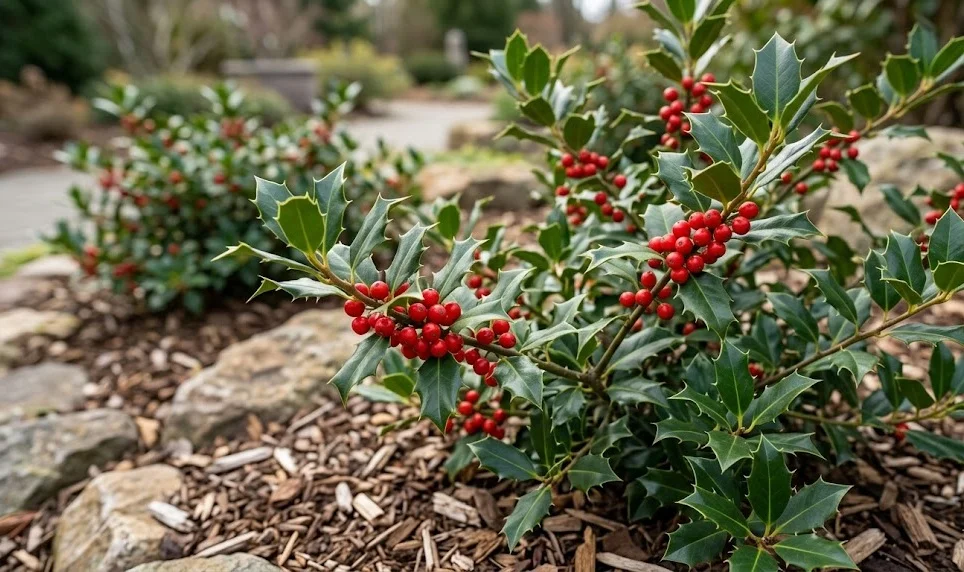
Flowering and berry production are the ultimate signs of a happy and well-adjusted Chinese holly specimen. You should look for small, inconspicuous flowers in the spring, which eventually give way to the iconic red fruits. A lack of berries can sometimes indicate a lack of a pollinator or a stress response to the previous season’s weather. Monitoring these reproductive cycles ensures that you are meeting the biological milestones necessary for a complete life cycle.
Root health is harder to see but can often be gauged by the stability of the plant in the ground. You should ensure the shrub feels firmly anchored and that there is no heaving of the soil around the base. If the plant feels loose or if you notice mushrooms growing at the base, there may be an issue with the underground structures. Maintaining a healthy root system is the most important part of ensuring the holly lives for many decades.
Enhancing the local microclimate
The specific location where you place your holly can drastically change its care requirements and overall lifespan. You should try to find a spot that offers protection from the strongest prevailing winds, which can dry out the foliage. A microclimate that stays slightly cooler in the summer and warmer in the winter is the ideal setting for this species. Using nearby structures or other plantings to create a buffer can make a significant difference in the plant’s health.
Air circulation is often overlooked but is essential for preventing the buildup of humidity that leads to disease. You should ensure that there is enough space between the holly and other plants to allow breezes to move through the branches. Stagnant air creates a breeding ground for pests and fungi that can quickly overwhelm an evergreen. Proper spacing also ensures that every part of the plant receives an adequate amount of light and nutrients.
Reflective heat from walls or pavements can be a hidden stressor that causes the leaves to drop or burn. You should be cautious about planting too close to light-colored surfaces that bounce intense sunlight onto the foliage. If the plant is near a driveway or sidewalk, the salt used for de-icing in the winter can also damage the roots and soil. Understanding these external factors allows you to mitigate risks and create a safer environment for your garden.
Integrating the holly into a diverse landscape helps create a more resilient ecosystem for all your plants. You should consider planting groundcovers nearby that can help keep the soil cool and moist throughout the summer. These companion plants can also attract beneficial insects that help control pest populations naturally. A well-thought-out garden design makes the care of individual plants like the Chinese holly much easier and more effective.
Utilizing professional tools and techniques
Using the right equipment for maintenance tasks ensures that you do not accidentally damage the plant while trying to help it. You should always use sharp, sterilized shears when removing dead or diseased wood to prevent the spread of pathogens. High-quality tools make cleaner cuts that heal faster and look more professional in the final landscape. Investing in a good moisture meter can also take the guesswork out of watering and prevent over-saturation.
Soil testing kits are invaluable for understanding the chemical makeup of your garden and making informed decisions. You should test the pH and nutrient levels at least once every few years to see how the soil is evolving. This data-driven approach allows you to apply exactly what the plant needs rather than guessing with generic fertilizers. Knowing the specific requirements of your site empowers you to be a much more effective and professional caretaker.
Mulching techniques require a bit of finesse to be truly effective without causing harm to the trunk. You should apply a layer that is about two to three inches deep, keeping it a few inches away from the bark. This “donut” shape prevents moisture from sitting against the wood, which can cause rot and attract boring insects. Using organic materials like pine bark or cedar chips adds nutrients to the soil as they decompose over time.
Recording your observations in a garden journal is a practice used by many top professionals to track plant progress. You should note the dates of fertilization, the first appearance of berries, and any unusual weather events. Over time, this record becomes a personalized manual for your specific plant and its unique environmental conditions. Having a history of care allows you to spot patterns and make better predictions for future seasons.
Long-term health and rejuvenation
As the Chinese holly matures, its needs will change, and it may require more significant interventions to stay healthy. You should be prepared to perform occasional thinning to allow light to reach the interior of the shrub. This prevents the inner branches from becoming bare and keeps the foliage looking dense and lush from top to bottom. A mature plant is a beautiful asset, but it requires a watchful eye to maintain its structural integrity.
If a holly has been neglected for several years, a rejuvenation plan can often bring it back to its former glory. You should start by removing the “three Ds”: dead, damaged, and diseased wood to see the core structure. Gradually improving the soil quality and consistency of watering will provide the energy needed for the plant to recover. Patience is key, as it may take two or three growing seasons to see a complete transformation.
Encouraging a strong leader and well-spaced branches will help the plant withstand heavy snow loads in the winter. You should monitor the canopy for any crossing branches that might rub against each other and create wounds. Structural integrity is just as important as aesthetic beauty when it comes to the longevity of a large shrub. By guiding the plant’s growth early on, you save yourself a lot of corrective work in the future.
Ultimately, the care of a Chinese holly is a rewarding journey that connects you with the rhythms of the natural world. You should take pride in the glossy leaves and bright berries that your hard work has helped produce. Sharing your knowledge with other gardeners can help build a community of experts who appreciate these resilient evergreens. With the right approach, your holly will remain a focal point of the garden for many generations to enjoy.