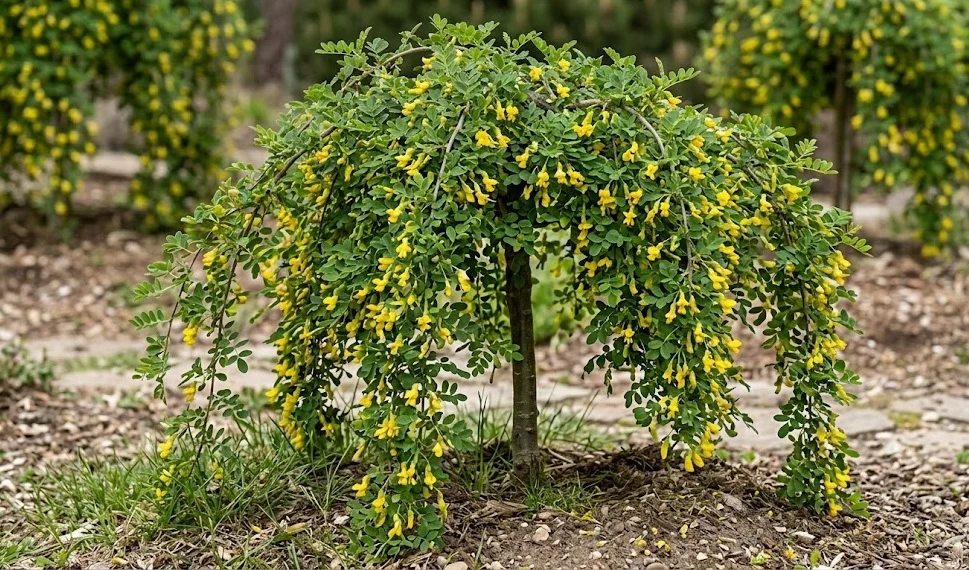

The weeping pea tree is highly valued in cold-climate gardens because it tolerates winter conditions better than many small ornamental trees. Its natural hardiness makes it suitable for regions with frost, snow, and exposed sites. Even so, young trees, recently planted specimens, and container-grown plants benefit from thoughtful winter preparation. Good winter care protects the graft union, root zone, and cascading crown while avoiding unnecessary covering that can trap moisture and cause damage.
Cold tolerance and winter behavior
The weeping pea tree is naturally hardy and enters dormancy as temperatures fall. Its leaves drop in autumn, and the plant conserves energy in its woody framework and root system. This seasonal rhythm is normal and should not be confused with decline. A leafless winter crown is part of the plant’s natural cycle.
Established trees in the ground usually need little winter protection. Their roots can tolerate cold soil if drainage is good and the plant entered winter in healthy condition. The most important requirement is avoiding waterlogged ground before and during winter. Wet soil combined with freezing conditions can damage roots more than cold air alone.
Young trees are more vulnerable because their root systems are not yet extensive. A newly planted specimen may not anchor firmly before winter winds arrive. The trunk and graft union may also be more exposed to mechanical stress. Support and careful mulching can reduce these risks.
The weeping crown can collect snow, especially when branches form a dense curtain. Light snow is usually harmless, but heavy wet snow can bend or break branches. The crown should be checked after storms. Snow can be gently shaken off by hand if the branches are under visible strain.
More articles on this topic
Preparing the tree in autumn
Autumn preparation begins with reducing stress before dormancy. The tree should not be fertilized late in the season because soft new growth is more vulnerable to frost. Growth should be allowed to mature naturally. A plant that enters winter with firm wood is better prepared for cold.
Watering should be adjusted according to autumn rainfall. If the season is very dry, a deep watering before the ground freezes can help prevent winter desiccation. This is especially important for recently planted trees. However, wet soil should never be made wetter unnecessarily.
Mulching is useful when applied correctly. A moderate layer over the root zone helps buffer soil temperature and protect soil structure. The mulch should be kept away from the trunk and graft union. Piling mulch against the bark can trap moisture and encourage decay.
Autumn is also a good time to inspect the structure. Broken, diseased, or badly damaged branches can be removed before winter weather worsens them. Major shaping is usually better left until late winter or early spring. The goal in autumn is cleanliness and safety, not aggressive pruning.
More articles on this topic
Protection against snow, wind, and animals
Wind can loosen newly planted standard trees if they are not properly supported. A stake should hold the trunk steady without making it rigid. Ties must be checked so they do not cut into the bark. Flexible support allows some natural movement while protecting the developing roots.
The graft union should remain visible and undamaged. It should not be buried under soil, mulch, snow piled from paths, or protective wrapping that stays wet. This area is structurally important and can be sensitive to rot if kept constantly damp. Good winter protection keeps it dry and ventilated.
Animals may damage bark during winter, especially when food is scarce. Rabbits, rodents, and deer can chew stems and lower branches. A protective guard or mesh barrier may be useful in gardens where browsing is common. The barrier should not rub the bark or trap wet debris.
Snow management should be gentle. Branches should never be struck with tools because frozen wood can crack easily. If snow must be removed, it should be brushed or lifted carefully from below. The natural weeping form should be preserved without forcing branches into unnatural positions.
Container wintering and spring recovery
Container-grown weeping pea trees need more protection than trees planted in the ground. Roots in pots are exposed to colder temperature swings than roots insulated by garden soil. The container can be moved to a sheltered outdoor position, such as beside a wall protected from harsh wind. The plant should remain dormant and should not be brought into a warm room.
The pot should drain freely throughout winter. Waterlogged container soil can freeze and damage roots. Raising the pot slightly on feet or bricks helps excess water escape. Wrapping the container can reduce root temperature fluctuations without covering the crown too tightly.
Even in winter, container plants may need occasional watering during frost-free periods. The soil should not become bone dry for long periods, especially in windy conditions. Watering should be modest and applied only when the substrate has dried significantly. Saturation in cold weather should be avoided.
In spring, winter protection should be removed gradually as conditions improve. The tree should be inspected for broken branches, dead tips, and rootstock suckers. Light pruning can restore a clean outline before new growth begins. A slow return to active care helps the plant move smoothly from dormancy into the growing season.